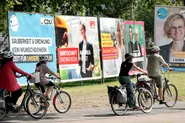
Nearly 10 million people in Germany were eligible to vote on Sunday as mayoral run-off elections took place in North Rhine-Westphalia. As the CDU made gains and the AfD failed to win, we look at the results in detail and what they mean.
Germany's leading conservative party has hung on to a strong lead in cities across the western state, but overall support for mainstream parties has dipped while support for the far-right has grown.
Every major political party, with one exception, agreed to follow a code of conduct when campaigning for Sunday's election in North Rhine-Westphalia. So what are 'fairness agreements' in German politics, and why don't they apply to the far-right?
Local elections this weekend in Germany's most populous state offer a vital opportunity for many residents to cast a vote and have a say on topics including housing, schooling, public transport, and social integration. Here's a look at who can vote.
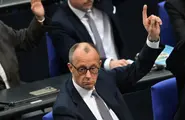
German lawmakers will gather in early May to elect Friedrich Merz as chancellor after his conservative bloc sealed a coalition agreement with the main centre-left party, the Bundestag said Monday.
With the centre-right conservatives set to take the helm of the next German government, and the far-right having made significant gains, readers of The Local shared their thoughts on the election results.
After a close-run election, a new German parliament is coming together. Our columnist Brian Melican shares who the vote winners and losers are, and what the results mean for the next government.
Germany's conservatives led by election winner Friedrich Merz held first talks Friday with the Social Democrats on forming a coalition government as the country faces multiple challenges at home and abroad.
Germany's conservatives, who won elections last weekend, are set to start exploratory talks with the Social Democrats on Friday towards forming a coalition government, party sources said.
Many of the 213,000 people with German citizenship living abroad were unable to have a say in the snap election because postal voting documents were not delivered or arrived too late, according to an investigation.
German election winners, the conservatives, have started initial coalition talks with the SPD. But experts warn that forming a functioning government is just one of many challenges politicians need to overcome to tackle far-right gains.
The far-right Alternative for Germany (AfD) confirmed Tuesday that its new cohort of MPs will include Maximilian Krah, a man thrown out of its caucus in the European Parliament after various scandals.
Germany's main conservative Christian Democrat parties won parliamentary elections Sunday in a vote that saw the far-right Alternative for Germany (AfD) achieve a record score. We look at some key numbers that help explain the events.
After a humbling election defeat for Chancellor Olaf Scholz and his Social Democrats (SPD), the party looked to collect itself on Monday in preparation for a potential new role as the junior partner in a conservative-led government.
CDU leader Friedrich Merz said he would get down to work after election win. But from warning against the AfD and addressing shaky US relations to his plans to meet with Benjamin Netanyahu, Merz may already be ruffling feathers.
The conservatives and the far-right have swept up nearly half the votes in Germany’s national election, but the results look very different between regions and among different demographics. We take a closer look at how Germans voted this time around.
Alternative for Germany (AfD) doubled its score in Germany's 2025 elections. But the nationalist right isn't just on the rise in Germany. Here's an overview of where they're gaining ground in Europe.
After the CDU/CSU emerged as the largest party in the federal election, one thing is certain: Germany is heading for a change of government. Which coalitions are possible according to the latest results?
The head of Germany's pro-business Free Democrats (FDP), Christian Lindner, resigned on Sunday night after the party failed to cross the five-percent threshold to enter parliament.
Germany's conservative election winner Friedrich Merz vowed to get to work Monday on the arduous task of building a new coalition government, warning "the world isn't waiting for us".
Germany's centre-right conservatives have swept to victory in the federal elections. What can foreigners expect from Friedrich Merz's party in government - and how could potential coalition partners alter their plans?
Germany's election winner Friedrich Merz has vowed to rule Europe's largest economy by returning to his Christian Democrat party's conservative roots, ease restraints on business and crack down on irregular immigration.
The far-right Alternative for Germany (AfD) is set to win the second largest share of votes in the federal election, early exit polls have shown. What might it mean for Germany's attitude to foreigners?