
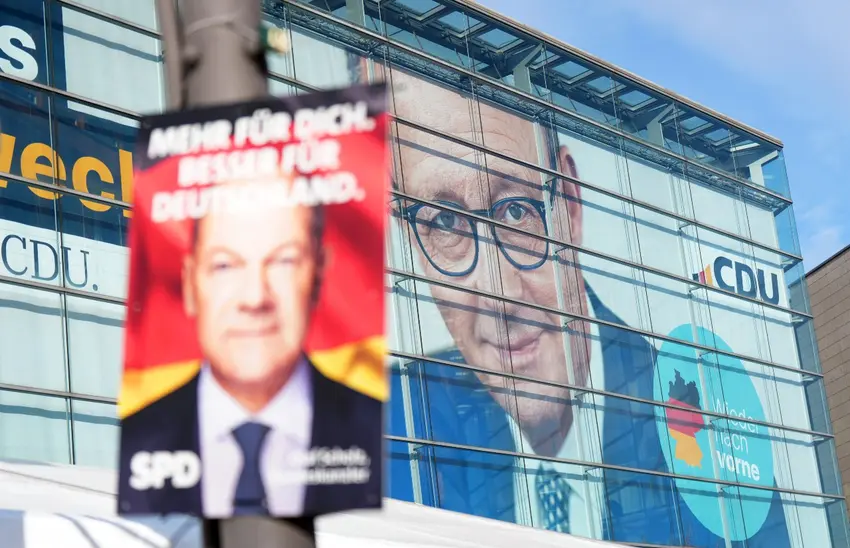
In Sunday's snap elections, the conservatives secured a convincing victory, with CDU candidate Friedrich Merz almost certain to become Germany's next chancellor.
According to the most recent exit polls released on Monday morning, the centre-right CDU/CSU alliance secured 28.5 percent of the vote, followed by the far-right AfD on 20.5 percent.
In contrast, the parties of the collapsed traffic-light coalition had a disappointing night across the board. Olaf Scholz's Social Democrats (SPD) secured just 16.5 percent of the vote, while the Greens, led by Robert Habeck, looked likely to achieve an 11.6 percent vote share.
The worst result by far was achieved by the Free Democrats (FDP), who landed on 4.3 percent and failed to secure the five percent needed to enter the Bundestag.
READ ALSO: Conservatives win German election as far-right AfD surges, exit polls show
Meanwhile, the leftwing Linke party saw a last-minute surge to almost nine percent of the vote, driven largely by an upswing in support among young voters.
However, the conservative-leftist Sahra Wagenknecht Alliance (BSW), which was founded by Linke defector Sahra Wagenknecht, fell short of the five-percent hurdle on 4.97 percent.
How is the next government formed?
In German politics, the election results are only half the story - and in many ways the really crucial work begins afterwards. Traditionally, the largest party in the elections makes the first attempt to form a government, inviting smaller parties to coalition talks to attempt to thrash out a plan.
In this case, CDU leader Merz has said he intends to get started with talks right away, with the aim of having an agreement done and dusted by Easter.
Speaking on ARD and ZDF's Berlin Roundtable after the initial exit poll results were announced, Merz pointed to the tense global situation and declared "the world is not waiting for us".
"We now have just under eight weeks until Easter, and I think that should be enough time - at most enough time - to form a government in Germany," he added.
READ ALSO: What happens next in Germany after conservative election win?
With so many potential disagreements to iron out, this may be a tighter deadline than it sounds. However, the fact that both the FDP and BSW fell short of the votes need to enter parliament makes things a fair bit simpler for the Union when it comes to coalition building.
Here are the three possible coalitions under the current vote shares.
Most likely option: Grand Coalition between the CDU/CSU and SPD
In the run-up to the federal elections, a new Grand Coalition between the centre-right CDU/CSU and centre-left SPD seemed the most likely option. This is still the case.
For a few hours on election night, it seemed that Sahra Wagenknecht's BSW would manage to sneak over the five percent hurdle needed to enter parliament, which would have robbed the parties of the seats they needed to form a two-party coalition. In the end, Merz managed to dodge this bullet as BSW fell just 15,000 votes short of the necessary threshold.
According to the current results, a Grand Coalition - or GroKo in colloquial German - would have 328 seats in parliament. This amounts to 12 seats over the 316 needed for an absolute majority.
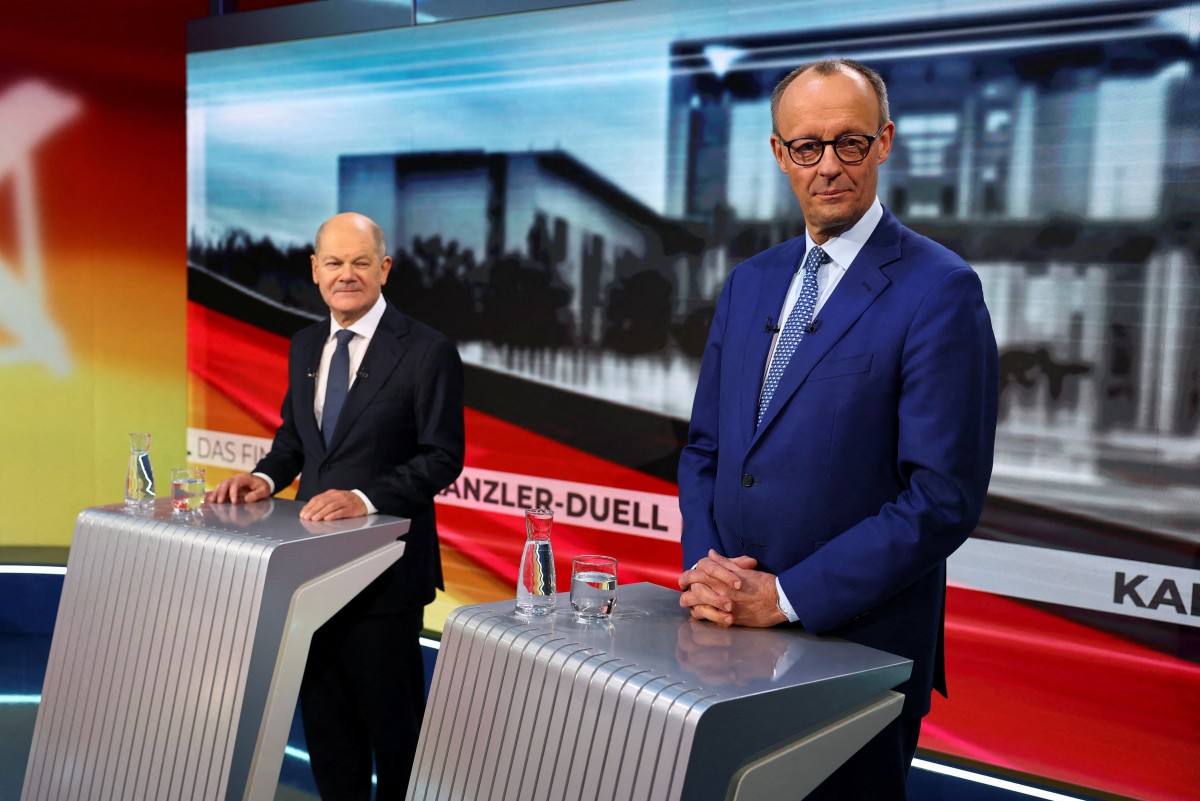
For his part, Merz has said he wants to kick off coalition talks with the SPD in the coming days. Chancellor Olaf Scholz (SPD), who will stay in office until a new government is formed, has said he will not be part of negotiations. Instead, Defence Minister Boris Pistorius seems likely to take on a leadership role in his wake.
Regardless of who takes the reins, the talks are unlikely to be plain sailing. Speaking on RBB radio on Monday, SPD Housing Minister Klara Geywitz said the CDU's tax policies, which favour richer households, could be a major sticking point in negotiations.
"Friedrich Merz's CDU has presented an election programme that would tear billions more out of the already strained budget," she said. "In this respect, we are at the beginning of a very difficult process, the outcome of which is still open in my view."
READ ALSO: German vote winner Merz faces tough talks to build government
Other issues that could cause friction include a reform of Germany's strict debt rules, social welfare schemes such as the Bürgergeld unemployment benefit, the statutory minimum wage and workers' rights, the continuation of the Deutschlandticket and relaxed dual nationality rules.
In addition, the parties disagree on climate policies, with the CDU/CSU pushing for a far more relaxed approach to targets and the scrapping of stricter climate protection measures.
Another difficulty for the SPD is that the decision to enter a Grand Coalition as a junior partner would likely be put to a members' vote. According to Hendrik Träger, political researcher at the University of Leipzig, this would be hard for the party leaders to ignore.
"The SPD will not be able to decide against the will of the party base to enter a grand coalition as a junior partner - for the fourth time in 20 years - because it has almost always emerged as the loser," he explained.
Nevertheless, according to a YouGov poll conducted on Sunday night, 44 percent of voters think this is the best coalition option.
Unlikely option: Kenya coalition between the CDU/CSU, SPD and Greens
Though a Grand Coalition between the Union and SPD would be able to secure enough seats by itself, a three-party 'Kenya' coalition involving the Greens could command a more convincing majority.
Under the current results, this constellation would combine the Union's 208 seats with 120 from the SPD and 85 from the Greens in order to secure 413 of the 630 seats in parliament. That said, it's highly unlikely that the CDU and CSU would want to water down their influence by dealing with both centre-left parties together.
As we saw from the three-party negotiations between the SPD, Greens and FDP to form the previous traffic-light coalition back in 2021, adding more parties into the mix is also a recipe for far more complicated coalition talks.
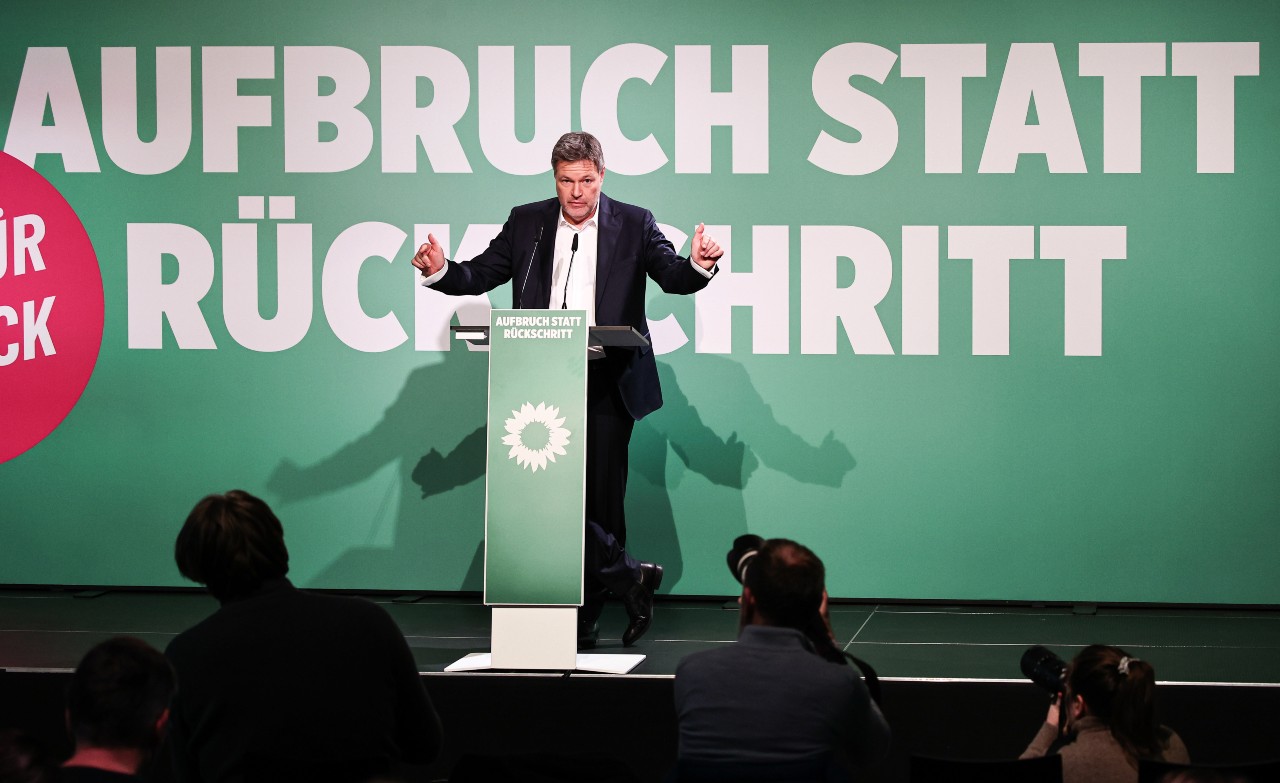
Another big hurdle to a coalition involving the Greens is the strong aversion that many conservative politicians have towards the eco-friendly party. The most vocal of these, CSU leader Markus Söder, has repeatedly ruled out working with the Greens and did so again after the exit polls were announced on Sunday.
READ ALSO: What should foreigners in Germany expect from a CDU-led government?
When it comes to policy, the parties would likely have a big uphill climb ahead of them, with fundamental disagreements on climate protections, tax policy, healthcare and migration - to name just a few. On foreign policy, they would likely find more common ground, as the Greens and CDU/CSU have both been unequivocal in their support for Ukraine.
According to YouGov's poll, 25 percent of voters prefer this coalition option.
Ruled out by Merz: Black-Blue coalition between CDU/CSU & AfD
The coalition that in many ways would be the simplest is also the one that is least likely to happen: a black-blue coalition between the centre-right Union and the far-right AfD.
Under Merz, the party of former chancellor Angela Merkel has swung to the right on a range of issues, with the CDU even accepting votes from the AfD to push through a tough migration motion in January.
If the two right-wing parties did decide to link up, they'd have a total of 360 seats in the Bundestag and a majority of 34. Alice Weidel's right-wing extremist party has also offered to lend the CDU/CSU votes on "rational" policies.
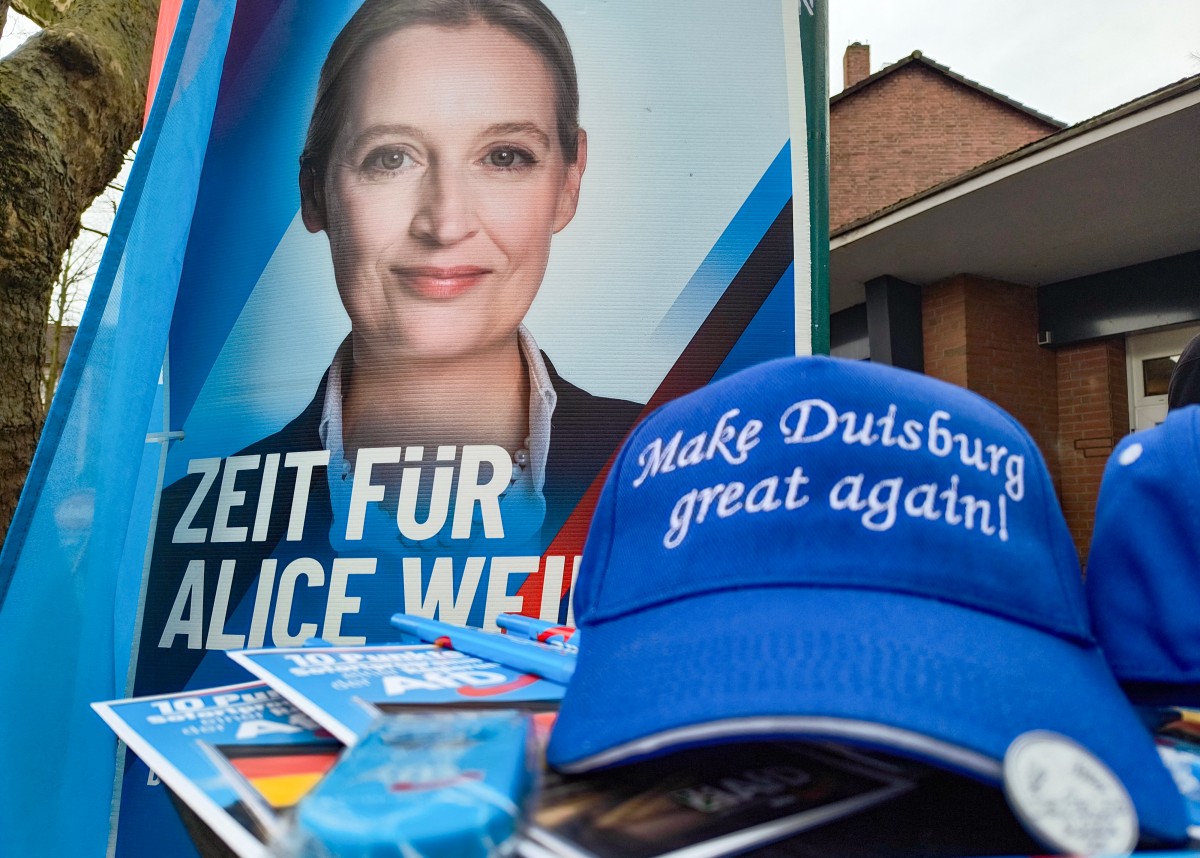
However, the CDU's chancellor candidate has been unequivocal in ruling out a formal coalition with the far right.
"The voters of the Union and the voters of the AfD knew before the election that it wouldn't come to any cooporation," Merz said in the Berlin Roundtable programme on ARD/ZDF on Sunday night. He added that his party had "fundamental disagreements" with the AfD, particularly when it came to foreign policy.
READ ALSO: 'We have achieved historic result' - Germany's far-right AfD jubilant after gains
Previously in the election campaign, the CDU leader had ruled out both informal and formal cooperation with the AfD.
"There is no cooperation, there is no acquiescence, there is no minority government, nothing at all," he declared at the CDU's party conference in Berlin.
According to a snap poll after the elections, 30 percent of respondents would like to see a black-blue coalition in Germany.
Comments