
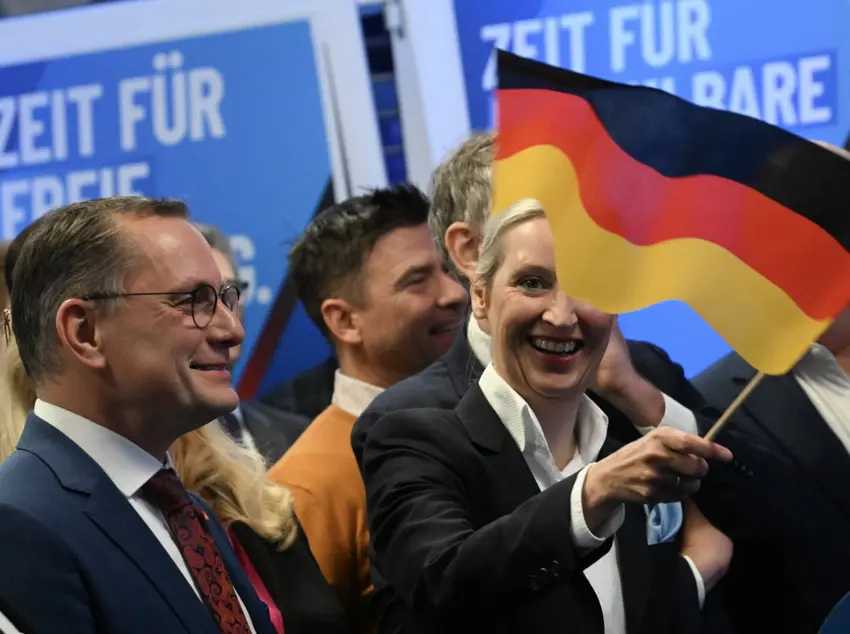
"We have achieved a historic result," the party's top candidate Alice Weidel, 46, told party supporters cheering and waving the German national flag at an election night party in Berlin.
READ ALSO: Conservatives set to win German election as far-right AfD surges, exit polls show
For many German citizens and the mainstream parties, it was an anticipated but still shocking result, spelling the death knell for the notion the country still seeking to atone for the Holocaust was immune to a far right-wing revival.
Weidel insisted that the party was now "firmly anchored" in the political landscape and had "never been so strong on a national level".
She told the ARD TV station that "our hand is reaching out" to enter into a coalition government with the conservative CDU/CSU alliance, which came first with at least 28.5 percent according to exit polls.
CDU leader Friedrich Merz has ruled out any such alliance but caused uproar last month by bringing a motion to parliament that was passed with AfD votes, breaching a long-standing taboo.
Weidel predicted that if the CDU continued to refuse to work with her party to "implement the will of the people", the AfD would "overtake" them in the next election, expected four years from now.
The AfD itself sometimes insists it is "conservative-libertarian", and the ideological kin of US President Donald Trump, whose cabinet members and billionaire ally Elon Musk have voiced full-throated support for it.
Ultra-conservative platform
Under Weidel, the AfD has sought to play down some of its harshest nativist and revisionist rhetoric.
Attempts to whitewash Germany's Nazi and Holocaust history prompted state security services to put the party under observation and made it the target of mass street protests.
READ ALSO: 'Alice für Deutschland' - Who is the German far-right party's unlikely leader?
Weidel during the campaign was at pains to nudge the AfD further into the political mainstream - recalling the efforts of other right-wing populist leaders abroad - helped by getting air time in TV debates with the other top candidates.
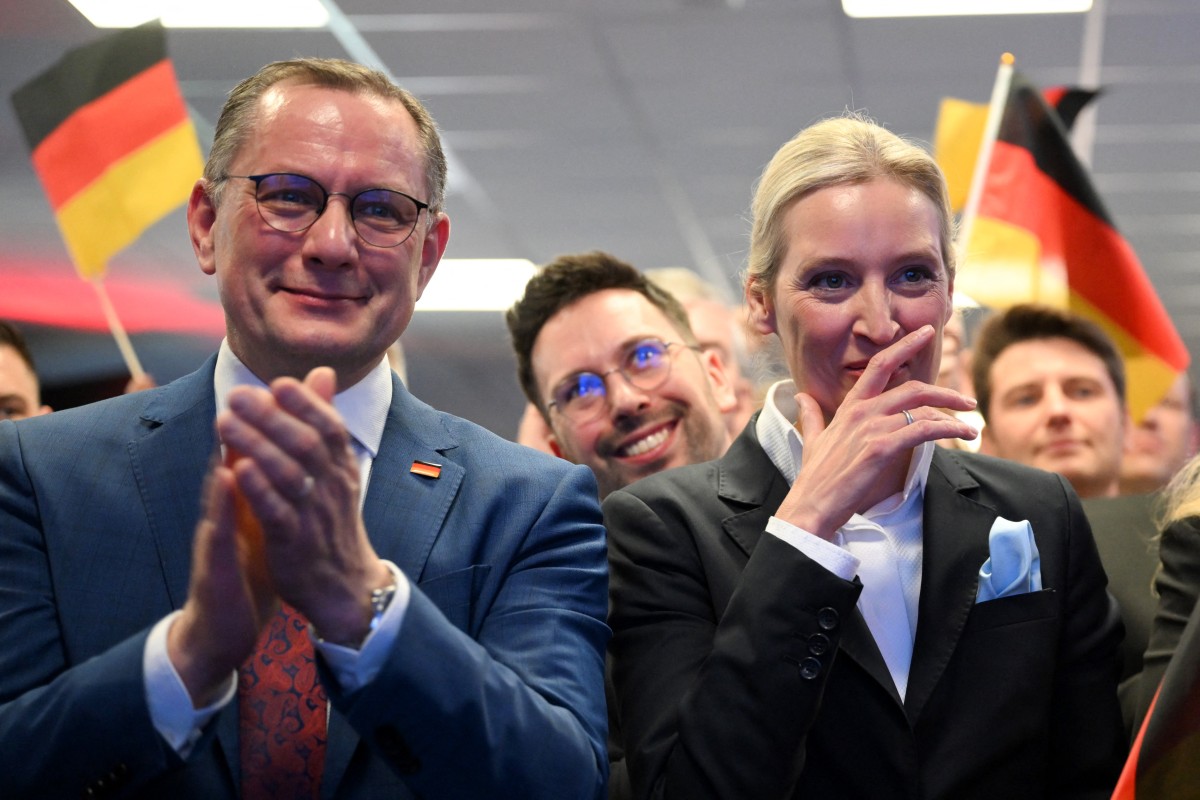
The AfD is abhorred by many Germans for openly railing against irregular migrants, Islam and multiculturalism.
In the social media-fuelled culture wars increasingly splitting Western liberal democracies, the AfD voices anti-"woke" views, doubts climate change and leans toward Moscow on the Ukraine war.
READ ALSO: How would a strong AfD election result impact foreigners in Germany?
Russian-linked disinformation campaigns have heavily supported pro-AfD views and narratives.
In vast areas of ex-communist eastern Germany - where nostalgia lingers for the Soviet era alongside resentment against being effectively absorbed by the rich West in 1990 - the AfD scored above 30 percent.
But in western areas too, to a growing number of voters the AfD's hardest edges have been softened, in part by Weidel's personal story, which defies some of the party's ultra-conservative "family values" platform.
Weidel lives with a female Sri Lanka-born partner - with whom she is raising two children, in a town across the border in Switzerland - and is a Mandarin speaker who during a business world career spent several years in China.
Comments