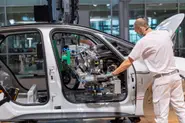
Germany's industrial decline is taking a painful toll on communities that have long relied on local manufacturing titans for jobs, prosperity and a sense of a secure future.
Despite downturns and stagnation, Germany remains the world's third largest economy for the third year running, according to a new study. But India is expected to jump ahead by the end of the decade.
Germany's economy is unlikely to rebound in 2026 as geopolitical uncertainty, high costs and weak domestic demand weigh on growth, the German Chamber of Industry and Commerce (DIHK) said Tuesday.
German chemical group Wacker Chemie said Thursday it will axe 1,500 jobs, almost a tenth of its workforce, in a cost-cutting drive as the sector slips deeper into crisis.
With the industry teetering on the brink of collapse, the German Chancellor is hosting an urgent steel summit this week. Why is the industry so important for Germany, and can it be saved?
German Chancellor Friedrich Merz called Tuesday for "more flexibility" from the EU in the transition to electric cars as resistance grows over plans to phase out combustion-engine vehicle sales by 2035.
German Chancellor Friedrich Merz will open the IAA motor show in Munich on Tuesday as debate rages over the EU's target to phase out combustion-engine vehicle sales within a decade.
Businesses across various industries, from hospitality to postal services, are concerned that they may struggle to fill basic jobs amid a sharp drop in the number of refugees entering Germany.
The EU still hopes to strike a deal with the United States despite President Donald Trump's ramped-up threat of 30-percent tariffs, the bloc's trade chief said Monday, with pressure on Brussels to toughen its stance.
As Germany's new government plans an ambitious push to rebuild bridges and big infrastructure projects across the country, local leaders say it will take more than funding to make projects happen.
Top members of Germany's new conservative-led government have pushed for an 'evaluation' of cannabis legalisation, but for now companies producing and selling the product are seeing business boom.
US President Donald Trump has announced another tariff on foreign imports, this time affecting cars and car parts. Here's how its expected to affect the German economy.
European consumers outraged by US President Donald Trump’s Ukraine policy turnaround, among other issues, have begun boycotting products and services made by US-based companies. Will the boycott take off in Germany?
US President Donald Trump is continuing to rely heavily on tariffs in his economic policy. Revived tariffs on metal imports to the US are expected to hit Europe - and especially Germany - hard.
Over 140,000 automotive manufacturing jobs are expected to be cut over the coming decade in Germany, a new study has found. But this is only half the story, as new jobs are being added in related sectors, an employment expert says.
Volkswagen, Europe's biggest carmaker, has cancelled a long-standing job-protection deal and is mulling closing factories in Germany as it attempts to cut costs. Here's what we know so far – and who could be affected.
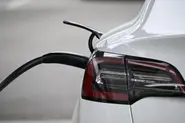
The European Commission announced plans Tuesday to impose an extra nine-percent tariff on Tesla's China-made electric cars, much lower than what Chinese firms face unless Beijing compromises in a trade row.
"Only a few businesses were able to benefit directly" from the European Football Championship in Germany, according to a recent survey carried out by the German Hotel and Restaurant Association (DEHOGA).
A new techno club opened inside the Tesla factory just outside Berlin's city limits. A number of employees have celebrated the opening online, but local clubgoers are more sceptical.
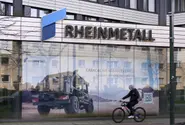
German weapons manufacturer Rheinmetall, whose business has boomed amid the Ukraine war, is set to hire workers from Continental as the auto supplier cuts thousands of jobs, the companies said on Friday.
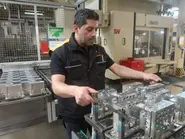
Emrullah Karaca has made brakes for the past 20 years, but he is now learning to assemble heat pumps instead, as the Continental factory where he works in northern Germany is slated to close.
In its search for sorely needed talent, German chipmaker Infineon is looking as far as Guatemala, but the rise of the far-right at home risks making the move unappealing and harming the industry.
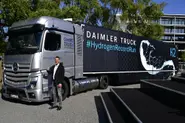
German firms such as Daimler Truck and Bosch are betting that hydrogen has a role to play in slashing road transport emissions. But the technology has plenty of hurdles to overcome before going mainstream.