
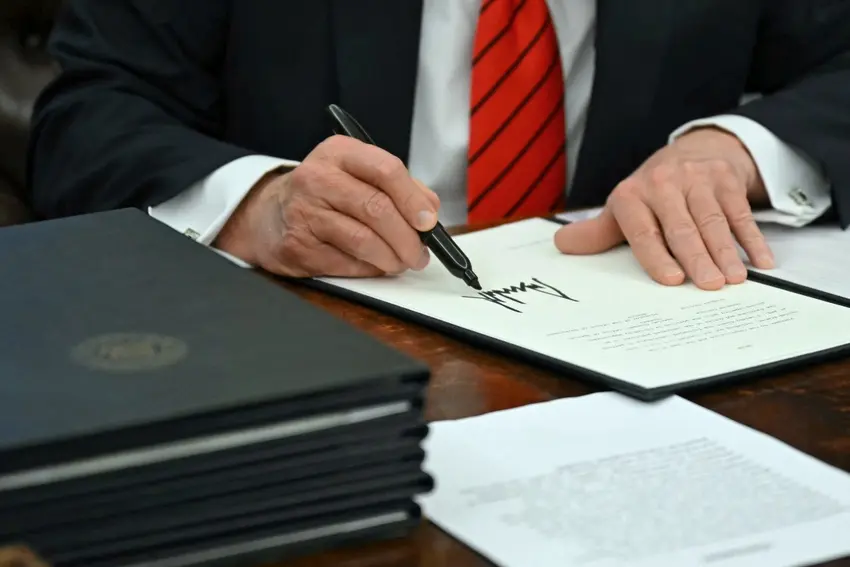
Trump has introduced tariffs of 25 percent on steel and aluminium imports into the United States - a move that will have a direct impact on Germany as a large exporter of steel.
In the two proclamations, which the US government headquarters have published, it is listed that various exemption rules for various countries will no longer apply from March 12th. Instead, a uniform tariff rate of 25 percent is to take effect.
Trump had similarly imposed tariffs on European steel and aluminium imports during his first election term. At that time the EU responded with retaliatory tariffs on US products such as jeans, bourbon whiskey, motorcycles and peanut butter.
During the term of his successor Joe Biden, a standstill agreement was concluded that defused the tariffs.
What does it mean for Germany?
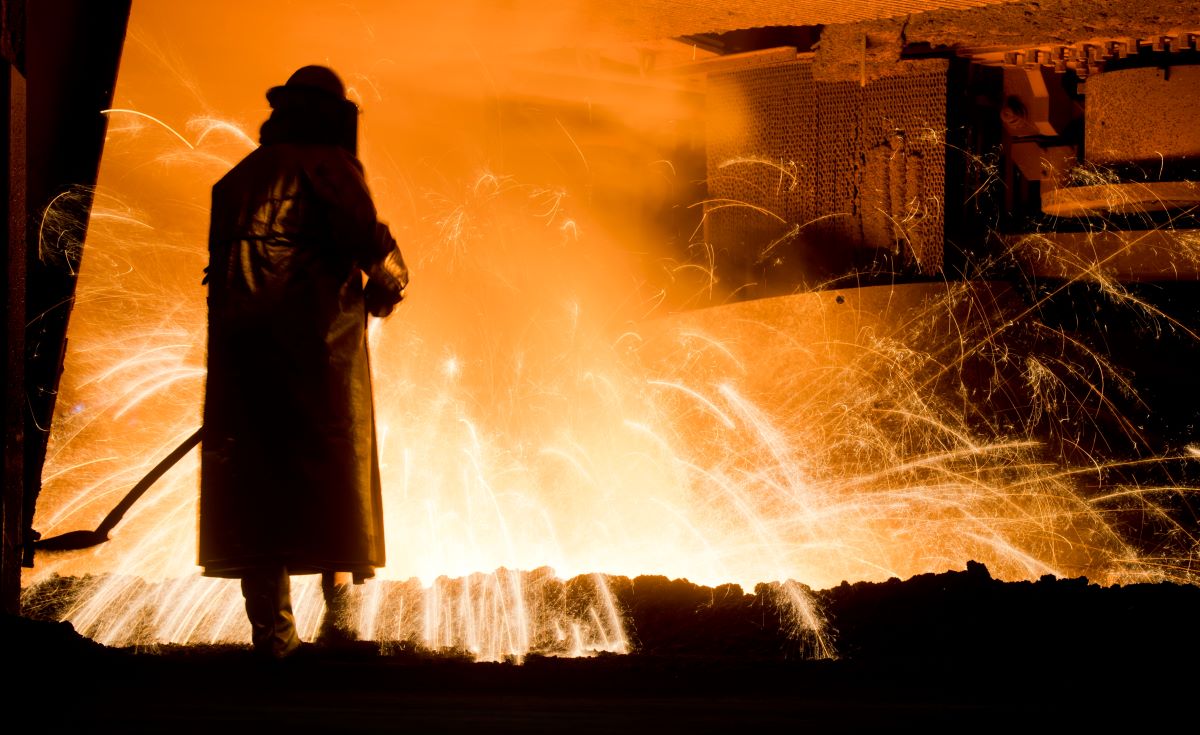
According to German industry association Stahl, the USA is the most important sales market for the European steel industry.
And Germany is the largest steel producer in Europe. In 2023, the country exported around one million tons of steel to the US.
It's also worth noting that across all industries, the USA is the most important sales market for German exporters.
With the German economy already entering it's third year of stagnation, further strains on its major exports could be expected to have far-reaching consequences within key industries.
The German Steel Association notes that during the last round of Trump tariffs on steel in 2018 to 2019, European exports to the US halved.
However, opinions differ on how drastic that impact would be for German businesses.
For example, steel and capital goods group Thyssenkrupp told the business newspaper Wirtschafts Woche that the current tariffs would have "limited impacts" on its business, adding that it's main steel buyers were in Europe.
But Wolfgang Niedermark, a member of the board of the federation of German businesses (BDI), warns that a build-up of retaliatory tariffs and related trade hurdles could ultimately jeopardise jobs and prosperity in Germany.
Recently, German automakers expressed grave concern over US tariffs enacted on Canada and Mexico, which would have affected their auto sales in the US. Those tariffs ended up being quickly withdrawn by Trump after negotiations with leaders from the affected countries.
What has the reaction been?
Political and business leaders alike in Germany have previously expressed concern about Trump's tariffs.
Just ahead of the tariff announcement on Monday, German economy minister Robert Habeck suggested that Germany and Europe were prepared to act in a "United and determined manner".
"In the long term, a tariff conflict only has losers," Habeck said.
He added that "The most important thing is that we continue on the path of cooperation with the United States, from which both sides benefit," but also made clear that Europe was prepared to react to trade restrictions.
Shortly after Trump's tariff order was signed, Chancellor Olaf Scholz condemned the measure: "If the US leaves us no other choice, then the European Union will react unanimously."
"But I hope that we will be spared the wrong path of tariffs and counter-tariffs," Scholz added. "In the end, trade wars always cost both sides prosperity."
Meanwhile, the former head of the Kiel Institute for the World Economy, Gabriel Felbermayr, expects manageable consequences from the tariffs. "It is unpleasant for our economies, but not devastating," Felbermayr told DPA.
He noted that steel prices could be expected to fall if more steel remains in Germany rather than being shipped to the USA, which could cut down construction costs for wind turbines, for example.
Felbermayr says Trump appears to be using tariffs primarily as a threat, rather than a real economic policy tool.
"The US also has no lasting interest in really sealing itself off and erecting tariff walls," he said.
But Felbermayr admits that Europe is perhaps in a more difficult position today than it was eight years ago, considering its increased dependence on liquefied gas supplies from the US.
Comments