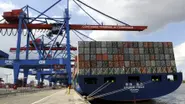
Germany's trade surplus soared in July as its export engine revved up, official data showed on Tuesday, but a drop in industrial output signalled that economic recovery is fragile.
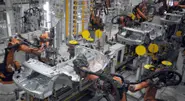
German industrial orders rose sharply in July in a boost for Europe's biggest economy even though the increase was almost solely due to a large order for armoured cars, analysts said on Monday.
Salaries for top executives of major German companies plummeted by one-fifth last year as the financial crisis began to bite in Europe's top economy, a study released on Thursday showed.
Germany has escaped the clutches of its worst recession in over 60 years, official data showed on Tuesday, as consumption helped Europe's biggest economy grow by 0.3 percent in the second quarter.
A survey suggesting soaring investor confidence provided more cheer for the German economy on Tuesday, less than a week after data showed its worst recession in decades ending sooner than expected.
The German economy grew unexpectedly for the first time since early 2008 in the second quarter of this year, the Federal Statistics Office (Destatis) reported on Thursday.
Inflation in Germany dropped 0.5 percent last month compared to the same period in 2008 – the first such decline in 22 years – raising the spectre of deflation amidst the worst economic downturn since World War II.
Germany's trade surplus soared 28 percent in June compared to May, official data showed on Friday, in a sign that the main motor of Europe's biggest economy is spluttering back to life.
Politicians are calling for tighter controls after further reports of criminal misuse of Germany’s "cash for clunkers" car scrapping premium emerged this week.
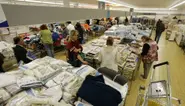
German retailing giant Metro said on Monday it was now considering cutting 17,000 jobs as part of its major restructuring programme – potentially eliminating thousands more positions than previously announced.
Unemployment in Germany will climb even further than previously feared, with 4.7 million people out of work in 2010, the German Institute for Economic Research (DIW) predicted this week.
German unemployment in July rose slightly as the country's worst recession since World War II took its toll on the jobs market, government data showed on Thursday.
Southern Germans are suffering more from the economic crisis than their fellow citizens in the North and East, according to daily <i>Passauer Neue Presse</i> on Thursday.
German prices fell for the first time in 22 years in July, official statistics showed Wednesday, but analysts said Europe's biggest economy was unlikely to slip into a dangerous deflationary spiral.
Deutsche Bank, Germany's largest, reported on Tuesday a better-than-expected 68 percent increase in second quarter net profit to €1.1 billion ($1.6 billion dollars).
Despite the worst economic crisis since 1945, German consumers are ever more confident in the future and increasingly willing to part with their hard-earned cash, a closely-watched survey said on Monday.
The majority of German businesses believe the financial crisis is over and the state of Europe's top economy will improve in the next 12 months, according to a new study to be published on Monday.
The mood among German firms brightened for the fourth month running in July amid signs that the worst may be over for Europe's biggest economy, the closely watched Ifo index showed on Friday.
The recession has reinvigorated a German interest in camping, as more people decide to pitch a tent or park an RV instead of sleeping in a more expensive hotel, daily <i>Leipziger Volkszeitung</i> reported on Tuesday.
Germany's worst recession since the Second World War has lost much of its intensity according to reports published on Monday by the Finance Ministry and central bank.
The Finance Ministry reckons the recession is over, with a predicted growth rate of zero expected for the second quarter of the year, according to an internal estimate, says <i>Der Spiegel</i> magazine.
Insolvency administrators are expecting a record number of German companies to go bust towards the end of this year and into 2010, as the effects of the global recession take hold.