The European Central Bank (ECB) on Thursday cut its main interest rate by 50 basis points to 3.25 percent in an attempt to buttress the weakening eurozone economy.
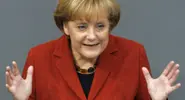
Chancellor Angela Merkel's cabinet on Wednesday approved a stimulus package aimed at helping Europe's biggest economy and the world's top exporter avoid the worst effects of a sharp global slowdown.
Chancellor Angela Merkel gave details on Tuesday of measures aimed at boosting slowing growth in Germany, calling the package a "bridge" for Europe's biggest economy until it picks up again in 2010.
The number of people unemployed in Germany fell below three million for the first time for 16 years in October, data from the Federal Labour Agency showed on Thursday.
The German Economy Ministry said Wednesday it had set up a hotline for small- and medium-sized enterprises (SMEs) that are having problems with financing because of the international crisis.
German business confidence dropped for the fifth month running in October, a key index showed on Monday, as the biggest European economy was slammed by the international financial crisis.
<b>Worried about the global economic meltdown? Roger Boyes, the Berlin correspondent for British daily The Times, has come up with a simple A to Z survival guide for the hard times in Germany.</b>
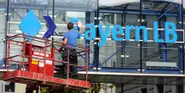
German regional bank BayernLB on Tuesday evening became the first bank to apply for state aid under a rescue package thrown together to underpin the country's financial sector.
German Economy Minister Michael Glos on Monday called for investment bankers to follow the example of Deutsche Bank CEO Josef Ackermann by forgoing their bonuses this year in light of the global financial crisis.
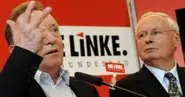
Oskar Lafontaine, the head of the hard-line-socialist Left party, is backing the controversial call by the party's presidential candidate Peter Sodann to jail German bankers like Deutsche Bank CEO Josef Ackermann.
Berlin plans "targeted measures" to boost Europe's largest economy but no major stimulus package in response to the financial crisis and slowing growth, the government said on Monday.
The German cabinet finalised on Monday the conditions under which banks can make use of a €480-billion ($650-billion) rescue package rushed through parliament last week.
Germany's €480-billion ($650-billion) bank bailout flew through parliament in an historic fast-track vote on Friday to restore shattered confidence in the crisis-ridden financial sector.
Jürgen Thumann, the president of the German Federation of Industry (BDI), called upon well-paid banking executives to contribute to the bailout of their banks if they are rescued by the government.
Chancellor Angela Merkel said on Wednesday the world was facing the most difficult financial crisis since the 1920s, and one that would not leave Germany’s economy unscathed.
The majority of Germans remain full of hope for the future despite growing panic about the worldwide financial crisis, according to a poll published on Wednesday by German weekly <i>Stern</i>.
Only the state can restore trust to financial markets now, German Chancellor Angela Merkel said on Sunday as she and other European leaders went into an emergency summit in Paris.
Germans are moving their nest eggs to the safety of state-owned banks, despite Chancellor Angela Merkel's pledge this week to guarantee all savings and current accounts.
Germany’s leading stock index the DAX tanked more than ten percent in the opening minutes of trading on Friday, following the downward spiral of markets in Asia and North America.
Germany’s leading stock index the DAX slumped to its lowest point in more than two years on Monday despite the government’s decision to offer a blanket guarantee on all bank deposits over the weekend.
Peter Struck, the head of the Social Democratic Party’s parliamentary group, on Thursday slammed Deutsche Bank CEO Josef Ackermann for demanding Germany set up a government bailout plan for troubled banks.
German retail sales posted a surprise jump in August as energy prices eased, but analysts were divided over whether the boost would prevent Europe's biggest economy from falling into recession.
Deutsche Bank’s chief economist Norbert Walter told daily <i>Stuttgarter Nachrichten</i> on Wednesday that Germany and Europe would not be able to avoid recession in light of the ongoing global financial crisis.
The German government will have to “markedly revise downward” its economic growth forecast for 2009, due to the world financial crisis, Economy Minister Michael Glos said Saturday.