Each year between 2011 and 2015, electricity providers cut off power to at least 300,000 German households who could no longer afford to pay their bills, the government revealed on Thursday.
Beneath the sheen of startups and hipsters, Berlin is a troubled city. Are politicians to blame or does it still need more time to recover from the Cold War?
Twenty-six years after reunification, eastern Germany remains economically anaemic with little prospect of catching up with the rest of the country by 2030, a study published on Wednesday said.
One-third of unemployed people in Germany are unable to afford a square meal at least once every two days, figures from the Federal Office of Statistics showed on Monday.
Poverty levels in Germany have reached an all-time high, with 15.5 percent of the population – or 12.5 million people - affected. Single parents and unemployed people were the hardest hit, according to a report from a welfare association.
Germany has a new story about income inequality after years of simplistic thinking about a rich West and poor East. A study released on Monday shows the wealth divide is more between city and country than East and West.
Poverty among young Germans is on the rise, a new study shows. Reasons for the increase are thought to be failings in education and vocational training.
A third of children in Berlin are living in households dependent on unemployment benefit Hartz IV. Despite sustained economic growth and falling unemployment, the numbers of families receiving state benefits rose in the last year.
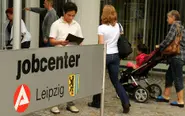
As figures show an increase in poverty despite record employment rates, and the potential new government argues about a universal minimum wage, German job centres are suing employers for paying less than €2 an hour.
Despite the strong economy, the number of impoverished Germans has been steadily increasing. Figures from a European-wide study released on Friday show one in six people are at risk of poverty.
Foreigners are more than three times as likely to be poor in their old age as Germans, new data shows. Former "guest workers" are the most likely to be living in poverty.
More than one in three Germans entitled to state benefits do not apply - saving the government billions - a new study showed. Shame and not knowing they are eligible are thought to be the most likely explanations.
Growing numbers of pensioners in Germany receive such meagre state pensions that they have to continue working well into old-age, it emerged on Tuesday.
More Germans need state help to supplement their wages - because their jobs pay so badly they cannot pull themselves above the poverty line, figures from the Federal Employment Agency (BA) showed on Wednesday.
The risk of poverty is lower in Germany than in the European Union as a whole, according to Europe-wide data released by national statistics office Destatis on Wednesday.
In The Local's latest <b>Weekly News Roundup,</b> Ben Knight looks at the government's purportedly whitewashed poverty report, a fake bishop in the Vatican, some bullied soldiers, and how David Hasselhoff will save the Berlin Wall.
A long-delayed report on poverty in Germany has finally been rubberstamped by the government – without the parts that stated that wealth is distributed very unequally.