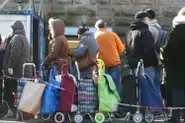
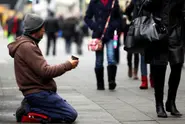
From the outside, Germany is viewed as a prosperous country with low unemployment. But new figures shed light on the increasing number of people turning to food banks.
More than 340,000 electricity customers across Germany have their power cut off each year for failing to pay bills. A new proposal from one political party aims to change this.
Statistics have revealed increases in poverty in many larger cities in west Germany, predominantly in the Ruhr region. Conversely, poverty is trending downward in the former east.
A newly released study has confirmed what residents of German cities have known for some time: rents are rising - and the poorest are the most affected.
Chancellor Angela Merkel touted Germany as a country "in which we live well and happily" during her re-election campaign. But those words ring hollow to the one in five children living in poverty in Europe's top economy, with little prospect of climbing the social ladder.
Nearly every seventh child in Germany required assistance from Hartz IV last year, says the newest report from the German Federal Employment Agency (BA). Only 5 years ago, the rate was one in every eight children.
The outspoken Christian Democrat politician Jens Spahn told a newspaper on Saturday that Germany was a country without poverty thanks to its "Hartz IV" social security payments. Critics called his comments “cold-hearted and aloof.”
Last week a food charity in Essen took the controversial decision to stop taking any new foreign clients. The move, said to be aimed at helping German Omas, has unleashed a heated debate about racism and poverty.
At the start of the millennium, Germany was lambasted by the OECD for the inequality that was prevalent in its schools. But a new study by the organization has found sizeable improvements in German schools.
Rising rents and a lack of social housing are contributing to homelessness in the German capital. Adapting means disappearing 'like a little grey mouse' in the city's crevices.
According to an estimate published by the Federal Association for Assistance for the Homeless on Wednesday, the number of people living on Germany’s streets has risen by 13,000 in two years.
A growing gap between rich and poor in Germany could sap social cohesion in Europe's largest economy and most populous country, a government report warned on Thursday.
A new report claims that more Germans are poor now than at any time since reunification. But some experts have dismissed the numbers as "not serious and stupid".