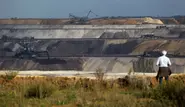
Sybille Tetsch returned to the German village of Proschim to set up a restaurant four years ago, in an attempt to save her birthplace from mining excavators and heal a deep rift there over the future of coal.
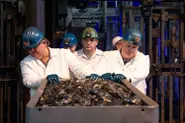
Germany will close its last black coal mine on Friday, a milestone marking the end of a 200-year-old industry that once fuelled the country's economic growth but lost the battle against cheaper foreign competitors.
When Germany's last black coal mine shuts on Friday, it is not just miners who may shed a tear – football fans too will mourn the end of a pillar of the nation's industrial wealth.
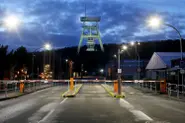
After more than 150 years, Germany's last black coal mine will close in the Ruhr region, posing a gigantic geological and environmental challenge to the former industrial heartland.
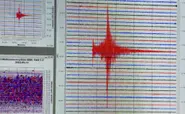
Residents in a sleepy part of western Germany woke up to an unusally strong earthquake on Friday. Registering 3.5 on the Richter scale, houses swayed before dawn broke.
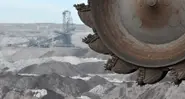
Germany's highest court threw out on Tuesday a lawsuit against plans for an enormous open-cast coal mine for which entire villages will have to be uprooted.
Details emerged on Thursday as an investigation was launched into the worst mining accident in Germany since 1989. Three men died in a mine in central Germany on Tuesday afternoon after deadly gas escaped into a mine shaft.
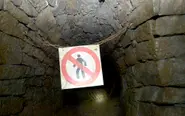
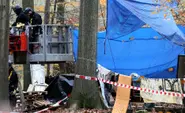
Police have pulled an environmental protester out of a six-metre deep tunnel after four days trying to dig him out without prompting a collapse which would have buried him alive.
A graphite mine in Bavaria reopened on Thursday as rising prices of raw material imports from China made German mining profitable once again. Meanwhile, the search is on to find sources of expensive raw materials closer to home.
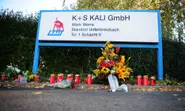
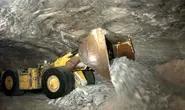
A miner has been killed and 26 injured after a gas leak in a potash mine in the German state of Lower Saxony. The workers drilled into a pocket of highly toxic hydrogen sulphide at a depth of 1,200 metres.
Germany on Friday urged a visiting senior Chinese official to review Beijing's restrictions on exporting so-called "rare earths" critical to manufacturing hi-tech goods.
Germany has unveiled a new strategy to help firms in Europe's top economy obtain vital minerals, amid concern that China is curbing exports of rare earths crucial for high-tech industries.
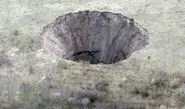
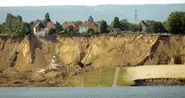
Geologists are urgently investigating the subterranean ground outside Bernburg in Saxony Anhalt after a massive section of earth abruptly collapsed, leaving a 40 metre-deep crater.
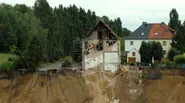
There were clues that the ground in Nachterstedt was unstable years before a landslide pulled homes into a lake killing three people earlier this week, daily <i>Frankfurter Rundschau</i> reported on Thursday.
Four days after a landslide pulled homes into a lake killing three people in Nachterstedt, the state of Saxony-Anhalt’s premier announced on Wednesday that all lakes made from former open-pit mines will be inspected.
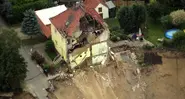
Two days after a landslide dropped one-and-a-half houses into a lake bed and likely left three people dead, authorities in Saxony-Anhalt are warning of further landslides around the former open-pit mine.
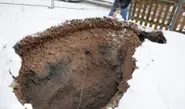
A neighbourhood in the small city of Kamen in North Rhine-Westphalia had a fright when the threat of the ground collapsing beneath their homes forced an evacuation on Thursday evening.
As demand booms for ever dwindling stockpiles of rare metals used in high-tech appliances, industries and countries are scrambling to secure their supplies, according to German research.
To generate electricity, power company Vattenfall burns the dirtiest coal on earth. So far, thousands of people’s homes have been destroyed by mining, and more will follow. Will the company’s new ‘carbon capture’ technology make a difference? Exberliner's <b>Seymour Gris</b> reports.