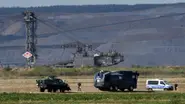
Germany is on course to abandon coal-fired power stations but ironically one mine is being allowed to expand - to the fury of local residents who describe the battle to save their homes as "psychological terror".
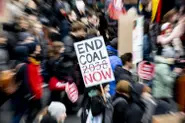
Climate activists heckled German MPs Friday outside the Berlin parliament building as the country passed a law to end use of coal-fired power generation by 2038.
Activists occupied Germany's newest
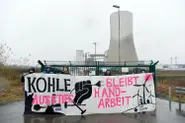
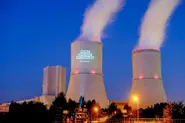
power plant on Sunday to protest against a law passed last week to end coal electricity generation, but which environmental groups argue is insufficient.
German ministers on Wednesday signed off a law to end coal electricity generation that demonstratorsand environmentalists say does too little, too late.
Germany could end electricity
generation from coal in 2035, three years earlier than previously planned, under a pact sealed Thursday between Chancellor Angela Merkel and leaders of affected states.
Several hundred climate activists evaded police to enter an open-cast mine run by energy giant RWE in western Germany Saturday, a day after tens of thousands campaigned against the use of coal.
As Germany plans to shutter its coal sector, the government pledged Wednesday to pour €40 billion into mining regions over the coming years to stimulate growth and jobs.
There will be "significant" job losses as Germany phases out coal use by 2038 as part of efforts to combat climate change, energy giant RWE's CEO Rolf Martin warned on Monday.
Sybille Tetsch returned to the German village of Proschim to set up a restaurant four years ago, in an attempt to save her birthplace from mining excavators and heal a deep rift there over the future of coal.
Germany should end all coal mining for electricity production by 2038, a government-appointed commission said on Saturday, laying out a roadmap to phase out the polluting fuel.
Germany will close its last black coal mine on Friday, a milestone marking the end of a 200-year-old industry that once fuelled the country's economic growth but lost the battle against cheaper foreign competitors.
When Germany's last black coal mine shuts on Friday, it is not just miners who may shed a tear – football fans too will mourn the end of a pillar of the nation's industrial wealth.
After more than 150 years, Germany's last black coal mine will close in the Ruhr region, posing a gigantic geological and environmental challenge to the former industrial heartland.
Germany will close its last black coal mine on Friday, turning the page on two centuries of mining history in the Ruhr region that helped fuel the country's post-war "economic miracle".
Following the death of a journalist, police continue dismantling tree huts in the Hambach Forest between Aachen and Cologne, having cleared 53 as of Wednesday morning, according to Aachen authorities.
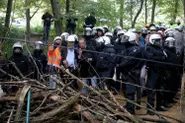
Nine environmental activists were injured and 34 detained in an operation to evict protesters holed up in forest treehouses in a bid to block the expansion of an open-pit coal mine, police said Sunday.
German activists living in treehouses to protect an ancient forest from being razed for a nearby coal mine were bracing Thursday for a forced eviction by police, in a major escalation of the long running environmental battle.
A commission set up in June has been given the task of recommending a timeline for an exit from coal power. Two new reports give very different opinions on what that means for the German economy and consumer.
Commuters on Tuesday morning were shocked to discover the roads surrounding the Berlin Victory Column covered in fresh yellow paint, after a controversial demonstration by Greenpeace demanding an end to coal power plants.
Germany's divided Social Democrats will hold a crunch vote on Sunday on whether to pursue a coalition deal with Chancellor Angela Merkel's conservatives, or plunge the nation into political turmoil.
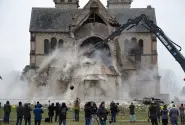
The demolition of a historic church to clear the way for the expansion of an open-cast mine this week has outraged locals in western Germany and environmentalists, as politicians moot giving up their own clean energy targets.
Angela Merkel has been dubbed the "climate chancellor" but she now faces the real risk of Germany, a green energy pioneer, missing its emissions reduction target on her watch.
With coalition talks to create a new German government seemingly going nowhere, the Green party signalled on Tuesday that they were willing to compromise on some of their key policies.