
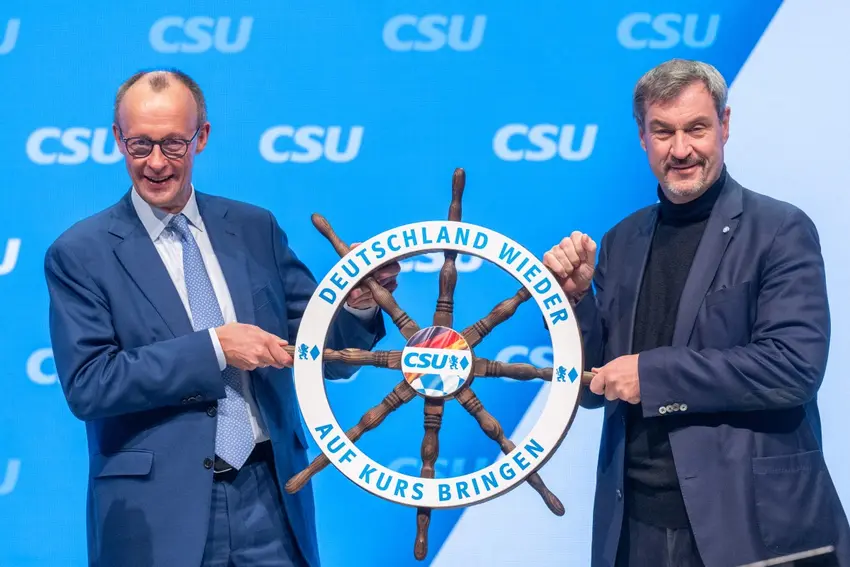
Yes, I’m calling this one: Friedrich Merz will be Germany’s next chancellor. After all, in a move which would once have been tantamount to electoral suicide, he recently broke both his own promise and a political taboo by pushing a pointless anti-immigration motion from his conservative bloc through Bundestag with the backing of the extremist AfD.
For a man who claims to be a decent, pragmatic, policy-focussed conservative and an old-fashioned man of his word, this was unexpected, to say the least. But, upsetting as this may be for those of us who have much to fear from his legitimising the far right: most German voters don’t care. Increasingly, they just want migration to stop – and are getting ever less fussy about who makes that happen or how.
So while mass demonstrations against Merz’ course of action make impressive footage – and former Chancellor Angela Merkel coming out of political retirement to give him a clip round the ear makes a good headline – the whole sorry affair has cost him the grand total of (drumroll, please… ) one, two percent tops in the polls.
The Christian Democrats (CDU) will now come in in the very high 20s, not the very low 30s. But it will still be the largest party by far. In other words, Merz, who leads the CDU, would literally have to… Well, I don’t want to think about what he’d have to do to screw things up from here: the mental imagery is just too painful.
Unstable, unethical, or both
So given that he is a dead cert, what kind of chancellor will Friedrich Merz be? The short answer is: an unpredictable one. After all, there are two readings of what happened back in late January. One says that Merz, a caring grandfather, was so genuinely overcome with grief after the Aschaffenburg attack on toddlers that he saw no other option than to break his own solemn pledge (barely two months old) never to procure parliamentary majorities with the AfD. The other says that he unceremoniously ditched his ‘honest' promise in order to prove his anti-migration credentials.
I don’t know which explanation is true – or to which degree – but neither is a ringing endorsement for high office: either Merz is a man whose emotions get the better of him under strain; or he’s a calculating scoundrel willing to go to any lengths for political expediency. So with the caveat that Merz is either fundamentally unstable or unethical (or both), here is how I expect him to behave in the three likeliest post-election scenarios.
READ ALSO: Friedrich Merz - The German conservative gunning to become next chancellor
Most likely scenario: Merz as head of a coalition government
Even a slim majority in Bundestag for what used to be referred to as a ‘Grand Coalition’ between CDU (along with Bavarian sister party, CSU) and SPD is looking increasingly unlikely. But there will almost certainly be 50 percent+ for ‘Kenia’, a coalition named after the flag colours black (CDU/CSU), red (SPD), and green (Green party). What is wholly uncertain, though, is how seriously Merz means one of his latest flagship ‘cast-iron guarantees’: namely that he will not – ever, under any circumstances; no, really – enter into any coalition unless his partners agree to his plans to essentially seal Germany’s borders.
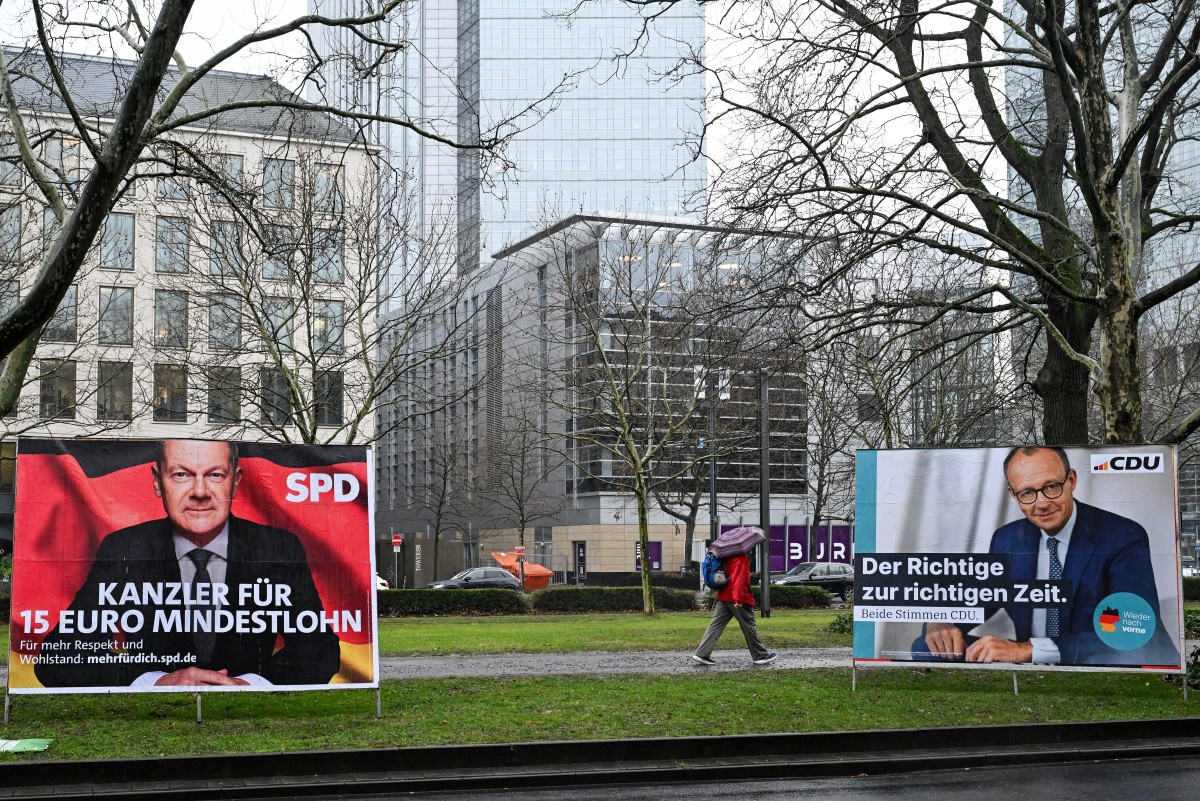
The problem is that border control is already working flat-out at the upper end of what European law allows – as the two potential coalition partners, SPD and Greens, well know: they’ve just extended checks introduced last year for six months. So if Merz is having a rational day, he’ll agree to some face-saving compromise about ‘further strengthening’ or ‘re-enforcing’ the borders. In the political horse-trading, he’ll probably water down plans to curb new applications for dual citizenship; in exchange, Robert Habeck will force his Greens to trade concessions on asylum for more climate action; and a battered SPD will do almost anything to stay in power.
Leading a three-party government constantly at the limits of political compromise, Chancellor Merz will quickly end up more like Olaf Scholz than he cares to think. You can expect Merz to be far shoutier than the SPD's Scholz, however, and for things to be even more dramatic than during the Ampel (traffic light coalition government) years. How is that possible? Well, Merz hasn’t even been sworn in as chancellor yet and he’s already bulldozed his way through Bundestag political culture…
READ ALSO: Which coalition government's are most likely after Germany's election?
Second most likely scenario: Merz as head of a minority government tolerated by SPD/Greens
Indeed, if there’s another mass stabbing during the (lengthy) negotiations or at a later point during the administration – or if Freddy is just feeling particularly emotional about immigration one day – he may well go all out: ‘My way or the Autobahn!’ While both the SPD and the Greens are aware that the political consensus is shifting towards junking the right to asylum (just listen to Deutschlandfunk’s headline interview yesterday morning), neither will make Merz’ life easy here and there’s every chance his patience will snap.
If it does, then the likeliest result is Merz heading a minority government on a confidence-and-supply agreement with the two parties. Although highly unstable, this solution would have advantages for all sides. In the months preceding a new ballot, Merz would be able to campaign on a platform of “I tried to get rid of asylum, but the bleedin'-heart lefties wouldn’t let me!” (I’m paraphrasing, but not by much…)
The SPD and the Greens, meanwhile, could claim to be the adults in the room, helping Merz get an austerity budget through Bundestag while washing their hands of it as they sigh: “If we hadn’t agreed to help, he’d have gone to the AfD…”
READ ALSO: What foreigners in Germany should know about the voting system
Least likely (but no longer impossible) scenario: Merz as head of a minority government tolerated by the AfD
After the outcry against the January votes, Merz categorically ruled out active cooperation with AfD. ‘Scout’s honour’, eh…? Perhaps he really does believe his own line; perhaps he’s already secretly planning to redraw it if needs be. In any case, while I don’t think Merz will cooperate with the AfD until every other option has been exhausted, given what happened last month, I now do think that he will cooperate with the AfD if every other option is exhausted.
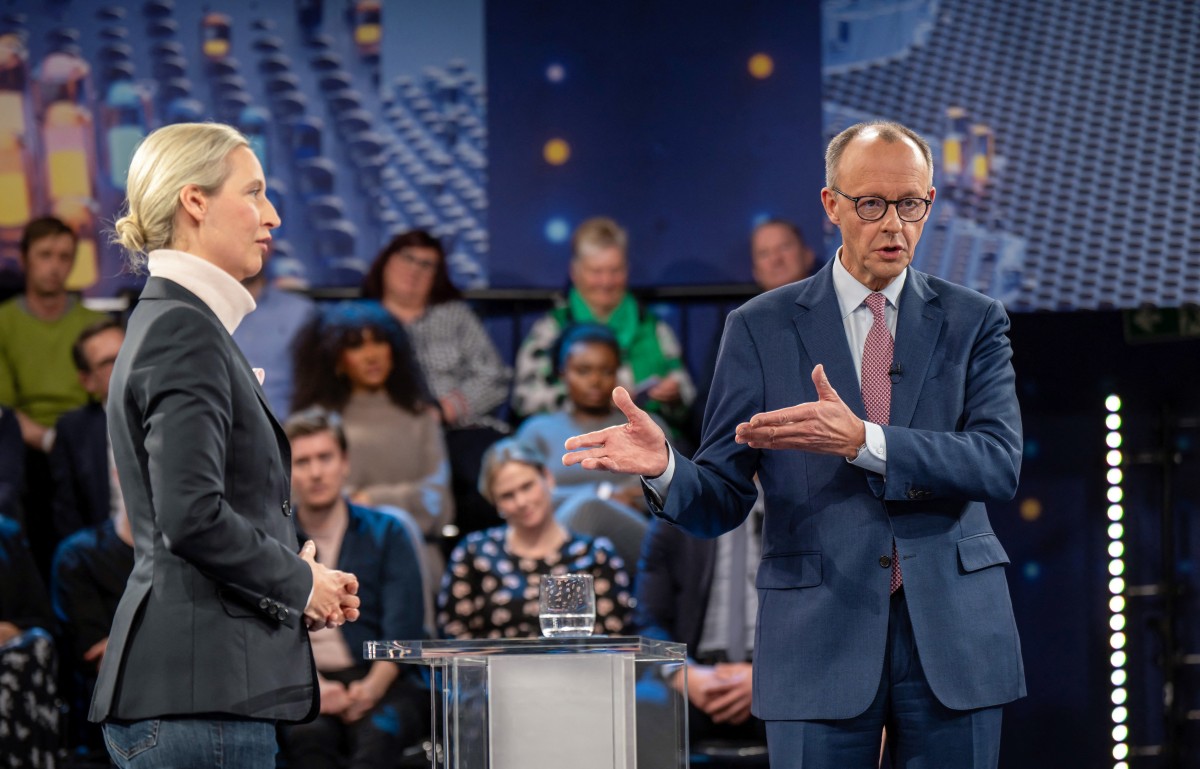
So if, firstly, Kenia coalition talks fail – or the coalition breaks down – and if, secondly, agreements with the SPD and the Greens prove unworkable, Friedrich Merz would head a minority administration tolerated by the AfD – at least until a new Bundestag is elected. If enough small parties don’t get past 5 percent, there will probably be a wafer-thin majority for this option from 23rd February onwards in any case – and Merz will certainly use the spectre of it to chasten the SPD and the Greens.
Indeed, this is why the first scenario is still by far the likeliest – at least for the next year or so. SPD and Greens now know that, if they don’t make him Chancellor, there is now a non-negligible chance that Friedrich Merz will go to the AfD. In the vein of Donald Trump, whose “From Day 1, I will…” patterns of speech he has recently adopted, Merz’ manoeuvring has served to display his ruthlessness to political opponents. The technical term for this is ‘madman theory’ – Let’s hope it is indeed a ploy, not genuine madness. Whatever happens, Merz in office will be a liability.
Comments (2)