

Just a few months back, the chancellor candidate for the conservative bloc and Christian Democrat (CDU) leader Friedrich Merz said his election drive wouldn't focus on foreigners.
At the party conference of the CDU's Bavarian sister party, the Christian Social Union (CSU), Merz said he "didn't really want to run a migration and immigration campaign".
But in recent weeks he seems to have changed his tune. With just a few weeks away until the February 23rd snap election, Merz has been pointing his finger at what he describes as the "problems" of the reform of naturalisation laws which allow dual citizenship in Germany.
And just before Christmas, we also learned about the heavy focus on migration and integration in the CDU's election programme.
The main messages are that foreigners need to make a bigger effort to adapt to so-called 'Leitkultur' (dominant culture), non-EU foreigners don't deserve to keep their original citizenship when they become German and foreigners shouldn't be allowed to naturalise after three years even if they show exceptional integration achievements.
READ ALSO: How the conservatives want to gut Germany's citizenship law
These statements are of particular interest to foreign residents in Germany because the CDU/CSU is riding high in polls ahead of the elections.
That suggests the party is in with a good chance of heading up the next coalition government. Of course that doesn't mean that all of their plans would pass in the Bundestag (they'd need support from other parties for that) but it does give us an idea of the direction Germany may go in, and the kind of debates we're likely to hear more about.
So just what is it that is so terrifying to some in Germany about people with a migration background who have lived, worked and contributed to society becoming German while keeping their original nationality?
'Dual loyalties'
Foreign nationals can apply to become German after five years of residence following the overhaul in 2024 by the previous 'traffic light' coalition led by Chancellor Olaf Scholz, of the Social Democrats. People who have exceptional integration achievements and C1 level German can apply after three years.
And the new law allows everyone - not just EU nationals and those with exceptions - to hold multiple nationalities. It also benefits Germans by allowing them to keep their nationality when gaining a citizenship abroad.
For many foreigners, keeping that connection to their origin country while integrating into their new home is hugely important. For example, it can ease travel and allows people to stay close to family, friends or even business connections.
READ ALSO: 'How I finally got German citizenship in Berlin after six years of waiting'
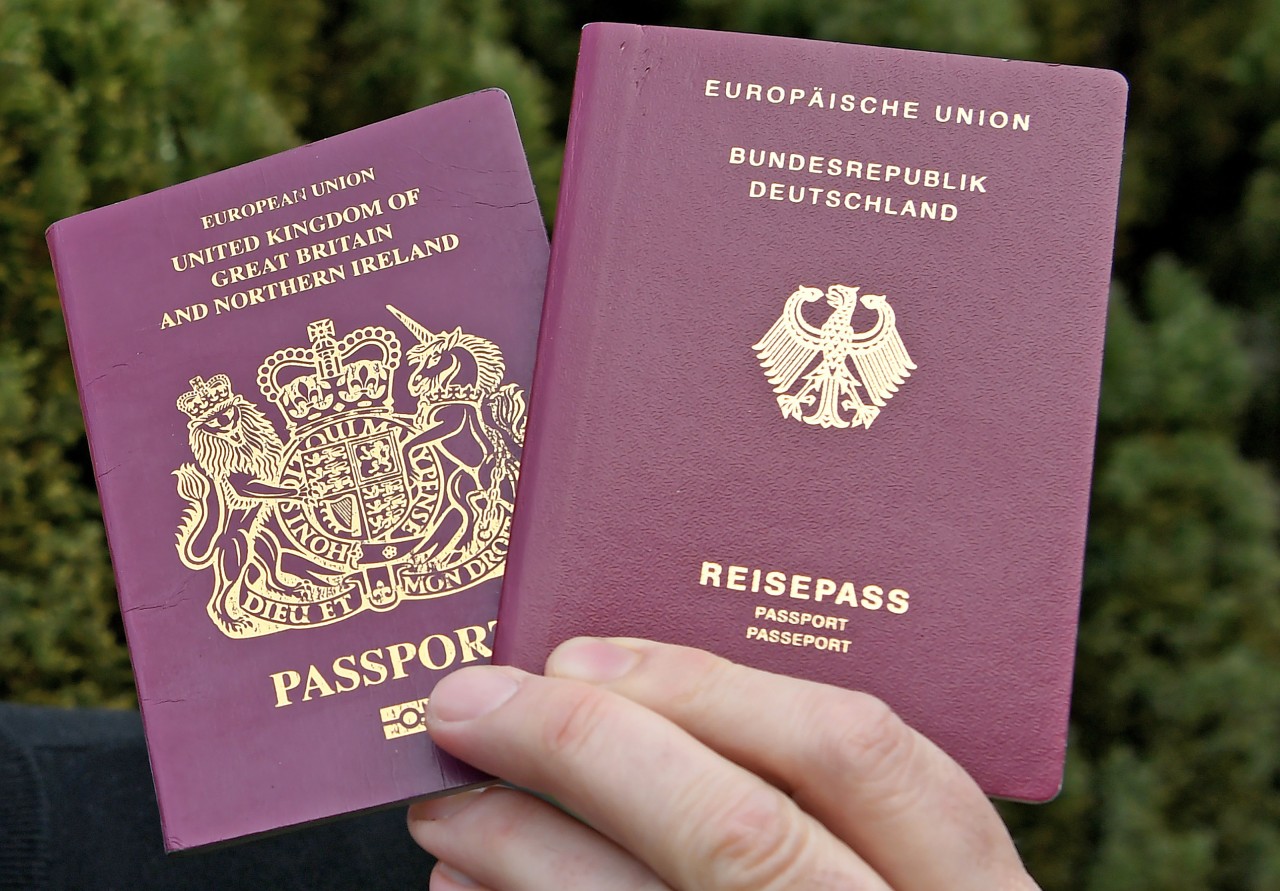
Allowing people to hold more than one nationality might not seem like a big deal to people from other countries where it is the norm, like the United States or UK (as well as many others). But this debate is firmly ingrained in Germany. There's a long history of strict limits on holding dual citizenship, and campaigning against it.
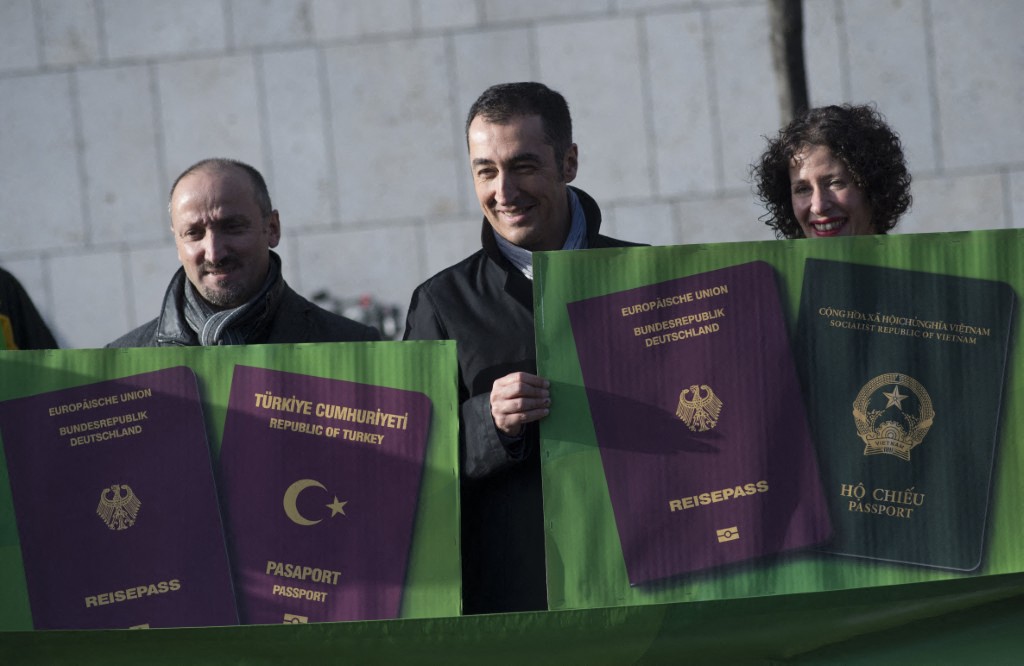
READ ALSO: Germany's decades-long debate to allow dual citizenship
That's why the law change in Germany - where almost 30 percent of the population have a migrant background - was such a historic moment.
It served as recognition to the the 'guest worker' generation - many of whom came from Turkey - who have lived in Germany for decades but never felt able to get citizenship under previous rules.
The previous Interior Ministry also argue it encourages more skilled workers from outside the EU to settle in Germany as the country is desperate to fill the labour market as the baby boomer generation retires.
But a claim that the conservatives repeatedly bring up in relation to dual citizenship is that it results in people having split loyalties - and not sharing Germany's 'core values'.
Zeynep Yanasmayan, head of the migration department at the German Centre for Integration and Migration Research, told The Local: "I think the CDU/CSU are still very old school in this case, you know - once a German, you have to have your loyalty to Germany."
Yanasmayan said the debate often simmers up when, for instance, there are Turkish elections. "Immediately the loyalty of Germans with Turkish origin is put into question," she said.
This idea of foreigners not being integrated or 'German' enough is an argument we hear a lot.
In a recent interview with Welt am Sonntag, CDU leader Merz said naturalisation should be "at the end of an integration process and not at the beginning, in the hope that naturalisation itself will only then make a greater contribution to integration".
He added: "The combination of fast-track naturalisation and dual citizenship decided on by the 'traffic light' (coalition) simply creates too many problems in Germany, which is why we need to change this very quickly."
But it's not just politicians who have this opinion.
For example, a commentary in the German newspaper FAZ saw writer Nikolas Busse back plans by Sweden to tighten citizenship laws, including increasing the residency requirement from five to eight years.
"There was a misunderstanding among the 'Ampel' (traffic light coalition) about what an immigration country is, if Germany wants to be one.
"Of course there must be the possibility of acquiring nationality, but the requirements for this must be high rather than low."
This rhetoric arguably plays into the idea we often hear from right-wing and far-right circles that German citizenship is being "given away freely" or placed on a "junk-yard sale".
But what they fail to mention is the many hurdles people need to cross before they can get citizenship in Germany. Along with five years of legal residence on the standard route, residents must show proof of German language skills, pass an integration test and they must prove they can support themselves financially and are contributing to social security, as well as provide other documents.
It's not something you can easily pick up at the Bürgeramt. It takes a lot of work - and money - to become German.
READ ALSO: What you need to apply for German citizenship
'Bringing problems into Germany'
We've recently been hearing another justification for getting rid of dual citizenship. Conservatives seem to be arguing that the new rules allow people to become German who the conservatives don't want to become German.
Merz in the Welt am Sonntag interview said dual citizenship was becoming the "norm" and that meant: "We are bringing additional problems into the country."
In the same interview, Merz called for the possibility of revoking German citizenship in cases of dual nationals found to have committed offences - something that experts slammed as unconstitutional.
READ ALSO: CDU leader - Dual citizenship creates too many problems in Germany
The recent calls to dismantle naturalisation laws came as Merz was talking about tougher migration laws following the fatal attack on a Christmas market in Magdeburg in December. Police arrested 50-year-old Taleb A, a doctor from Saudi Arabia who had lived in Germany since 2006, after a BMW was driven into the crowd.
Most mainstream parties - including the SPD - have been advocating for tighter rules on migration and asylum seekers in the wake of some horrific attacks in Germany in recent years involving migrants, among other reasons.
But taking aim at dual citizenship and migration at the same time highlights the conservatives' shift to the right and their increasing anti-immigration rhetoric.
Following the Merz interview, refugee aid organisation Pro Asyl accused the CDU/CSU of "radicalisation" in asylum policy and putting forward a populist election campaign.
"It is extremely worrying that the CDU/CSU parties are disregarding fundamental and human rights in many of their demands in order to woo voters from right-wing parties," Pro Asyl rights expert Wiebke Judith told the Funke Mediengruppe.
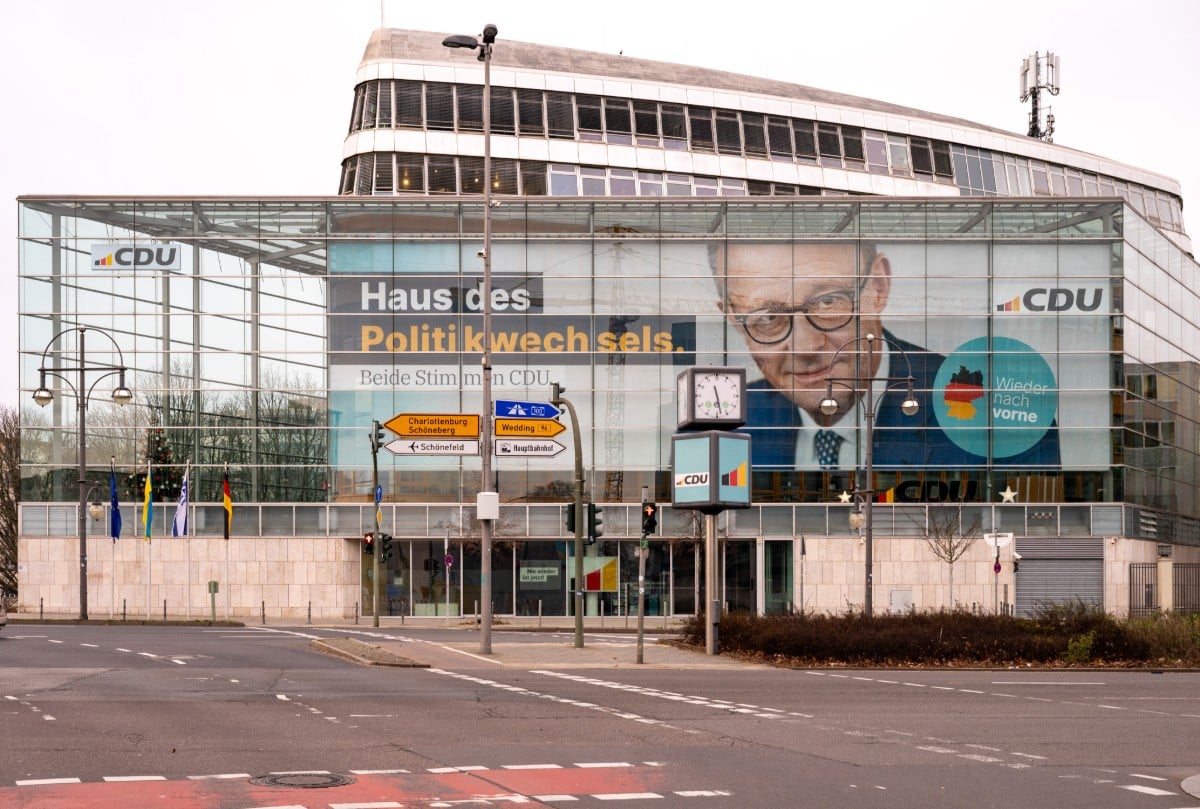
Meanwhile, the far right Alternative for Germany (AfD), has been toughening up their hardline stance on immigration and a regional branch of the party was under fire this week for posting offensive 'deportation ticket' flyers to voters, including those with a migrant background.
'More respect'
Interior Minister Nancy Faeser, of the SPD, this week called Merz out. She told the Rheinishe Post that his comments on dual citizenship "again leads to the feeling that there are first and second-class citizens".
Faeser added that immigrants' achievements "deserve more respect".
With Merz in with a high chance of becoming the next German chancellor and the constant immigrant bashing among some political parties, it does not seem likely that those with a foreign background will get that respect they deserve for their contributions.
Apart from making people feel unwelcome, it may mean fewer skilled workers opt to come to Germany, or those who are here could even leave. This, of course, would create a whole other set of problems for future German governments.
Comments