
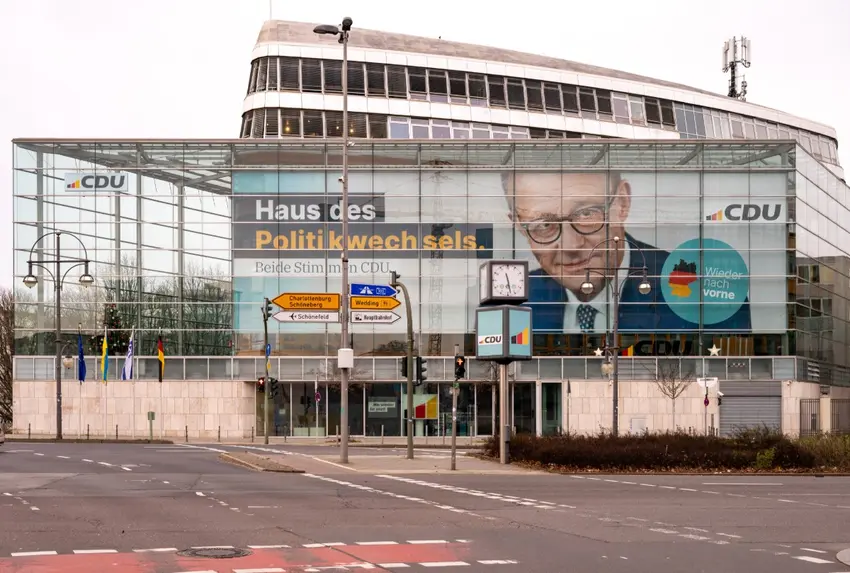
In an interview with Welt am Sonntag published on Sunday and reported on by Spiegel, Merz took aim at Germany's reformed naturalisation laws, which allow dual citizenship for all, and called for the possibility of revoking citizenship in the case of criminal offences by dual nationals.
Merz was discussing his calls for stricter migration rules after a fatal attack at the Magdeburg Christmas market on December 20th which saw six people killed and around 200 injured. Police arrested 50-year-old Taleb A, a German resident from Saudi Arabia, at the scene after a BMW was driven into the crowd.
Following the incident, Merz, who is chancellor candidate for the Christian Democrats and its Bavarian sister party, the Christian Social Union (CSU) said Germany "did not want such criminals". When asked about his plans to achieve this, he said there were "two options".
"Rejection in the case of attempted entry, and facilitated deportation in the case of criminal offences," he said.
"If we have refugees here who commit offences... then we must be able to take measures that lead to the end of their stay in Germany," added Merz. "Anyone who does not abide by the rules cannot stay."
Merz added that "in order to prevent attacks or further offences, foreign criminals must be deported after the second offence at the latest".
Dual citizenship brings 'additional problems to Germany'
When asked specifically about people with German citizenship who have committed crimes, Merz pointed to issues he said arise from the relaxed law on dual citizenship.
Foreign residents in Germany can apply to become German after five years - or three years in some cases - following the overhaul last year by the previous 'traffic light' coalition led by the Social Democrats.
The new law allows everyone naturalising as German to hold multiple nationalities, and it also benefits Germans by allowing them to keep their nationality when gaining a citizenship abroad.
Previously, only EU citizens naturalising as German could have dual citizenship unless there was an exception.
"Of the more than 200,000 applicants, around 80 percent want to keep their original citizenship," said Merz referring to naturalisation figures for 2024. "Dual citizenship will therefore become the norm in our citizenship law. We are bringing additional problems into the country."
Merz - and his conservative colleagues - have repeatedly called for Germany's citizenship reform to be rolled back.
The CDU/CSU is leading in opinion polls with around 31-33 percent ahead of the election on February 23rd.
READ ALSO: How the conservatives want to gut Germany's citizenship law
When asked what he would change, Merz said: "I would rather we didn't even have these accelerated naturalisation procedures".
He added that dual citizenship "should always remain an exception requiring justification and should not become the permanent rule".
"Naturalisation must also be at the end of an integration process and not at the beginning, in the hope that naturalisation itself will only then make a greater contribution to integration," said Merz.
"The combination of fast-track naturalisation and dual citizenship decided on by the 'traffic light' (coalition) simply creates too many problems in Germany, which is why we need to change this very quickly."
Merz also called for the possibility of revoking German citizenship in the case of people found to have committed offences, although he did not specify what kind of crimes.
The CDU leader said "it should be possible to revoke German citizenship if we recognise that we have made a mistake with people who have committed criminal offences".
'Point of no return'
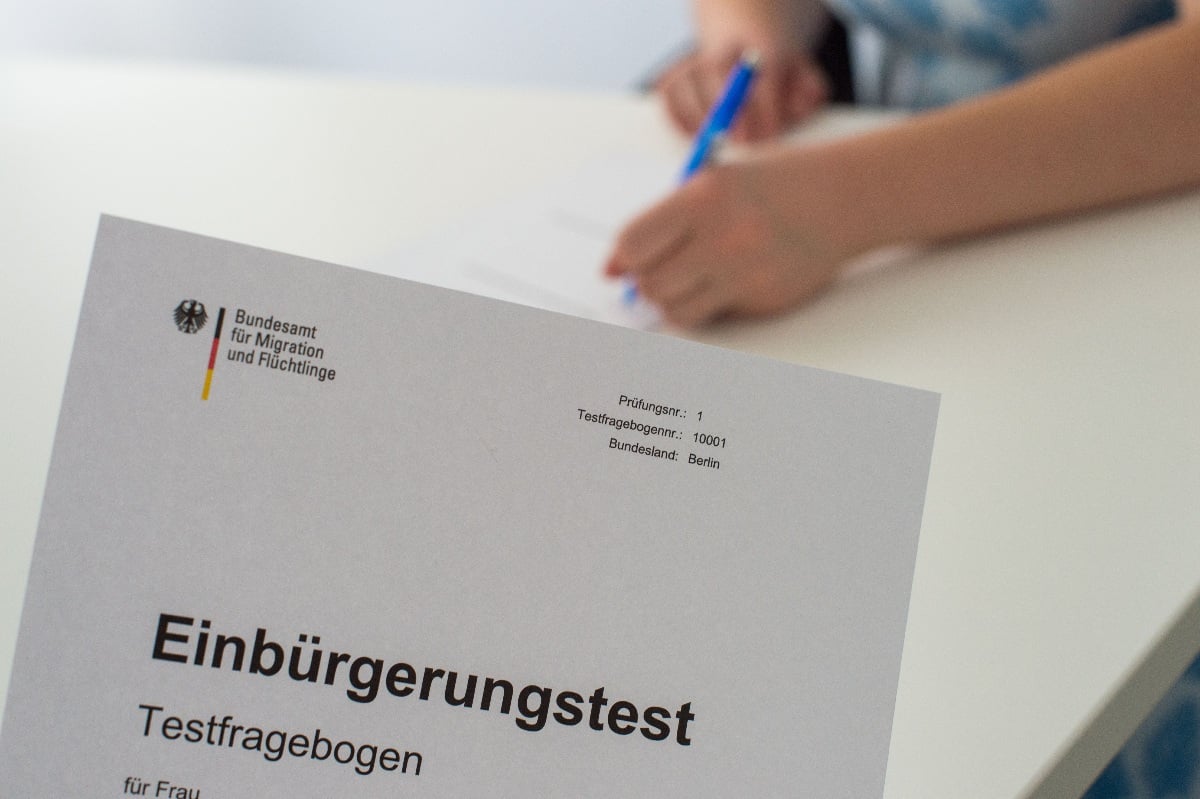
By calling for criminals to have their citizenship revoked, Merz is shaking up Germany's Basic Law or constitution, which stipulates in Article 16 that German citizenship generally cannot be revoked.
Stripping someone of their German passport is only possible for dual nationals in certain extreme situations.
In an article The Local published last year, Dr. Sonja Kock, press officer for the Interior Ministry (BMI), confirmed to The Local that "A 'revocation' of German citizenship by an official decision...because of a criminal conviction" is not permitted in basic law.
Kock added that the Nationality Act only recognises the loss of citizenship under very narrow requirements.
READ ALSO:
- When can your German citizenship revoked?
- Which criminal offences could get you barred from German citizenship?
Many people reacted to the interview with major concern. Gießen philosophy professor Elif Özmen, whose parents are from Turkey said on social media platform Bluesky it was the "point of no return".
She added: "I will never forget this day and this news for the rest of my life. Because today I realised that I and my peers will never be offered a safe home in the country where I was born and raised."
Point of no return. Diesen Tag und diese Nachricht werde ich den Rest meines Lebens nicht vergessen. Denn heute habe ich eingesehen, dass man mir und meinesgleichen in meinem Geburts- und Heimatland niemals eine sichere Heimat bieten wird. search.app/kscX74bMF3Qj...
— Elif Oezmen (@elifoezmen.bsky.social) 5 January 2025 at 12:33
[image or embed]
'Boosts far-right message'
In the interview, Merz also warned against voting for the far-right Alternative for Germany (AfD) with an interesting justification. He said: "Every vote for the AfD is basically a vote for more influence for the left-wing parties."
Anyone who wants a "radical and comprehensive policy change" in Germany should vote for the CDU/CSU, he argued.
However, the idea of making it easier to strip German citizenship from those with a migration background has been repeatedly floated in AfD circles.
An investigation by German news outlet Correctiv published last year detailed AfD members and other individuals discussing 'remigration' - which would involve the mass deportation of immigrants and "non-assimilated citizens" from Germany - in the event of the party coming to power.
Although the AfD distanced itself from the plan, the report sparked outrage across Germany.
READ ALSO: How worried should Germany be about the far-right after mass deportation scandal?
Some pointed out that the comments from Merz fuelled the far-right. On X, Nic Houghton said the CDU "boosts" the AfD's message.
The discourse in Germany has changed. The Overton Window has shifted dramatically, driven in part by the likes of Friedrich Merz, who's strategy as CDU leader has been to promote AfD arguments.
— Nic Houghton (@40PercentGerman) January 6, 2025
The hope of taking votes from the far-right is folly, this just boosts their message. pic.twitter.com/ElK29Gentb
Comments