

Germany's residency requirement for naturalisation is actually pretty straight forward. Nonetheless some common misconceptions persist.
So when exactly does the clock start ticking toward your meeting Germany's residency requirement for naturalisation? Here's what you should know.
How long do you need to have lived in Germany to qualify for citizenship?
The residency requirement that applies to you depends on the path toward German naturalisation that you qualify for. If you are naturalising through marriage to a German citizen, or claiming citizenship through descent, then you won't need to live in the country for as long as those who are applying via residency.
According to Germany's current naturalisation law, to qualify for citizenship by residency foreign nationals need to have legally lived in the country for at least five years.
This legal residency requirement was reduced from eight years to five years when Germany's Naturalisation Act was reformed in June 2024.
If you are married to a German, however, and are applying to naturalise through marriage, the residency requirement is reduced to three years.
Crucially, you must also have been married for at least two years. So the quickest possible timeline here would apply to someone who marries a German national within their first year of living in the country, or who was already married to a German and then moved to the country for three years.
If you are claiming citizenship through descent, you generally bypass the residency rules altogether, with many people in this position actively applying for German citizenship from abroad before making the move to Germany. This can, however, be a hard and lengthy process to navigate.
READ ALSO: 'Difficult and opaque' - Applying for German citizenship via ancestry often takes years
When can you start counting from?
For those aiming to gain a German passport based on residency, your residency period effectively begins from the moment you start living in Germany on a valid residence permit.
In an interview with The Local, immigration lawyer and founder of Migrando, Fabian Graske, confirmed that residency toward the citizenship requirement begins from the time a person arrives in Germany.
Asked about the misconception that time on a student visa, or other temporary stay permits, does not count in full toward the residency requirement, Graske said that whereas the rules around residency and other requirements are more complicated for permanent residence, when it comes to citizenship, it's simple: you must have lived for at least five years in the country.
As long as you have maintained the legal right to reside in Germany throughout this time, you can switch from one type or residence permit to another without issue.
For example, if you lived in Germany first on a student visa for two years, and later on a resident permit for employment, or on an EU Blue Card, for three years, you would be eligible to apply provided you met the other requirements for naturalisation.
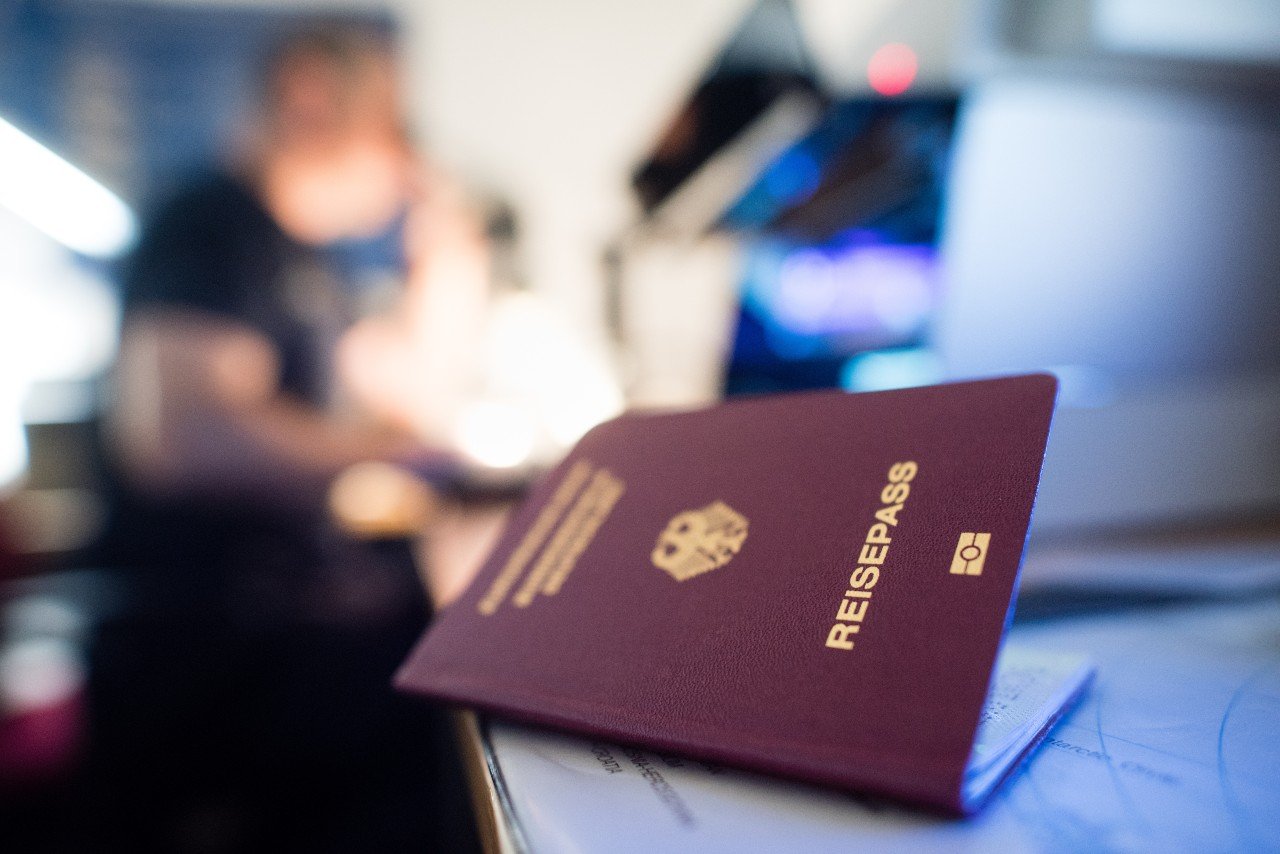
So, time spent in Germany on a student residence permit fully counts toward your five years of residency. But it's worth noting that the residency permit you hold at the time you apply for German citizenship does matter.
You cannot naturalise if you currently hold a student residence permit (Section 16b), for example. If you are a student, you must first finish your studies and transition to a qualifying permit before your citizenship application can be approved.
At the time of naturalisation, you must hold one of the following: A residence permit for permanent residence, an EU Blue Card, a residence permit under the Switzerland–EU agreement, or a temporary residence permit which can eventually lead to permanent residence, such as a working residence permit (like an 18a or 18b).
What other requirements should you be aware of?
Of course, whether you are applying through standard residency or marriage, meeting the time requirement is only one part of the application.
In brief, you must also:
- Prove you can support yourself financially
- Demonstrate at least a B1 level of German language proficiency
- Pass the 33-question German citizenship test
- Have a record clear of serious criminal convictions
- Formally commit to the free democratic basic order of Germany's Basic Law
READ ALSO:
- CHECKLIST - What do I need to apply for German citizenship?
- EXPLAINED - The different routes to obtaining a German passport
Note: A previous rule that allowed "well-integrated" individuals with advanced German language skills to fast-track their naturalisation after just three years was axed by the government in 2025.
Comments