
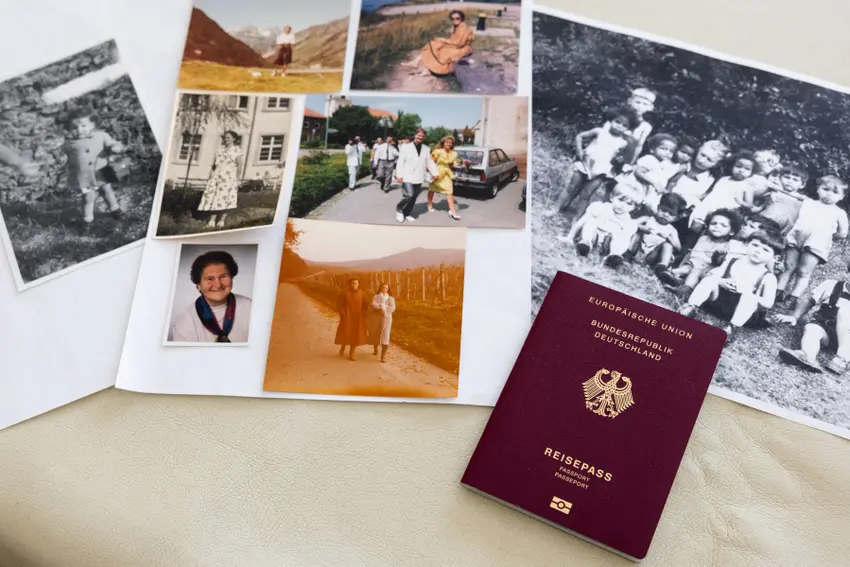
There are three ways that foreign nationals can qualify for German citizenship; through residency, through marriage or through ancestry.
The ancestry route applies to those with German heritage, who may be able to ‘reclaim’ their German citizenship in some cases. The rules around this are a bit complex but in general the idea is that someone with a German parent, or whose parents would have been German had citizenship not been stripped from an ancestor under specific circumstances, should be able to reclaim their citizenship rights.
Many of the people applying for German citizenship through ancestry reside in other countries, and hope to regain their citizenship so that they can move to Germany (or at least have the option of moving to Germany) in the future.
In these cases, applicants don’t contact Germany's immigration offices (Ausländerbehörde), but instead submit their applications to the Federal Office of Administration (BVA).
As readers of The Local will be aware, foreign residents in Germany applying for citizenship through residency often face incredibly long wait times, with immigration authorities reporting processing times in the range of six months to several years.
Unfortunately for those applying via ancestry, the situation seems comparable, with applicants facing extremely long wait times, and in many cases having little to no clarity on how their application is moving forward as the process drags on.
READ ALSO: How many German citizenship applications are rejected?
Bryan Peabody, a 49 year old software engineer who lives in Louisville, Kentucky, is among those currently waiting to hear back from the BVA about a pending application.
“The process has been difficult and very opaque,” Bryan told The Local.
He explained that the BVA had signed for the application package he had sent in July of last year, meaning that he’s been waiting nine months for a reply at the time of writing. Since then he had not received any communication about the status of his application, nor a file number (Aktenzeichen), he said.
“I contacted the BVA once to ask for a status update and whether they could share the file number,” Bryan explained. “I received a standard response explaining that cases are processed in the order received and asking applicants not to send repeated inquiries.”
Similar complaints are commonly seen online, such as in posts to the ‘German Citizenship’ sub-Reddit. Comments on posts discussing processing times for descent-based applications suggest that around three years is common in many cases.
Asked how long processing times for descent-based applications tend to be, a BVA spokesperson told The Local in an email that “the duration of the proceedings depends on the specific case and cannot be estimated in general terms.”
The spokesperson said that, “Applications are generally processed in the order in which they are received.”
But they also added that key factors determining processing times for an application include: “the completeness of the submitted documents and information upon receipt of the application, the necessary cooperation of applicants from abroad, feedback from other domestic authorities due to necessary investigative measures, and the complexity of the review in each individual case.”
READ ALSO: 'Indispensable' - Experts explain how to speed up your German citizenship application
Bryan said that he had consulted with a lawyer in New York who specialises in citizenship law and is licensed in both the US and Germany. Unfortunately, the lawyer had suggested that usually BVA processing times can only be accelerated for exceptional circumstances like advanced age or serious illness.
Bryan said that he had submitted a request to have his case expedited due to his family situation. That request was denied by the BVA.
“My wife is a naturalised US citizen from Latin America and we currently feel unsafe given recent events here,” Bryan said.
As to why he’d like to live in Germany: “My family’s roots are there. I feel a deep connection to that.”
An ancestor on Bryan’s mother’s side emigrated from Sapelloh – a region in Lower Saxony west of Hanover.
He told The Local that he spent years researching family history to determine whether his family’s citizenship had ever been ‘lost’. He says that baptism records in the church books that he found with Archion.de and documentation from the Landesarchiv helped to back up his case.
EXPLAINED: Who is entitled to German citizenship by descent and how to apply for it
Missing file numbers
In an initial response a BVA spokesperson told The Local that “upon receipt of the application, a confirmation of receipt will be sent by mail within one week, and the file number will be provided.”
Bryan suggested that does not align with his own experience, or the experiences he's seen shared online by people dealing with similar cases.
“On the forums, the first contact normally mentioned is when the applicant gets their Aktenzeichen, which has been running six to nine months recently,” Bryan said. “Some people report they never see it until a decision letter is sent.”
Asked what applicants should do if they do not receive their file number, a BVA spokesperson said that inquiries regarding a file number should be sent through the contact form on the BVA website: “This transmission method is generally secure and more reliable than a simple email to the central mailbox.”
They added that this can only be provided after an application has been received and processed.
Are you currently facing delays or other challenges in the process of applying for German citizenship by descent? If so, we'd love to hear from you by email at news@thelocal.de, or in a comment below.
Comments (5)