
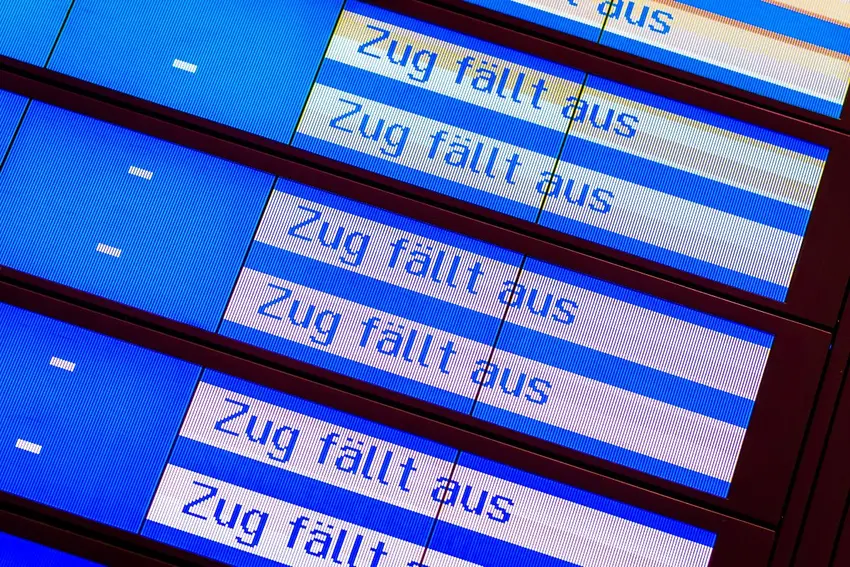
This month started off with a nightmare for commuters on Monday when a nationwide public transport warning strike coincided with continued winter weather that left roads frozen over in parts of Germany -- effectively preventing at least some employees from being able to catch a train to work, or to safely and easily drive there.
Public transport strikes are known to disrupt commutes around Germany. They typically happen at least a few times each year in the early months.
If you're new to working in Germany, or haven't previously faced serious disruptions on your way to work, you may be wondering what exactly German labour law says about strike-related tardiness.
What exactly is expected of employees, and can your employer take disciplinary action against you?
Here's what everyone working and commuting in Germany should know.
Must I go to work?
According to German labour law, employees bear the so-called "commuting risk" (Wegerisiko).
This means that workers are responsible for arriving at work on time regardless of virtually any foreseeable disruption. This includes public transport strikes as well as most types of severe weather, like snow and icy roads.
As a spokesperson for the Association of German Employment Lawyers told dpa: Even if buses and trains are not running, employees simply must not be late.
What exactly are my responsibilities?
In the event of a public transport strike, employees must do everything reasonable to arrive at work on time.
The following actions would all be considered reasonable efforts:
- Waking up earlier than usual / beginning your commute earlier than usual
- Using alternative means of transport to get to work
- Carpooling
- Planning ahead for high traffic
- Keeping up to date with the latest strike disruptions and reacting accordingly
Note that reasonable alternative transport could involve additional costs, such as taxi fare, for example. This cost is also the employee's responsibility.
Can my boss withhold my pay?
You are not entitled to compensation for any working time that is missed due to strike-related travel disruptions. If you fail to show up to work, or arrive late, your employer can doc your pay.
If you have no alternative to public transport for your commute, and don't want to lose a day of pay it may be that you have to take a vacation day or use flexitime to work from home if that is an option.
READ ALSO: Why do people in Germany take so many sick days?
In some specific cases, reasonable exceptions could be expected to be made on the employer's side. For example, people with low incomes, who have no feasible option beyond a long and expensive taxi ride might reasonably be granted an exception.
This should, however, be agreed between the employee and employer in advance.
It may also be possible to arrange some time off without pay or to reduce overtime, but these options also depend on employer approval.
If you foresee yourself being late, or otherwise think it would be reasonable to work from home or make other arrangements, you should of course contact your employer as far in advance as possible.
Can I be fired?
In addition to having your pay cut for any missed time, if you are late your boss can also take further disciplinary action.
You could receive a warning, even for a first time offence, if you are at fault for being late -- for example because you didn't take reasonable action to arrive on time or failed to inform your boss about your delay in advance.
You cannot be dismissed for being late one time.
However, you could be dismissed if you are late after you have already been warned. Typically this would only happen after an employee has been late multiple times.
READ ALSO: How long can I stay in Germany if I lose my job?
What about spontaneous strikes?
Warning strikes are typically announced at least a day or two in advance, such as Monday's transport strikes which Verdi had originally announced on Friday.
In these cases the above rules are strictly applied, because employees can be expected to have had time to prepare.
But occasionally there are also unannounced, or spontaneous, strikes. In these cases the same general rules apply, but employees can also expect a bit more leeway.
Since they did not have adequate time to prepare, an employee who could not reasonably find their to work in this case is less likely to face disciplinary action from their employer.
What are the rules around getting my kids to school during strikes?
Even when the school bus is cancelled, parents cannot refer to this as an excuse for their child not to showing up at school.
"The strike in local transport does not change anything about compulsory schooling," Wilhelm Achelpöhler, a lawyer in administrative law told dpa.
So during strikes, working parents must plan ahead to ensure that both they and their kids can still make it to school and work on time.
READ ALSO: ‘Schulpflicht’ - What parents need to know about kids missing school in Germany
Comments