
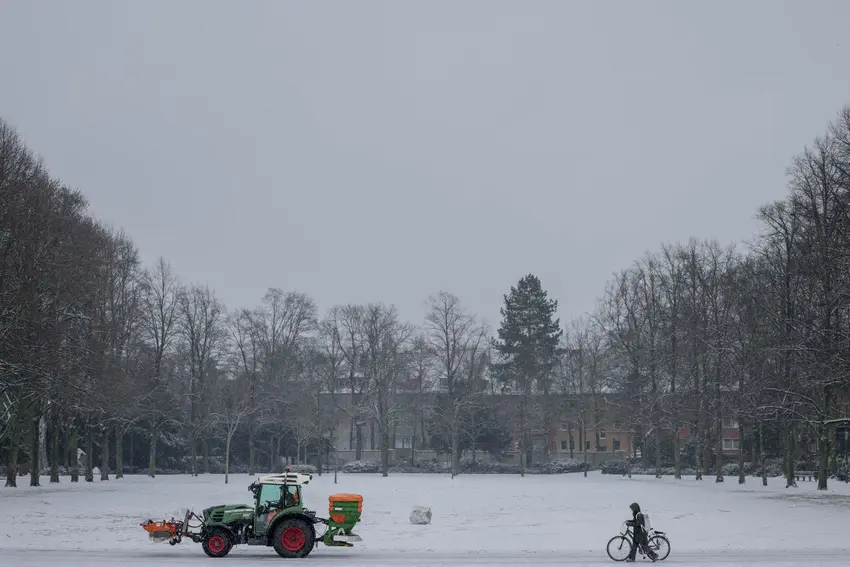
The impact of a prolonged spell of wintry weather in Germany is being felt most acutely in the north where thick slabs of ice have accumulated on the streets and sidewalks.
In Berlin, hospitals and clinics and working nonstop to treat a surge of patients with injuries from falling on icy pavements. Surgeons have been working through the night to cope with the influx, with many patients suffering broken bones, concussions and even near-paralysis from falls according to reporting in the Berliner Zeitung.
Meanwhile, on Thursday night alone, police in Hanover and the surrounding region recorded 37 traffic accidents due to slippery roads, though thankfully only one person was slightly injured.
What is expected at the weekend?
The weekend will bring continued risks of black ice and freezing rain, according to the German Weather Service (DWD), particularly in the western low mountain ranges and a stetch of land from northern Hesse to East Westphalia and Emsland.
The northeast is expected to remain frosty, with temperatures ranging from -3C to 1C, while the west and southwest can expect milder conditions, with temperatures up to 7C.
READ ALSO: 'Eat for the season' - The verdict on how to survive the German winter
Fog is expected in the south and centre, with visibility predicted to drop below 150 metres in places. Gusty winds could affect coastal areas, and the risk of snow breakage remains in the low mountain and Alpine regions. Snow breakage (Schneebruch) refers to the phenomenon where heavy accumulations of snow cause trees, branches or other structures such as power lines to break or collapse under the weight.
Tragically, a cyclist in Bamberg recently died after being hit by a tree branch that broke under the weight of snow.
When are temperatures expected to rise?
Current frigid temperatures across the country are the result of a battle between cold continental air from the north and milder maritime air from the south and west. So far this has left a mass of cold air hovering over Germany.
The polar vortex plays a decisive role here: if it weakens, milder air could sweep in, bringing a thaw.
Current forecasts suggest a mild spell could occur between February 3rd and 7th, with temperatures rising to between 3C and 6C in many areas, and higher in the southwest.
But winter conditions may be expected to return after this brief respite, so don't pack away your ice spikes and snow shovels just yet.
READ ALSO: Lüften - How often do you have to air out your German flat in winters?
How can people stay safe in the meantime?
The authorities are urging everyone in affected regions to take extra care. Wear sturdy winter shoes, ideally with spikes, and avoid cycling on icy roads.
A spokesperson for Berlin’s Unfallkrankenhaus recommends the “penguin walk” – moving with knees slightly bent and body leaning forward – as one way to help prevent falls.
Drivers are advised keep a safe distance, check road conditions before travelling, and ensure their vehicles are fitted with winter tyres. If you must travel, allow extra time and be prepared for delays.
READ ALSO: What drivers in Germany need to know about staying safe in snowy conditions
Comments