

Foreign parents may struggle to get their heads around the concept of Schulpflicht – an obligation to ensure their children turn up at school every day. While the law is well-intentioned, the way it's enforced can feel excessively heavy-handed to parents who are used to having a greater say in how they raise their children.
The degree of enforcement can vary from school to school, but the rules around Schulpflicht apply to all schools in Germany, whether they're public, private or international.
Legitimate reasons for missing school
In common with schools the world over, German schools recognise a number of legitimate reasons for missing school.
The first and most straightforward of these is illness. According to government health information, when a child is unwell parents not only have the right, but also the responsibility, to keep their child at home to safeguard their own health and that of other pupils.
READ ALSO: What foreign parents really think of schools in Germany
Some other commonly accepted reasons for absence include family bereavement, weddings, religious obligations, or a significant personal event - like participation in top-level sports or music competitions.
In all these cases, documentation and a formal request are almost always required. To have the best chance at gaining approval, parents are advised to submit a formal request to the school as early as possible, stating both the reason for and duration of the planned absence.
Foreign families with relatives abroad may sometimes be given extra leeway to travel during term time (to visit aging grandparents, for example), but the final decision usually rests with the class teacher.
Informing the school
If a child is unwell and unable to attend school, parents must inform the school as soon as possible.
Specific procedures vary from school to school, but generally parents are expected to contact the school before the start of the school day, often via telephone, email, or an online portal.
READ ALSO: The schoolyard terms you need to understand your German-speaking kids
Upon the child’s return to class, a simple written excuse from the parent – often called an Entschuldigung – may be required for short absences.
When do you need a doctor’s note?
Again, guidelines around doctor's notes and documentation differ from state to state, or even school to school, but a few common rules apply.
For short-term illness (one or two days), a parental note is usually enough. However, documentation may be required if the absence coincides with an exam or is marked as suspicious by the school.
A medical certificate (ärztliches Attest) becomes necessary if the absence is longer – typically after three or more consecutive days or if the child is frequently absent for medical reasons.
Schools are legally allowed to demand a doctor’s note, and on occasion problems can arise because doctors are also legally allowed to refuse to issue one. In some parts of Germany, this has resulted in a struggle between schools determined to crack down on truancy, and doctors sick of wasting their time writing notes and seeing their waiting rooms filled with children who would be much better off at home under a blanket.
READ ALSO: How to find mental health resources in Germany for children
When a child is repeatedly sick, or the timing seems suspicious - just before the holidays, for example - some schools could ask to see a doctor’s note for a shorter absence.
Taking kids out of school for holidays
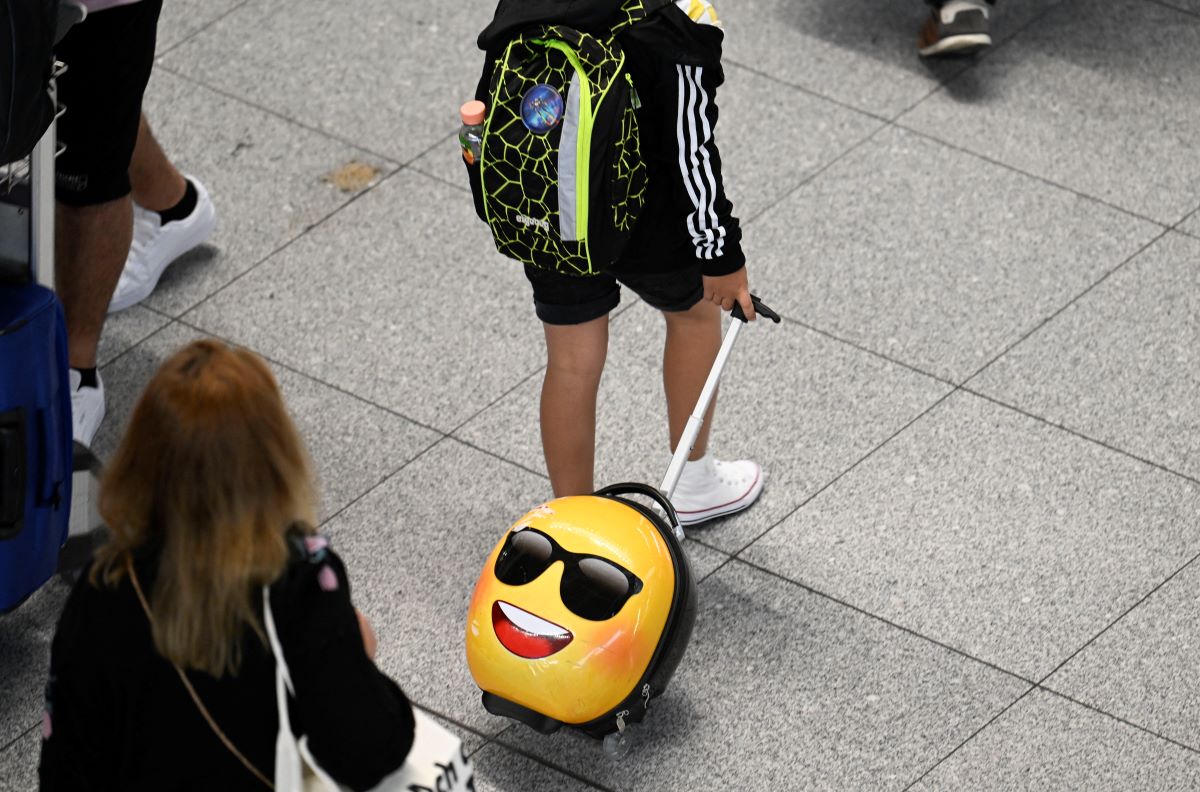
One key aspect that foreigners in Germany may not anticipate is the outright ban on extending school holidays for family travel.
Taking children out of school for non-essential reasons – especially to prolong vacations – is explicitly forbidden.
It's worth noting that schools in Germany tend to pay special attention to absences that occur immediately before or after holiday periods.
What happens if you take your kid out of school without permission?
Parents who violate Germany’s strict attendance rules can face significant consequences.
When parents take their children out of school despite having been denied permission to do so, schools can report the absence to the authorities. The authorities, in turn, are entitled to levy fines.
The maximum fines for violating compulsory school attendance vary from state to state. Legal guardians in Baden-Württemberg, Bavaria, Bremen, Hamburg, Hesse, Lower Saxony, North Rhine-Westphalia, Saxony-Anhalt, Schleswig-Holstein, and Saarland can face fines up to €1,000.
READ ALSO: What having kids at a German kindergarten teaches you about the local culture
In Saxony, the limit rises to €1,250, while in Rhineland-Palatinate and Thuringia, parents may be fined up to €1,500. The highest fines – up to €2,500 – are imposed in Berlin, Brandenburg, and Mecklenburg-Western Pomerania.
For parents who repeatedly or persistently take their children out of school, the penalties can escalate significantly. In some states like Hamburg, Hesse, Mecklenburg-Western Pomerania, and Saarland, this may include fines calculated by daily rates up to 180 days or even prison sentences of up to six months.
The vast majority of “unexcused absences” will not result in fines being levied on parents, of course. A far more likely outcome is simply having a few days marked as “unexcused absences” on your child’s next school report.
End of semester reports in Germany invariably record the number of days the child has missed (versäumte Tage) and the number of these days which were “unexcused” (davon unentschuldigt).
Bear in mind that this doesn’t actually mean your child didn’t have a legitimate reason for missing school. In many cases it simply means that you failed to follow the proper protocol for reporting it, or that the school didn’t think your reason was good enough.
READ ALSO: Why Germany’s most populous state is bringing back nine years of school
A single absence of this type (or even two or three) isn’t generally a cause for alarm.
But persistent violations or deliberate flouting of the rules can escalate rapidly in Germany. Repeated offenses can prompt further administrative steps, increased scrutiny, larger fines, and even involvement from the youth welfare authorities in extreme cases.
If you have been affected by any of the issues raised above, or fallen foul of Germany's strict rules around "Schulpflict", we'd love to hear from you. Just leave a comment below or contact us at news@thelocal.de
Comments