
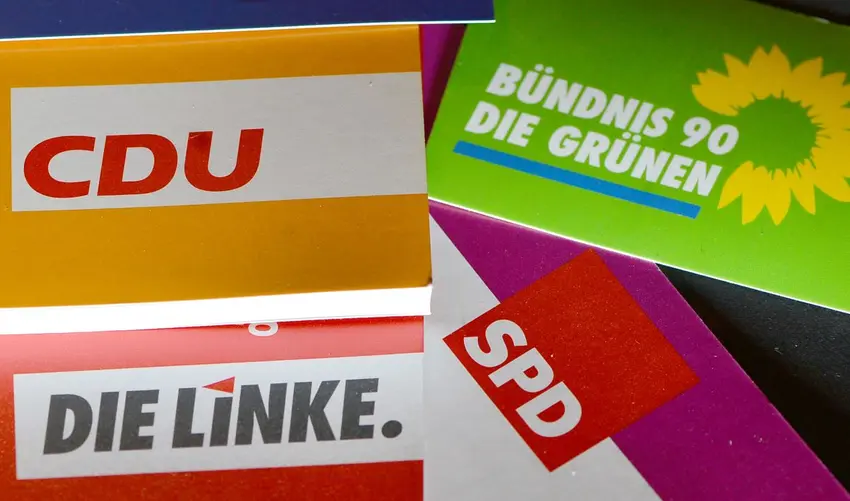
Every January, German political parties kick off the year with a time-honoured tradition: gathering for closed-door meetings to thrash out their main priorities for the months ahead.
It’s a ritual that’s meant to set the tone for the months to come and offer the electorate some clarity.
This January heavy snow and winter storms saw many of these party meetings cancelled, shortened or moved online. Still, each party in the Bundestag – from the three governing coalition partners to the main opposition parties – managed to put out their own agendas for 2026.
Here’s an overview of what Germany’s main political players are pushing for this year.
What do the parties in Germany’s governing coalition want?
The current federal governing coalition is led by the Christian Democratic Union (CDU) and its Bavarian sister party, the Christian Social Union (CSU), alongside the Social Democratic Party (SPD).
While these three parties lead Germany’s national government currently, not all of the policies they promote will become law -- a process which invariably involves negotiations among the coalition parties before a vote in the Bundestag and, finally, ratification by Germany’s second chamber, the Bundesrat.
The Christian Democrats (CDU): Cutting state bureaucracy
The largest party in the Bundestag, the conservative CDU had planned to launch the year with a grand strategy retreat in Mainz, but Storm Elli forced a last-minute cancellation.
The party leadership regrouped in Berlin, where the main talking point became the “Mainz Declaration” – a policy paper proposing a “silence means consent” rule for administrative approvals.
READ ALSO: Elections and reforms - What can be expected in German politics in 2026?
In essence, if authorities don’t object to an application (for a building permit, for example) within three months, it would be automatically approved.
The CDU also plans to ease the tax burden on employees by reducing income tax for people on low and medium incomes and making overtime bonuses tax-free by the middle of the legislative period (2027).
The Social Democrats (SPD): Inheritance tax reform
The centre-left SPD, meanwhile, began the year focusing on “cohesion” at a closed-door parliamentary group meeting, much of which took place online due to the weather.
The main headline-grabber? A renewed push for inheritance tax reform – a move the party's coalition partners had publicly ruled out before the SPD even had time to present the policy.
Essentially, the Social Democrats would like to abolish the system whereby gifts are exempt from inheritance tax after a certain number of years, replacing this with a higher, single allowance for all individuals before tax is levied on inheritances. In addition, the party wants to make major changes to the way taxes are calculated when people inherit businesses.
The SPD is also advocating for the right of residence for migrants with employment contracts.
READ ALSO: Will Germany's inheritance tax law see a serious shake-up this year?
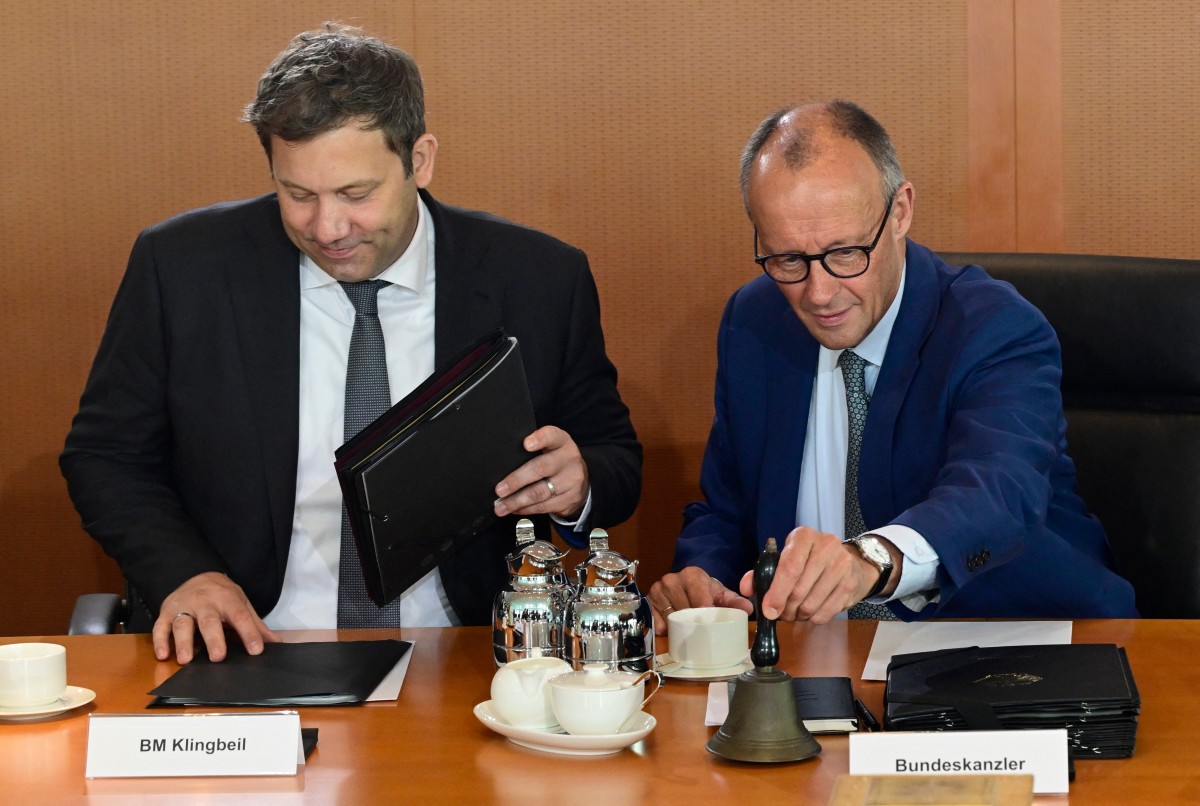
The Christian Social Union (CSU): More deportations and tighter immigration rules
Bavaria’s Christian Social Union (CSU) – the sister party of the CDU – kicked off the year with a two-day meeting which focussed primarily on immigration.
The party’s planned "deportation offensive" includes proposals for more deportation flights to Syria and Afghanistan, nationwide departure centres and even a deportation terminal at Munich Airport.
Other measures include revoking protection status for refugees who visit their country of origin, a tougher stance towards Ukrainian men deemed fit for military service and requiring asylum seekers with assets to contribute to the cost of their stay.
READ ALSO: Planned immigration crackdown by Bavaria's CSU slammed as 'propaganda'
What do Germany’s opposition parties want?
Germany’s three main opposition parties – the Alternative for Germany (AfD), the Greens, and The Left (Die Linke) – together hold a significant share of seats in the Bundestag (48 percent of the total).
The biggest single opposition party is the far-right AfD with 152 seats (up from 83 seats before the last election). Then comes the Green Party with 85 seats (down from 118) and the Left Party with 64 (up from 39).
The Alternative for Germany (AfD): Deportations and defunding
Plans to hold a national strategy meeting, originally scheduled for February, have been postponed because the AfD has so far been unable to find a venue willing to host the event.
But with state elections looming in 2026, the party also appears to be more focused on local politics.
In Saxony-Anhalt, the AfD’s platform is unapologetically nationalist. The party's state chapter there has outlined plans for its own “deportation offensive” as the first order of business should they form a government.
Other plans include the “remigration of millions,” defunding democracy initiatives such as “School Without Racism” and abolishing public broadcasting in its current form.
READ ALSO: Alternative for Germany members travel to the US on taxpayer money
The Green Party: Foreign policy and affordability
For the last few months, following disastrous election results in 2025, the Green Party has placed affordable living at the top of its agenda and the parliamentary group’s latest decisions reflect this shift.
The party is pushing for the conversion of empty office buildings into housing, a reduction in the price of the Deutschlandticket and measures to combat rising rents.
The Greens are also determined to be more visible on the foreign policy stage by adopting a clear anti-Trump stance and demanding that Chancellor Friedrich Merz take a tougher line with the US.
The Left Party: Housing and cost of living
The Left Party convened a shortened closed-door meeting (thanks again to the snow), emerging with a clear focus on the cost of living.
The party is pushing for a nationwide rent cap, tighter controls on furnished and temporary rentals and the abolition of index-linked rents that rise with inflation.
The Left Party also wants to see civil servants and politicians pay into the statutory health insurance system, and is calling for the creation of an “anti-rip-off office” to monitor and control prices for everyday goods and energy.
READ ALSO: Germany’s Left Party launches nationwide campaign against rent gouging
Comments