
Under the leadership of Bavarian Prime Minister Markus Söder, Germany’s conservative Christian Social Union (CSU) party has a tendency for leading with provocative statements.
But as an influential member of the current federal government coalition – along with their Germany-wide counterpart the Christian Democrats (CDU) and the centre-left Social Democrat Party (SPD) – their words and actions carry weight.
The CSU recently adopted its resolution paper for the year, which outlines ambitious goals for the coming year, and calls for a “major deportation offensive” including more deportation flights and tightened immigration policies.
According to the party's resolution paper, its suggested policies would help "make our country function better...ensure justice and...protect our democracy from those who want to destroy it".
But not everyone is convinced.
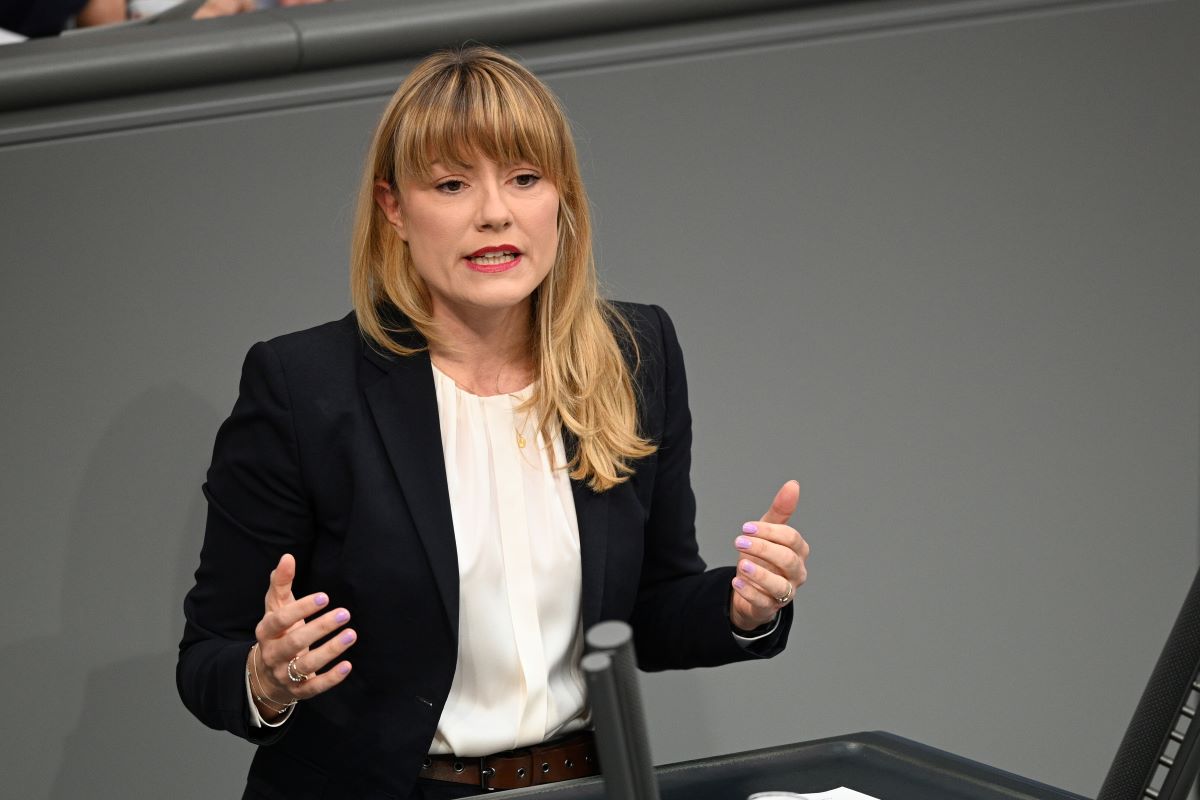
Clara Bünger, a Left Party member of the Bundestag, is among the vocal critics of the CSU's proposals. Asked for her thoughts on the CSU's purported plans, she said that much of what the party is calling for now would not really be new policies, but rather represent an expansion of existing measures.
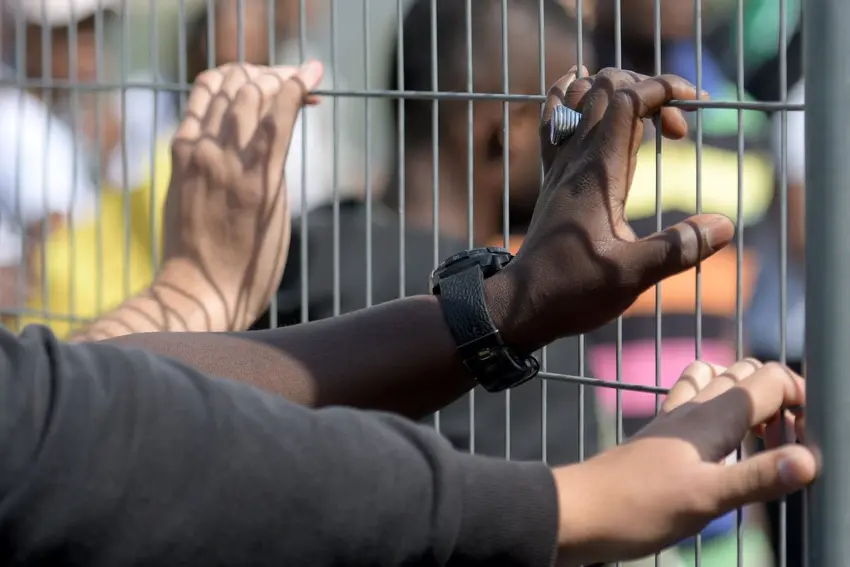
“Deportation camps are not new,” Bünger told The Local. “So-called anchor centres were set up in Bavaria under Interior Minister Seehofer – inhumane mass camps that are effectively designed to harass refugees and pressure them into self-deportation.”
Bünger stressed, however, that it was important to take the proposals seriously.
"The federal government is obsessed with deportation," she said, adding that Germany's current interior minister is a CSU politician.
Bünger is not alone in her criticism. Items from the CSU's resolution paper have also drawn condemnation from other parties, including from the CSU's coalition partners and economic and legal experts. Some commentators have described them as a gift to the far-right Alternative for Germany (AfD) – the party that is currently neck and neck with the conservatives in the polls.
READ ALSO: The CDU's rightward shift on immigration is costing the party votes
What exactly is the CSU proposing?
To recap, some of the proposals included in the CSU's 'deportation offensive' include:
- Scheduled deportation flights to Syria and Afghanistan
- Nationwide departure centres and a “deportation terminal” at Munich Airport
- Revocation of protection status for refugees who visit their country of origin
- A tougher stance towards Ukrainian men deemed fit for military service
- Stricter measures against “poverty migration,” including raising barriers to welfare and tightening the definition of “worker” in the EU Free Movement Directive
- Requiring asylum seekers with assets to contribute to the cost of their stay
READ ALSO: 'Major deportation offensive': What Bavaria's conservatives want for Germany in 2026
Bünger said that such measures risked dividing German society.
"When refugees are locked up in camps, they are isolated from the rest of the population," she said. "They appear to be ‘intruders’ who are supposedly not part of society, which is exactly what right-wing parties want people to believe."
'No solutions'
Asked if the CSU's proposals might be effective at saving money for the state or reducing crime, Bünger suggested that the party's narrative around immigration was "transparent propaganda that has nothing to do with reality."
In her view the conservative party had "no solutions to offer for the real problems people face".
"That is why it portrays migration as a threat and claims that people would be better off if refugees were deported," she said. To highlight the lack of genuine solutions on offer, Bünger added that "one of their demands at the closed-door meeting is the abolition of the maximum daily working hours".
The Local contacted the CSU's press office for comment, but had not received a response at the time of publication.
READ ALSO: OPINION - Yes, Germany's slide toward hard-line immigration policies will impact you
Beyond the left-wing opposition party, various economy and migration experts have also questioned the practicality and legality of the CSU’s proposals.
Marcel Fratzscher, President of the German Institute for Economic Research (DIW), described the CSU’s plans as “a serious mistake with enormous economic costs..."
Taking actions like establishing “return hubs,” could also face legal hurdles. Migration researcher Daniel Thym told ZDF that the logistics of setting up return hubs outside the EU remain unresolved.
But for Bünger the CSU’s framing of the issues was concerning in itself, even if certain action items failed to materialise.
"[The CSU] claims there is widespread ‘social security fraud’ and that foreign gangs are plundering the German social security system without providing any evidence," she said.
Adding that "the vast majority of people who come here work and pay taxes..."
READ ALSO: Elections and reforms - What can be expected in German politics in 2026?
Coalition squabbles
The CSU’s hard-line stance could create further difficulties for Germany’s embattled coalition government.
Matthias Miersch, parliamentary leader of the Social Democrats (SPD), recently stated that, "Everyone who has a job or is in training should be granted the right to stay."
Meanwhile the number of unauthorised entries into Germany is already on a steep downward trajectory. Asylum applications fell by half last year, with first-time requests plunging to 113,236 in 2025, according to Interior Ministry figures.
Given the recent statistics on immigration, some politicians, including those in the CSU’s sister party, the CDU, are wondering why Bavaria's leaders refuse to stop pushing a deportation-focused agenda. CDU parliamentarian Dennis Radtke told the Süddeutsche Zeitung that he could not understand why "two months before extremely important state elections, the number one issue for the AfD is being blown up again."
Comments