
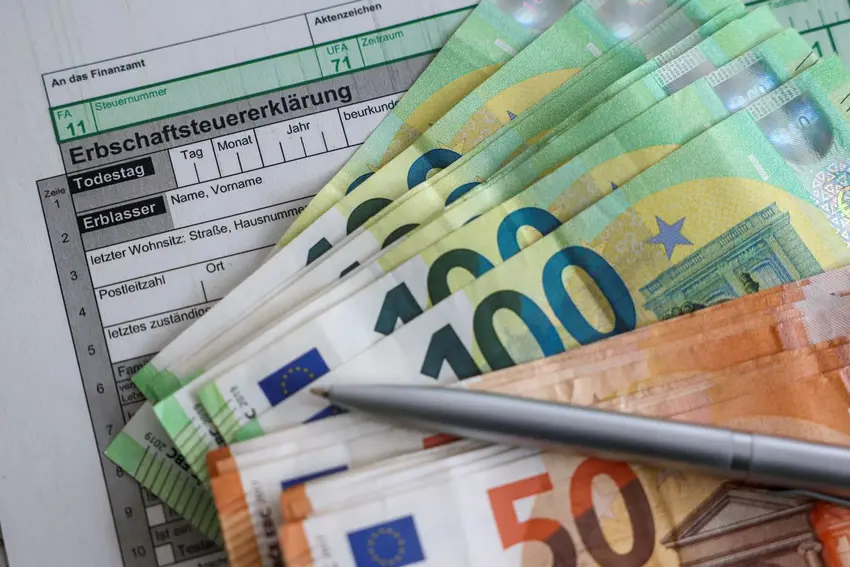
The centre-left Social Democratic Party (SPD), one of Germany’s main governing parties, has unveiled plans to overhaul the country’s inheritance tax system.
If these changes were to become law, they could affect people living in the country who would get an inheritance in future.
Anyone who receives an inheritance while legally resident in Germany – whether the deceased lived in Germany or not, and regardless of whether the assets are abroad – may be subject to the country's inheritance tax (Erbschaftsteuer).
What are the SPD hoping to achieve?
The SPD is proposing radical reforms in two main areas.
Firstly, the party would like to abolish the system whereby gifts are exempt from inheritance tax after a certain number of years, replacing this with a higher, single allowance for all individuals before tax is levied on inheritances.
Secondly, the party would like to make major changes to the way taxes are calculated when people inherit businesses.
According to SPD estimates, these two points together would amount to billions in additional revenue.
No more gifts
At present, German tax law has one loop-hole that allows individuals to make repeated tax-free gifts every ten years to family members -- effectively letting the wealthiest families pass down large sums and assets free of tax.
The exact amount depends on the relationship to the recipient. For example, children can receive up to €400,000 from each parent tax-free every decade.
READ ALSO: EXPLAINED - The rules around inheritance tax in Germany
Under the current rules people with substantial assets and good advisors often end up paying less tax than those who receive smaller amounts but hadn't plan ahead.
The SPD proposes closing the tax-free gift allowance, and swapping it for a much higher single “lifetime allowance” – which would be around €1 million per person (including €900,000 from family members and €100,000 from people outside the immediate family).
Owner-occupied homes are to be exempt from the regulation, according to the plans.
By introducing a single, higher lifetime allowance and removing loopholes, the SPD says it aims to create a fairer and simpler system that reduces tax avoidance and ensures that large fortunes are taxed more consistently.
In practice, the vast majority of inheritance recipients would still not be subject to taxes under the SPD plan. The average inheritance in Germany is less than €100,000, with more than half amounting to less than €33,000.
Tax on inheritances linked to businesses
The SPD would also like to reform how taxes are applied when people inherit businesses.
Currently, heirs to large companies can largely avoid inheritance tax if they continue to run the business and meet certain conditions, such as maintaining employment levels. This applies to businesses valued up to €26 million.
There are also a number of exemptions which can be applied for business assets above €26 million, which have allowed some very wealthy families to pay little or no tax on vast inheritances.
READ ALSO: Who are the richest people in Germany?
In simple terms, the SPD wants to eliminate these exemptions and introduce a €5 million allowance for companies. Anything above this amount would be taxed, with the aim of preventing the transfer of large fortunes tax-free.
How likely are the proposals to become law?
There is widespread agreement across the political spectrum that Germany’s inheritance tax system needs reform.
For example, the current allowances were set back in 2009 when property prices were significantly lower. As property values have soared, more and more people have found themselves affected by inheritance tax.
At the same time, the system of tax-free gifts every ten years has become increasingly popular as a way to minimise tax liability.
But while some measure of reform to Germany's inheritance tax laws may likely come to fruition, the SPD proposals look less than likely to make it into law unchanged – at least judging by the strength of the reaction, particularly to the proposals around inheriting businesses.
Mathias Middelberg, deputy leader of the Christian Union CDU/CSU parliamentary group, told the German Press Agency that, “The SPD’s concept would place a massive additional burden on family-run small and medium-sized businesses in particular.”
READ ALSO: Should you get a tax advisor in Germany - and how much does it cost?
Business associations have echoed this sentiment, warning that the plans send the wrong signal at a time when economic conditions are already challenging. The most commonly voiced concern being that higher tax liabilities could force heirs to sell businesses, rather than paying a large sum in taxes, potentially undermining long-term investment and job security.
The SPD has countered that these concerns are ignoring measures built-in to their proposal, including high tax-free allowances and the ability to spread taxes over a period of 20 years.
SPD parliamentary group vice-chairman Wiebke Esdar countered: "According to our concept, the majority of family-run businesses will not pay a single cent of inheritance tax."
According to the development bank KFW, the average targeted sales price for a medium-sized company is just under €500,000, well below the €5 million tax threshold proposed by the SPD.
Comments