
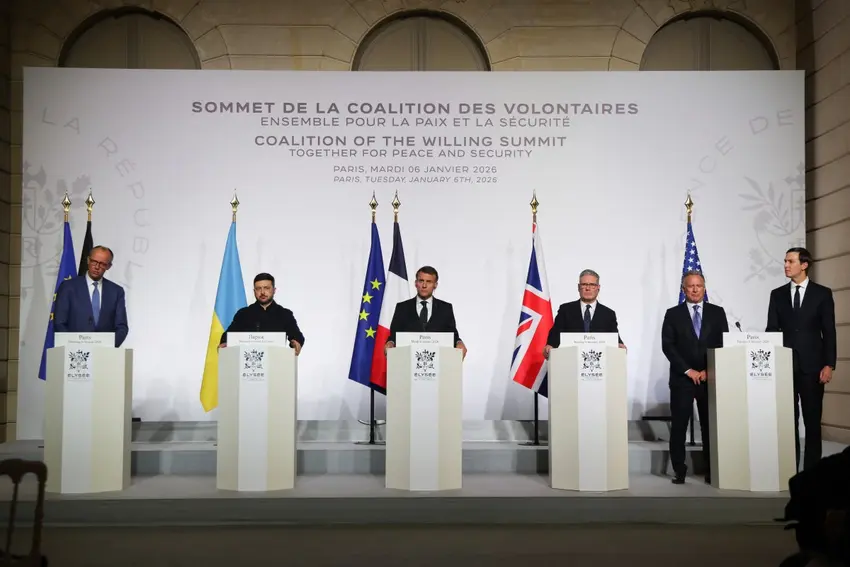
Wednesday's top story: Germany could join multinational force for defence in Ukraine
German forces could join a future multinational force to monitor a Ukraine ceasefire, but based on territory bordering the war-battered country, Chancellor Friedrich Merz said on Tuesday.
"Germany will keep contributing politically, financially and militarily. This could for example include deploying forces to Ukraine on neighbouring NATO territory after a ceasefire," he said.
Once a US-backed monitoring force is agreed, the German government and parliament "will decide on the nature and extent of a German contribution", he said.
For now, Berlin was "not ruling anything out", Merz said in Paris.
Germany, with its dark history of war and the Holocaust, has long been more reluctant than many of its NATO allies to deploy forces abroad.
Merz has signalled continued strong support for Ukraine, sharply raised German defence spending and announced plans to build up the Bundeswehr into Europe's strongest conventional army. But his suggestion of deploying German troops to neighbouring NATO territory did not go as far as France and Britain, which offered more explicit promises of support.
State of Berlin to reimburse hotel costs for power outage victims
The German capital will cover hotel stays for residents hit by a major power outage triggered by a suspected arson attack, Governing Mayor Kai Wegner (CDU) and Economics Senator Franziska Giffey (SPD) announced Tuesday.
Affected households can submit bills to the Steglitz-Zehlendorf social office for reimbursement from participating "Berlin Partner Hotels" offering rooms at €70 per double with breakfast.
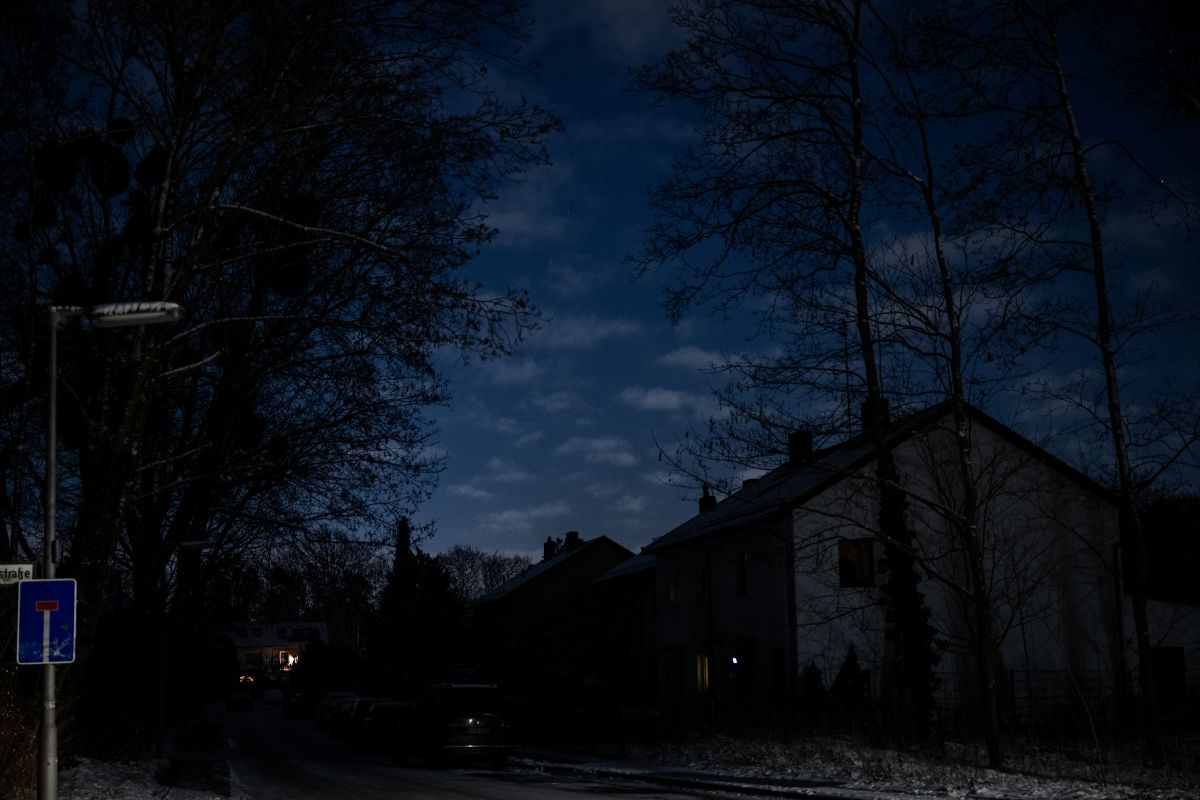
The blackout, claimed by the far-left "Volcano Group," has left around 38,000 homes and 2,000 businesses without power since Saturday amid sub-zero temperatures.
READ ALSO:
- Who's still affected by the ongoing blackout in Berlin?
- How to keep your German home warm when the power goes out
European leaders voice support for Denmark after Trump claims on Greenland
Chancellor Friedrich Merz signed a joint statement on Tuesday with leaders from France, Britain, Italy, Poland, Spain and Denmark rejecting any challenge to Greenland's territorial integrity.
The move follows Trump's weekend quip that Washington would address designs on the resource-rich island "in about two months," reviving concerns after his past overtures. AFP reported that the US President was discussing options, including military action, to take control of Greenland, according to White House statements on Tuesday.
The seven-nation declaration, triggered partly by US intervention in Venezuela, stresses Arctic security as vital for NATO and transatlantic ties. Signatories – including Merz, Denmark's Mette Frederiksen and Britain's Keir Starmer – vowed to uphold UN principles of sovereignty and borders, noting NATO's growing Arctic focus amid melting ice and new shipping lanes.
"Greenland belongs to its people," the statement asserts, with decisions reserved solely for Denmark and Greenlanders.
READ ALSO: Danish PM says US must stop 'threatening' Greenland
German climate goals at risk as emissions cuts slow
The pace of German greenhouse gas emissions cuts slowed further in 2025, putting in jeopardy climate goals in Europe's biggest economy, a think tank warned Wednesday.
Emissions fell by 1.5 percent in 2025 from the previous year, according to a study by Agora Energiewende, compared to a three-percent drop in 2024 and 10 percent the year before that.
"At the current rate of reduction, there will still be a climate protection gap with regard to 2030," said the study.
By 2030, Germany aims to reduce its emissions by 65 percent compared to 1990 levels.
To achieve its goals, Germany will have to cut its emissions four times faster than it did last year from 2026 onwards, Agora warned.
Last year's emissions cuts were driven by falls in energy-intensive industries, many of which are struggling as the economy stagnates, and record solar power generation.
But emissions in transport and buildings rose again in 2025, noted the study, criticising "years of insufficient progress" in the shift to electric vehicles and heat pumps.
“Wind and solar energy will remain the backbone of Germany's energy transition," said Julia Blaesius, director of Agora Energiewende Germany. But she added that emissions reductions from the power sector "cannot permanently offset the shortcomings in switching to climate technologies in transport and buildings."
Meanwhile Germany's black-red coalition, under Merz's leadership, has championed a series of policies that critics claim could damage the fight against climate change. Merz led criticism of an EU plan to ban new combustion-engine car sales from 2035, which was subsequently watered down, and his coalition is moving to scrap a law aimed at heating homes with more renewable power.
READ ALSO: Germany's energy transition put on the back burner in 2025
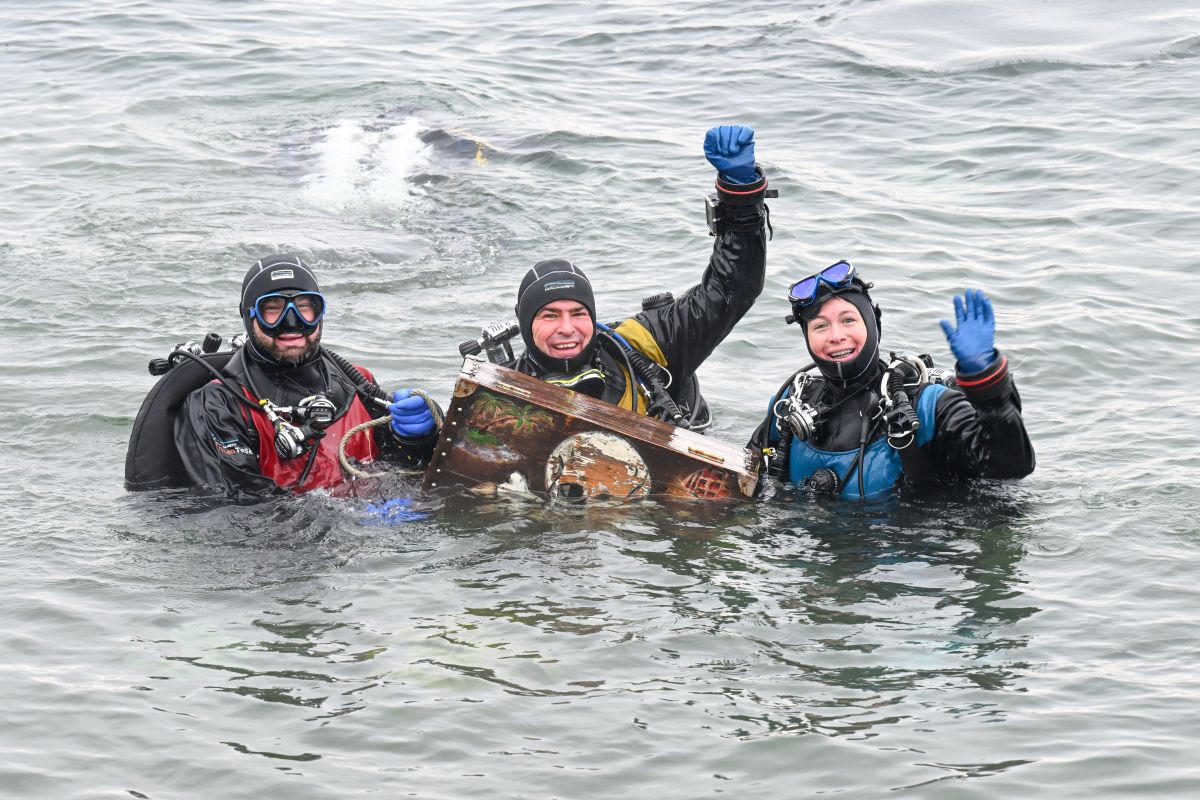
Divers hunt for treasure in Lake Constance on Epiphany
Numerous divers have searched for a hidden treasure chest in Lake Constance on the holiday on Tuesday.
The treasure chest, painted with a skull, was hidden at a depth of three to four meters near Überlingen - to find it, the divers had to search for 80 minutes. It started early in the morning in the freezing cold.
Hidden in the 20 to 25 kilogram box were not gold and jewels, but stones to weight it down, a steel cross and - for the first time - a bottle of non-alcoholic rum instead of real rum. In addition, two vouchers were enclosed.
The tradition, which always attracts spectators, has been taking place since 1970 and is organised by the "Überlingen Diving Group" and the "Lake Constance Aquanaut Team". Thanks to an underwater camera installed by the Tauch-Sport-Club Friedrichshafen, interested parties were able to follow the spectacle live on a monitor on land.
With reporting by AFP, DPA and Tom Pugh.
Comments