
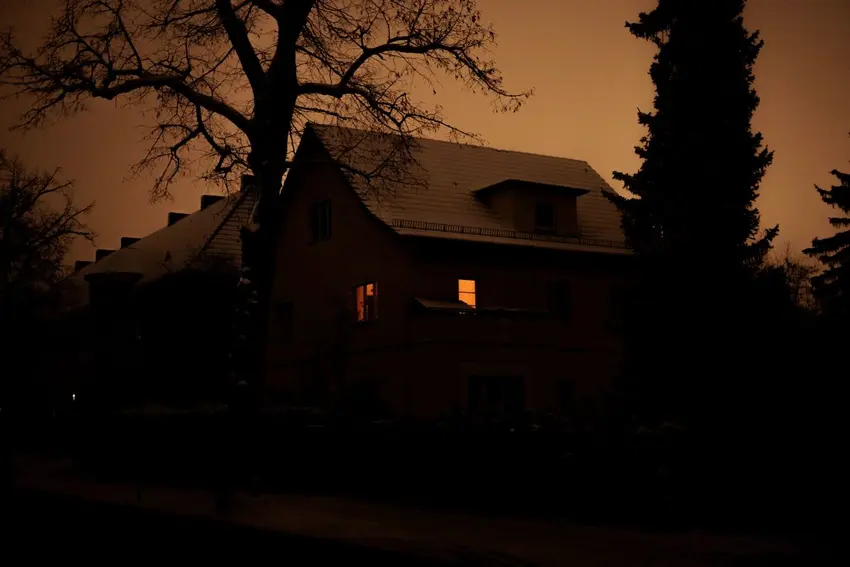
Thousands of people in the southwest of Berlin woke up to the first full week of the new year on Monday still lacking heat and electricity following a widespread outage that started early on Saturday morning.
An attack on power cables on a bridge over the Teltow Canal to the Lichterfelde power plant caused the outage, which initially affected 45,000 households and more than 2,200 companies.
The districts of Nikolassee, Steglitz-Zehlendorf, Wannsee and Lichterfelde were affected.
Over the weekend power was restored to some 14,000 households and 500 businesses, according to Stromnetz Berlin, but many more remain without electricity. It's expected that efforts to fully restore power could take until Thursday.
Where is the power still out?
According to reporting by Tagesspiegel, around 30,000 households and 1,700 businesses were still without power on Monday morning. The outage is also affecting mobile communications and emergency calls in some places.
Emergency shelters and warming rooms have been set up, as well as contact points for the fire brigade and police.
Seventeen affected schools are set to remain closed until Wednesday, although emergency care is being offered at other facilities. A list of closed schools, as well as alternative schools offering emergency care can be found in this report by BZ.
Several daycare centres were also closed on Monday, with emergency care at these facilities not available until Tuesday.
Several large hospitals in the districts were reconnected to the power grid after a day and did not have to be evacuated thanks to emergency power generators. However, the power outage also affected numerous care facilities and people in need of care in their homes. Affected residents have been moved to emergency shelters.

Public transport disruptions
S-Bahn and regional transport services were partially suspended in the area due to the power failure.
The S1 (Oranienburg - Wannsee) was not running between Zehlendorf and Wannsee, with replacement bus services running between these stations every ten minutes. You can find a list of stops on the S-Bahn Berlin website.
The S7 (Ahrensfelde - Potsdam) was also interrupted between Wannsee and Potsdam Hauptbahnhof, with a shuttle service between the two stations every 40 minutes. Trains on the S7 line were running from Ahrensfelde to Charlottenburg every ten minutes, and between Charlottenburg and Wannsee every 20 minutes.
READ ALSO: What's the best option when buying public transport tickets in Berlin?
The regional express lines RE1 and RE7 were also affected.
Resources for affected residents
The Berlin city website has a page with links to resources for the latest information and the locations of emergency shelters and other resources (HERE).
Affected residents can reach an emergency hotline run by the district's disaster management team by calling 030 90299 3333. Additionally there is a WhatsApp channel managed by the Berlin police (in German).
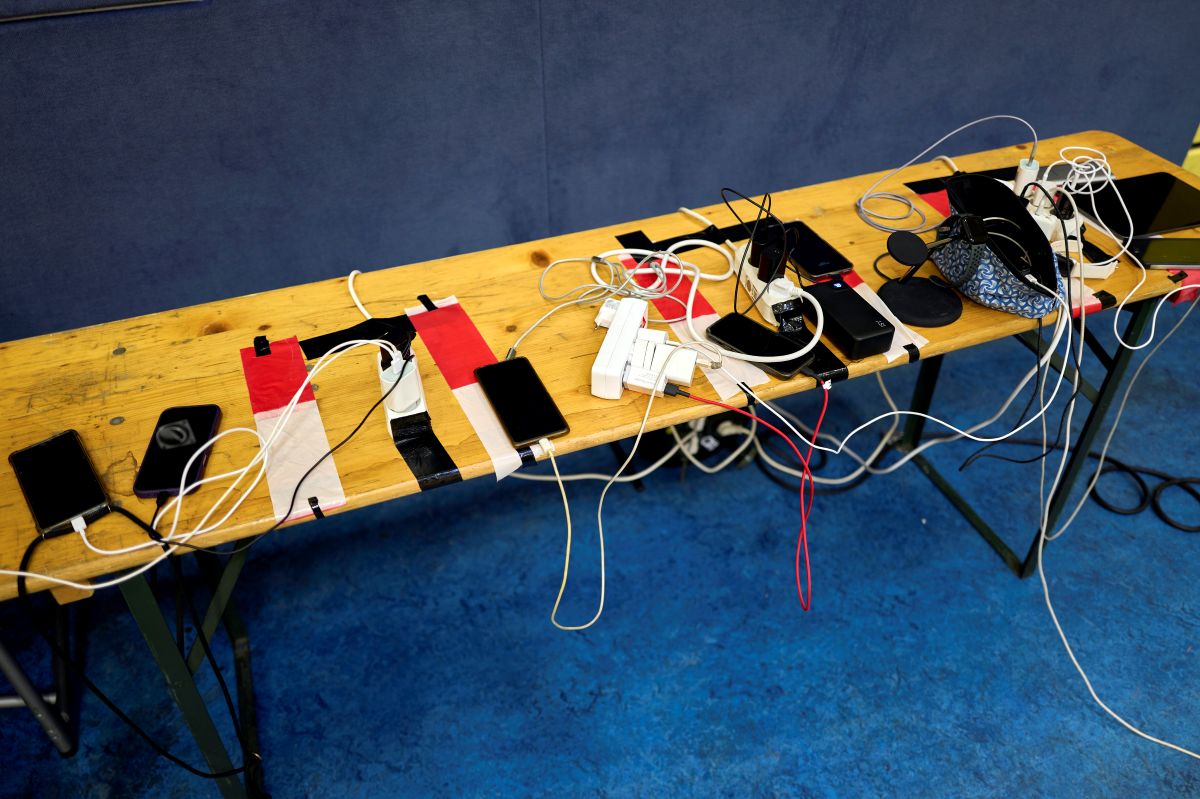
In addition to the emergency shelters, affected people can choose to stay in one of a number of hotels which are offering "special conditions" for Berliners affected by the power outage. Rates and availability are managed by the hotels themselves. You can find a list of options at the link above.
Sabotage
Since Sunday, authorities have made clear that they believe the power outage was caused by an act of politically motivated sabotage by left-wing extremists.
A police spokesman told AFP on Sunday that a letter by the extremist Vulkangruppe (Volcano Group), which claimed responsibility for the outage, was "plausible".
A long letter from the alleged perpetrators, titled "Turning off the juice to the rulers", stated: "In the greed for energy, the earth is depleted, sucked dry, burned, maltreated...destroyed." As a result, the gas-fired power plant in Lichterfelde had been "successfully sabotaged".
Berlin's Governing Mayor Kai Wegner (CDU) has described the attack as "terrorism", while former mayor and current Senator for Economic Affairs Franziska Giffey (SPD) called for federal help in the investigations.
This is the second major power outage caused by a suspected attack that Berlin has suffered in the last four months. In September around 20,000 homes and businesses lost power around Treptow-Köpenick, with some 13,000 homes left without power for several days, after a fire hit electricity pylons in what police labelled a suspected arson attack.
READ ALSO: 'Bunker list' - What we know so far about Germany's emergency shelter plan
With reporting by DPA.
Comments