
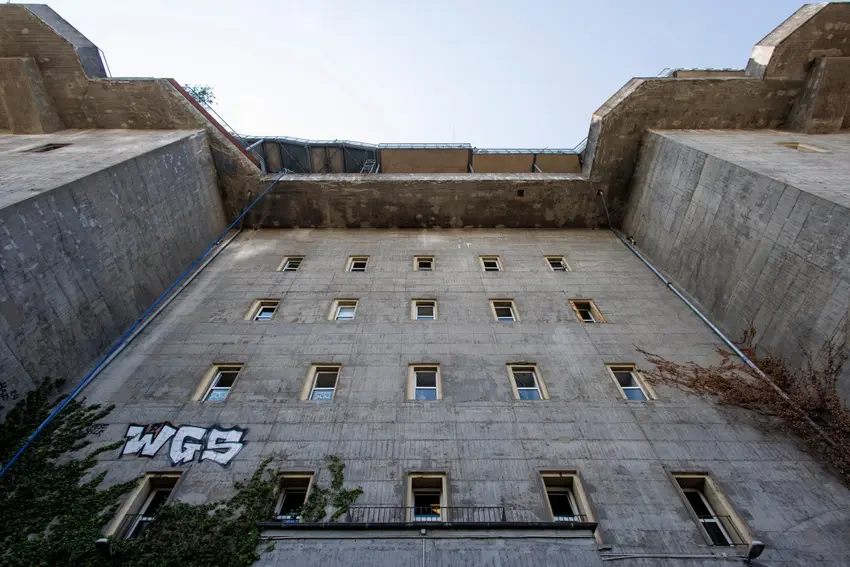
Earlier this week, the German government confirmed that authorities are preparing a digital directory of all bunkers and emergency shelters.
It comes after a document was leaked to the press showing how Germany is preparing for the threat of war. We look at what it all means.
READ ALSO: How Germany is preparing for future threats of war
What's this about bunkers?
Germany's Office of Civil Protection and Disaster Assistance (BBK) and other authorities are working together to draw up a list of emergency shelters across Germany, known as the 'National Shelter Concept’ (Schutzraumkonzept) or 'Bunker Plan'.
The plan is to gather information on the country's bunkers as well as other freely accessible buildings such as public offices, state buildings, U-Bahn stations and underground car parks that could offer protection in the event of a serious attack.
The aim is to compile a digital directory which residents will be then be able to search for on a smartphone app.
Similar apps are available in some other countries. For instance, in South Korea apps like Naver and Kakao offer a search function that shows the nearest emergency shelter.
Residents in Germany will also be encouraged to create protective shelters in their homes by converting basements and garages, an Interior Ministry spokesman said.
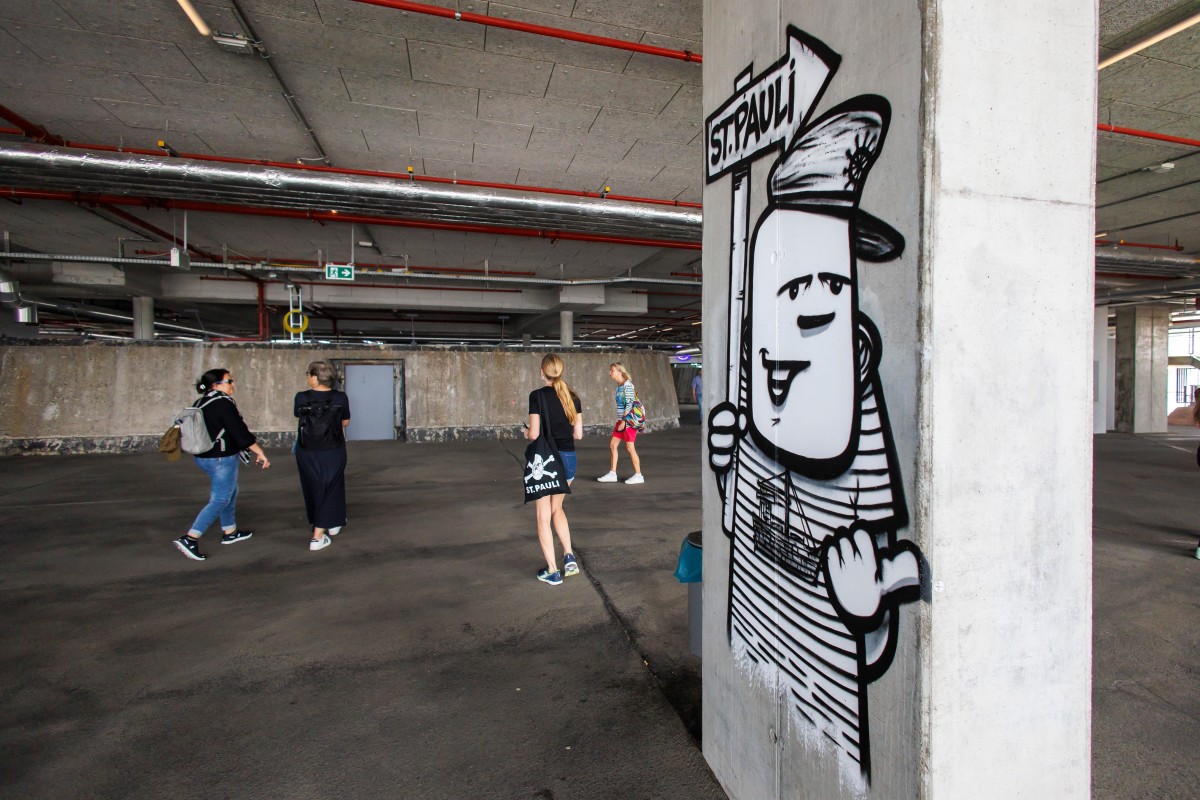
READ ALSO: Hamburg transforms 'ugly wart' Nazi bunker into leisure complex
When will all of this become available?
That's still unclear. The plan appears to be in the early stages. The Interior Ministry spokesman said it was a "big project" that would take "some time".
However, the public will be informed when things take shape. An information campaign is reportedly planned to raise awareness among the population and to let people know how they can find emergency shelter should it be needed.
Why is the bunker debate happening now?
Discussions over shelters and bunkers in Germany are not new. There have been many debates over the years over what to do with bunkers left over from previous wars, whether they are still needed or even if more need to be built.
But the conversation has taken a different turn in recent years following the spread of war in Europe.
Against the background of Russia's war against Ukraine - and surging tensions among NATO countries with Russia - Germany has been getting 'war ready'.
Earlier this year, Defence Minister Boris Pistorius warned that Germany must be ready for the possibility of conflict with Russia by 2029.
"We must not believe that Putin will stop at Ukraine's borders," he said at the time.
The plan to draw up a list of emergency shelters was reportedly agreed in June.
But the debate on preparing for more direct attacks has ramped up further over fresh concerns that Russian President Vladimir Putin is planning to escalate the situation. Putin last week warned the conflict in Ukraine had characteristics of a "global" war and did not rule out strikes on Western countries.
How many bunkers and shelters are there in Germany?
According to the Interior Ministry, of the original 2,000 public shelters in Germany, there are currently 579 with space for around 480,000 people.
After the end of the Cold War, many people believed the threat of war in Germany was over. Existing facilities were sold or in some cases allowed to fall into disrepair. Many old bunkers have been used in parks or turned into clubs or museums.
In 2007, the decision was made to wind up all public shelters but the process was halted in March 2022 - after the start of the full-scale invasion of Ukraine.
According to the Office of Civil Protection and Disaster Assistance, an inventory of the existing shelters has been taking place. The structural condition - such as ventilation systems and doors - and which rooms could be used again have been and are being examined. Now planning is underway for the nationwide public shelter plan.
OPINION: Germany's timid strategy risks both Ukraine's defeat and more war in Europe
Will there be a large-scale bunker construction?
It doesn't sound like it. Recent reports by the German government on civil defence suggest that the building a nationwide provision of public shelters is not feasible and they would only be suitable to a limited extent for providing protection.
A similar sentiment was expressed in an expert report discussed at the Conference of Interior Ministers in the summer, which was quoted in Der Spiegel. "Centrally located public shelters for several hundred or thousand people are not a suitable protective measure against modern precision weapons that specifically destroy individual war-relevant objects and only have a few minutes’ warning time in the event of an attack," said the report.
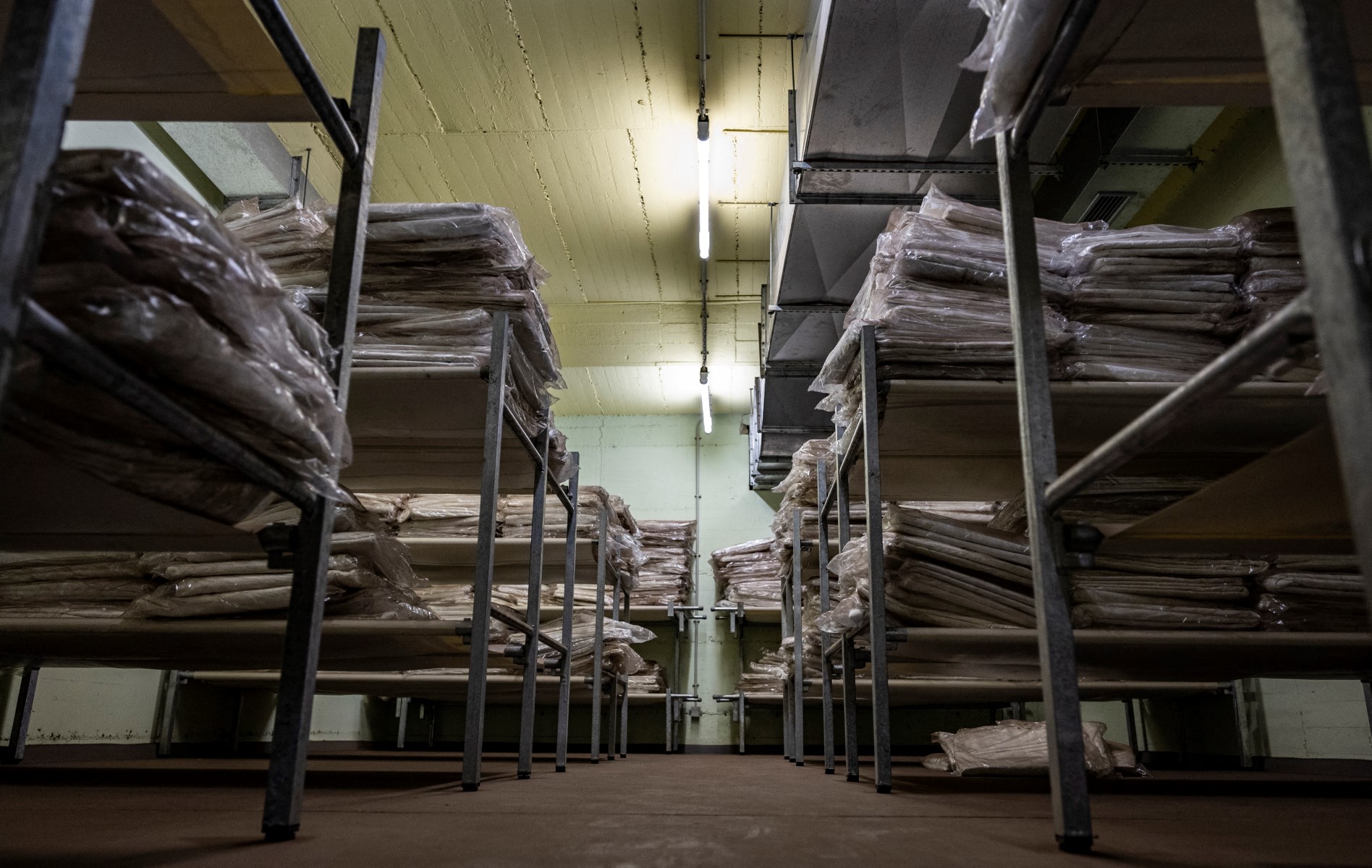
BBK President Ralph Tiesler has pointed out that there have never been "more shelters than for three percent of the population" in the past.
Representatives of the previous German coalition government, including Interior Minister Nancy Faeser from the Social Democrats, have argued in favour of investing primarily in warning infrastructure, emergency power generators, emergency wells and mobile shelters for temporary accommodation.
Politicians have also said the focus should be on the ability to defend Germany against IT attacks and the structural protection of critical infrastructure. German officials say the country is currently facing a surge in Russian spying and sabotage activities.
READ ALSO: Germany needs to be 'war ready' in 5 years: army chief-of-staff
What is the situation in other countries?
Several countries in Europe are worried about the threat of attacks. For instance, Poland announced in spring that it would be building bunkers and trenches on its border with Belarus and the Russian exclave of Kaliningrad.
When it comes to civil defence, Russia's neighbour and new NATO member Finland is often in the spotlight due to its location. Foreign Minister Annalena Baerbock (Greens) and Defence Minister Boris Pistorius (SPD) visited bunker facilities there.
With a a population of 5.5 million, Finland has 50,500 bunkers offering protection to five million people, with the facilities dating back to the Cold War. In the bunkers in the capital Helsinki alone, there is room for 900,000 people - more than the city's inhabitants.
With additional reporting from DPA
Comments