
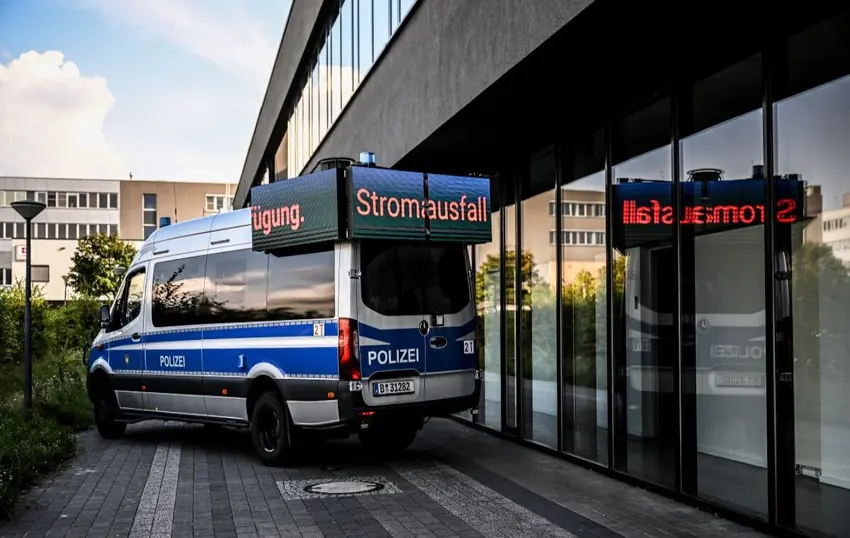
As of Thursday morning thousands of homes in Berlin were still without electricity as the result of a suspected arson attack which caused the longest major power outage in the city for 25 years.
While schools reopened, more than 13,700 households in south-east Berlin remained without electricity, with thousands also going without hot water.
The event has has also tested the capital’s emergency response protocols, affected local transportation and brought forward deeper questions about Germany’s infrastructure resilience.
Who is still affected?
The majority of the affected area lies in the districts of Treptow-Köpenick and surroundings. According to the local network operator Stromnetz Berlin around 13,700 customers were still disconnected from the grid on Thursday morning.
Most homes, offices, and public buildings also suffered from a lack of hot water, as power-dependent heating plants struggled to operate.
Schools in the area re-opened for lessons on Thursday, though emergency measures remained in place at certain sites, including the Grundschule am Mohnweg which had become a temporary crisis centre offering shelter and essentials to residents.
Some clinics and public health offices continued to operate as support stations for those particularly affected.
Crucially, emergency services in the district were still operating under significant strain, with the 110 and 112 emergency numbers still sporadically unavailable. Hundreds of police officers maintained a physical presence at intersections to manage traffic where signals were knocked out.
Mobile units of police and the fire brigade were stationed at various locations to provide residents with direct access to help.
Supermarkets scrambled to save frozen stocks, moving goods to refrigerated trucks or distributing them to central warehouses. Yet stores faced ongoing logistics problems – many were unable to process new orders online, and smaller shops struggled with supply delays.
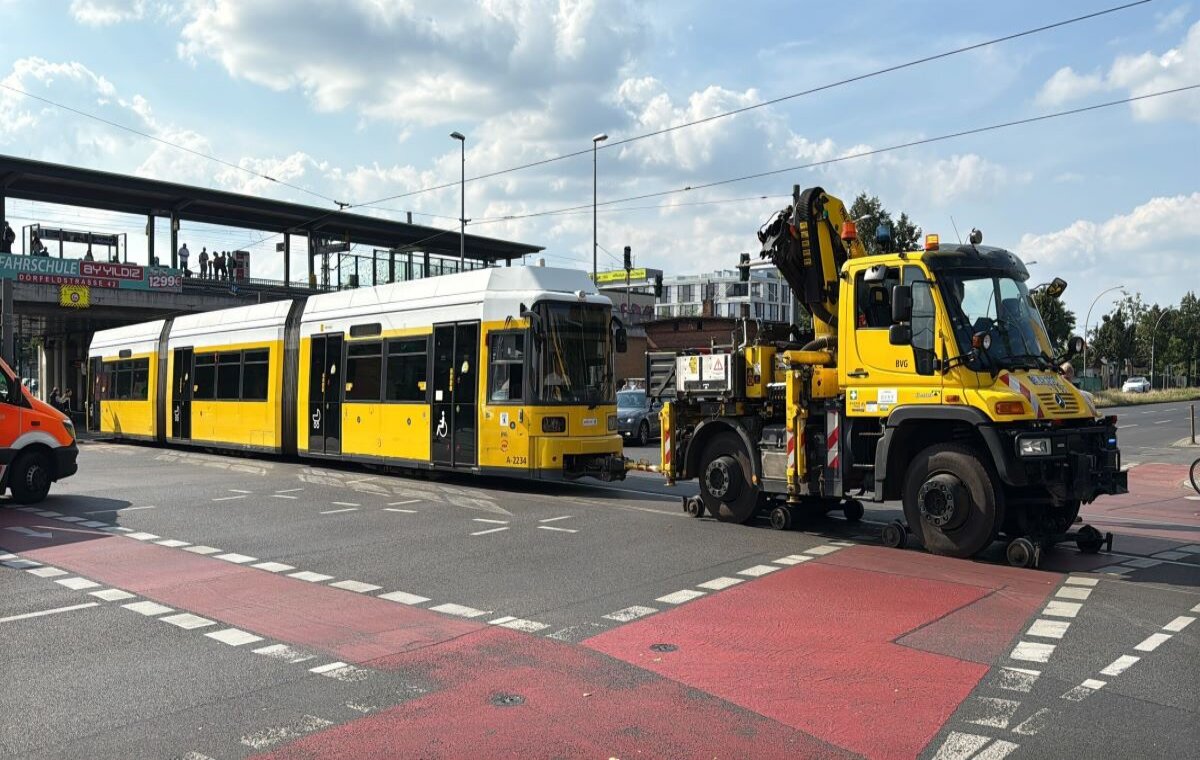
On public transport, multiple tram routes (M17, 63, 68) and bus lines remained truncated or diverted.
Several S-Bahn routes were affected, with replacement buses running and some train stations unlit at night.
Operators hope that normal services will resume by Thursday evening but warn customers to conserve power where supply has returned, emphasising the fragile stability of the repaired system.
Vulnerable infrastructure
The incident, described by Berlin’s Interior Senator Iris Spranger as “inhumane” on the rbb24 Evening Show, has thrown a spotlight on the city’s – and the country’s – critical vulnerability to targeted attacks.
According to Stromnetz Berlin, the duration of the outage has already surpassed an infamous blackout that occurred in Köpenick in 2019.
The blackout was caused by a fire on major power lines in Königsheideweg, which resulted in the rapid destruction of cables and pylons at the junction to Adlershof’s Technology Park.
The fire is suspected to have been caused by an arsonists’ attack. Investigations are still ongoing.
Fire crews took an hour to extinguish the blaze, which involved accelerants and targeted cables at the base of two masts near residential areas.
The incident demonstrates how easily a single targeted incident can disrupt not only power, but everything that depends on it, including heating, transportation, communications, and supply chains.
Critical infrastructure expert Johannes Rundfeldt told the Tagesspiegel newspaper, “It is not possible to protect everything in the country 100 percent.”
“Networks should be constructed so that the failure of a single point does not cause everything to collapse,” he added.
READ ALSO: How Germany is stepping up preparations for war
In part, this means that alternative network routes need to be created, adequate physical measures such as fences and alarm systems need to be installed, and operators need to ensure that key repair materials and sufficient skilled staff are always on hand in case of emergency. None of these measures are currently mandated by German law.
Most incidents, Rundfeldt noted, are not sabotage but accidents, and greater resilience is the best defence for all scenarios.
Who is responsible for the attack?
In a letter posted on the left-wing platform Indymedia, a group of unnamed individuals claimed responsibility for the attack.
The lengthy statement, signed by "some anarchists," denounced militarisation and capitalism, and stated the target was the Adlershof Technology Park, home to numerous tech companies, research institutes, and firms with links to the military-industrial sector.
The statement apologised to affected residents but stated that “collateral damage is acceptable.”
Initial speculation about the attack included possible foreign involvement.
Germany remains on high alert for sabotage, particularly from militant groups or hostile powers such as Russia, authorities noted.
Senator Spranger suggested that the same group responsible for a similar arson which targeted a Tesla factory in Grünheide last year could have been involved.
Last month three fires hit parts of the German rail network, with a far-left group calling itself the "Angry Birds Kommando" saying it was behind at least one of them.
How will Germany respond?
Coincidentally, the federal cabinet passed the draft bill for the long-awaited Critical Infrastructure Protection Act (KRITIS Dachgesetz) on Wednesday.
The new law is intended to provide greater protection for waterworks, power generators, and rail hubs going forward. Operators will be required to audit vulnerabilities, monitor faults, and implement baseline security measures.
Announcing the bill, Interior Minister Alexander Dobrindt said, “Our goal is clear: the defence capabilities and resilience of our critical infrastructure must be strengthened.”
READ ALSO: EU tells citizens to stockpile three days of supplies in case of attack or disaster
Yet experts warn that the law lacks urgency and bite. It won’t come into full effect until 2030 and penalties for failing to comply remain low. Moreover, state and local governments are absent from the current framework.
“Critical infrastructure in Germany must be secured. However, the KRITIS umbrella law that has now been presented is not at all suitable for this purpose,” said Rundfeldt
Anyone affected by the blackout is entitled to submit a formal claim for damages to Stromnetz Berlin.
Comments