

Thursday's top story: Bundestag votes on judge for Constitutional Court
The Bundestag will vote on Thursday on the replacement of three judges at the Federal Constitutional Court.
The vote requires a two-thirds majority, meaning the black-red coalition is hoping for votes from the Greens and the Left.
The law professor Ann-Kathrin Kaufhold and the judge at the Federal Administrative Court Sigrid Emmenegger, both nominated by the SPD, are up for election. The third candidate is Günter Spinner, currently presiding judge at the Federal Labour Court. He had been proposed by judges of the Federal Constitutional Court and then nominated by the conservative CDU/CSU parties.
The election scheduled for the afternoon is seen as a test for the coalition.
A previous election for a constitutional court judge, originally planned for July 11th, had been scrapped at the last minute when it became clear that Union leaders weren't going to vote for a previous candidate, lawyer Frauke Brosius-Gersdorf, who had been nominated by the SPD.
She has since withdrawn her candidacy. In her place, the SPD then nominated Emmenegger.
OPINION: Politicising Germany's Constitutional Court is a dangerous game
The Bundestag is also continuing its deliberations on the budget for 2026. Among other things, it will be about the financial resources for the Federal Ministry of the Interior and the Ministry of Family Affairs.
Merz defends reform agenda during Bundestag general debate
Chancellor Friedrich Merz used the Bundestag’s general debate to defend his government’s reform agenda against opposition criticism, particularly accusations of dismantling the social welfare state. He insisted that the reforms aim not to "cut down" but to preserve the social state in a modernised form.
Merz also rejected opposition claims that his government is neglecting climate policy, asserting that climate protection efforts are being pursued "without ideology."
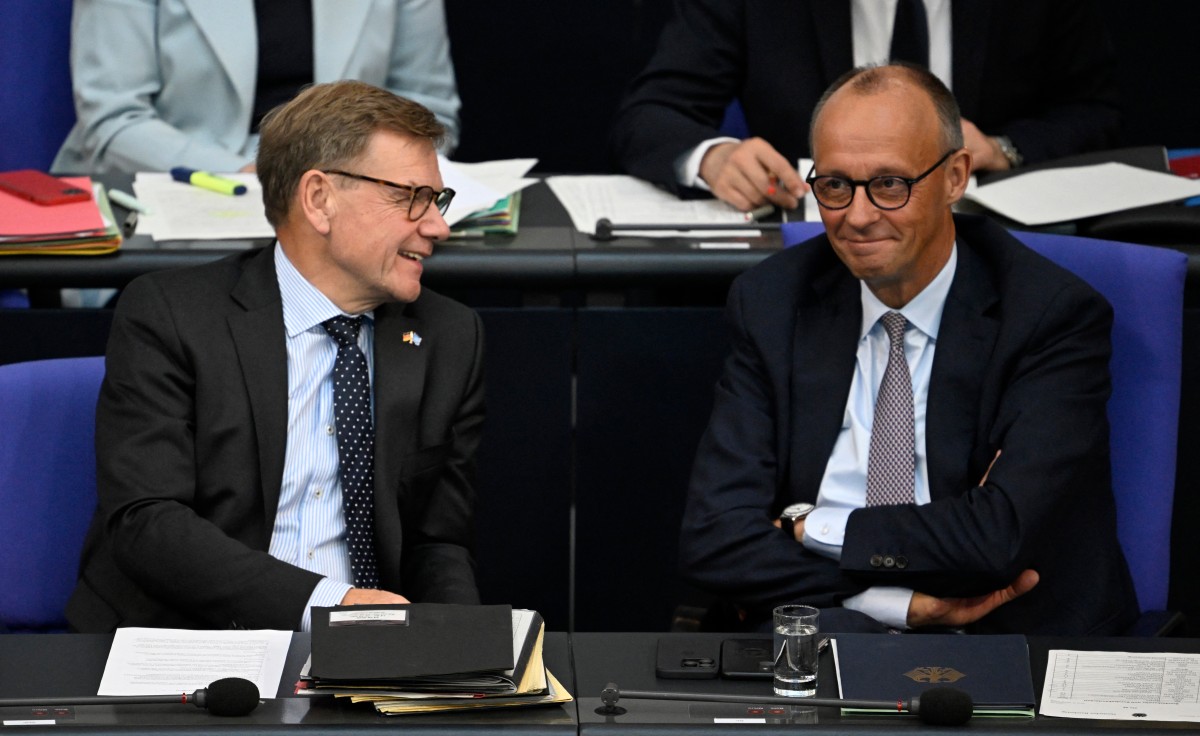
Notably, Merz did not address foreign policy topics such as U.S. President Donald Trump's UN speech, NATO airspace tensions, or the Middle East conflict, sparking criticism from opposition parties who urged him to attend the UN General Assembly and confront these issues.
The far-right Alternative for Germany, as the largest opposition party, called on Merz to break political barriers and engage with them, while Left party and Green factions renewed accusations of social cutbacks in youth and health services.
SPD leader Matthias Miersch demanded faster implementation of infrastructure and social projects, warning that budget approvals alone do not deliver results to citizens.
READ ALSO: Taxes to immigration - The major challenges Germany faces this autumn
German business morale in shock fall
German business sentiment unexpectedly fell in September, a closely watched survey showed Wednesday, in a setback for Chancellor Friedrich Merz as he tries to revive Europe's top economy.
The Ifo institute's confidence barometer fell to 87.7 points, down from 88.9 in August, breaking a run of eight straight increases.
Analysts polled by financial data firm FactSet had expected a slight rise to 89.2 points.
Both businesses' assessment of their current situation and their expectations for the future took a knock, bringing an end to a run of positive data releases that had raised hopes of a gentle recovery for Germany's economy.
"Any glimmers of hope that had emerged among capital goods manufacturers in the previous month have faded," Ifo president Clemens Fuest said. "Prospects for an economic recovery have suffered a setback".
Apart from construction, which rose slightly, the fall affected all sectors -- with services in particular dragged down by gloom among transport and logistics firms.
"Today was an unexpected blow for the German economy," LBBW bank analyst Elmar Voelker said.
"The September survey makes one fear that the German economy will remain stuck in near stagnation until at least the end of the year."
Merz's ruling coalition has vowed to spend hundreds of billions on infrastructure over coming years to help boost growth, but economists have warned that its impact will be limited without reform to make German industry more competitive.
Lucky Berliner wins €120 million
A lucky lottery player in Berlin has won a €120 million Eurojackpot, one of Germany’s largest lottery prizes to date. The winning ticket, purchased at a retailer in Charlottenburg-Wilmersdorf, consisted of nine one-off bets costing €19.
Despite the life-changing prize, the winner had yet to come forward on Wednesday to claim the money, according to Lotto Berlin. The lottery authorities stress the importance of confidentiality, advising that only close family members should be informed, and cautioning against public celebrations or disclosure of the win to protect the winner’s privacy.
This win marks the fourth time the €120 million Eurojackpot limit has been reached in Germany and the second time it has been won in Berlin. The odds of hitting the jackpot stand at 1 in 140 million.
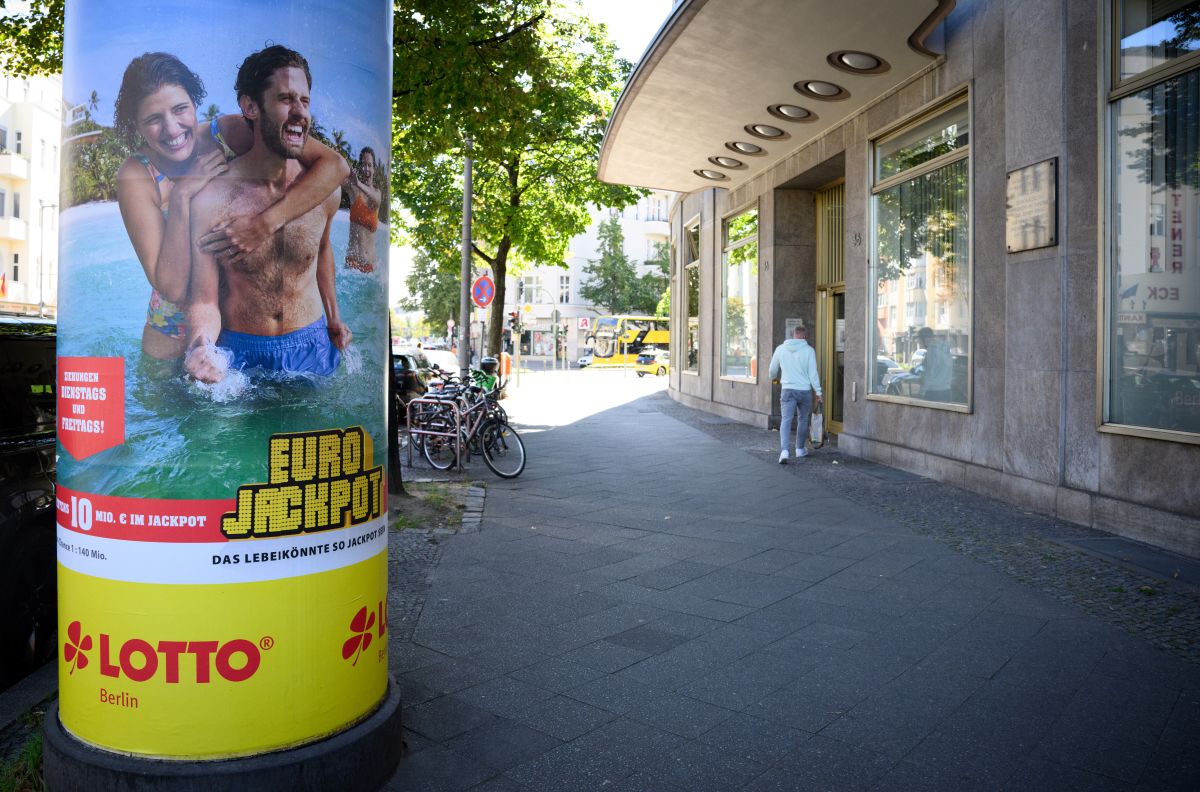
Because the ticket was purchased as a physical paper slip rather than online, the prize will be paid only to whoever presents the original ticket at Lotto Berlin’s headquarters in Wilmersdorf.
Coinciding with the win, a nationwide awareness campaign cautioned against problem gambling, highlighting that over 1.3 million people in Germany suffer from gambling addiction, emphasizing the risks despite the allure of jackpot dreams.
Insurance group warns about more accidents on the way to school among children
The number of traffic accidents on the way to school involving children and adolescents increased in the first half of 2025 compared to the same period last year.
According to preliminary figures from the German Social Accident Insurance (DGUV), the increase was around five percent - amounting to 42,303 accidents on the way to school from January to June this year as compared with 40,416 accidents last year.
These accidents occurred most frequently in the state of Lower Saxony (6.4 accidents per 1000 insured persons), and least frequently in Berlin (3.2 accidents per 1000 insured persons).
In around 43 percent of the cases, the students rode bicycles, just under 11 percent were car accidents and 9 percent were accidents as pedestrians.
Ten to 18-year-old students, mostly from secondary schools, were more likely to be affected.
In primary school, the number of accidents was lower because the distances are shorter and easier and many children walk. For the way to secondary schools, the bicycle is used more often, especially in cities.
READ ALSO: What's changing in German schools this year?
In a survey on recently observed dangerous situations at school, teachers mentioned dangers from cars in 47 percent of cases.
Often it is cars parking and stopping near to schools and in risky places that lead to accidents.
With reporting by AFP and DPA.
Comments