
The Global Innovation Index, compiled annually by the World Intellectual Property Organisation (WIPO) which is a UN authority, takes stock of the most innovative players among 130 economies globally.
This year's index, released on Tuesday, finds the German economy ranked 11th overall for innovation - still punching above it weight in the production of technological goods and exports but continuing to fall behind on digitalisation and in the promotion of new companies.
This year, Europe's largest economy has slipped another two spots, landing outside the world's top ten most innovative economies and being overtaken by China in this metric, according to WIPO. Last year Germany slipped one spot, to fall behind South Korea.
Germany's strengths
Efficiency in Germany remains strong, according to the study which notes that the country had a higher output than might be expected based on its use of resources.
The country also benefits from sustained export strength and the performance of some of its legacy tech companies.
In the "High-tech manufacturing" indicator and also in "Production and export complexity", Germany ranked 5th in the world. In logistics it ranks third.
READ ALSO: Where in Germany are the most startups being launched?
It also remains a world leader in scientific work, as well as research and development at large companies.
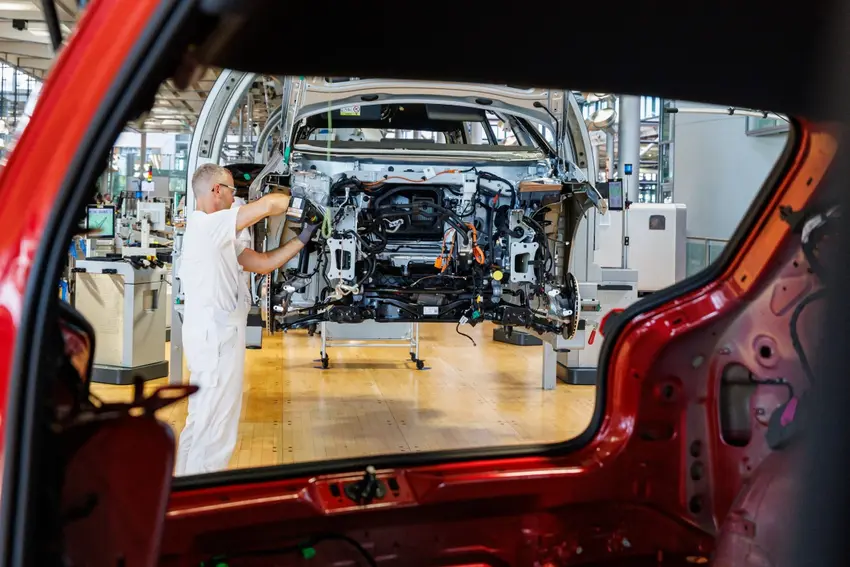
Despite what feels like a never-ending onslaught of bad news from Germany's auto industry, car makers are at the front of the pack in terms of the country's more innovative giants. The three German companies with the highest budgets for R&D were all automakers.
Germany's weaknesses
Germany, along with the US, noted a decline in the number of international patent applications, which is an important indicator of innovation. (It's still ranked 7th worldwide for this indicator.)
The study also notes significant weaknesses in access to and use of digital technologies. Digital infrastructure, like broadband internet for example, is being expanded very slowly.
Germany is also not a leader in mobile app creation - it ranked 48th for this indicator.
The bigger issue here appears to stem from the country's lack of innovative structures to promote new businesses or attract investments.
The country performed poorly in the "Entrepreneurship Policies and Culture" indicator, and venture capital investments in German companies continued to decline – by ten percent compared to the previous year.
The study also points to what it sees as continued weakness in the education sector: Germany ranks 56th out of 130 countries evaluated in terms of spending on education.
READ ALSO: 'Too many without qualifications' - German education system sees widening inequality
How bad its it?
The WIPO study comes as the latest worrying signal that all is not well in Europe's largest economy (also the world's fourth largest).
"The fact that our country is falling so far behind is cause for concern and a clear signal that we need to make greater efforts if we want to remain among the most innovative economies," said Eva Schewior, President of the German Patent and Trade Mark Office (DPMA).
"If we want to maintain our competitiveness, we must succeed in better translating our enormous research potential into protected innovations and then into attractive products and business models," Schewior added.
The German government, under the leadership of Chancellor Friedrich Merz (CDU) has made boosting the economy a top priority. Recent efforts to boost the country's competitiveness have included rounding up a massive collection of investment pledges, and introducing tax cuts for industry players.
But recent comments by Merz and his Union party colleagues, including calls to slow down the e-mobility transition in Europe, seem to go against the spirit of leaning into innovation. Doing so would certainly not help Germany catch up with China, which is increasingly dominating the industry.
Switzerland was ranked the most innovative economy by the WIPO study, a spot it's held since 2011.
Within Europe, Germany was also beat by Sweden, the UK, Finland, the Netherlands and Denmark.
It scored just above Japan and France, followed by Israel, Hong Kong, Estonia, Canada, Ireland, Austria and Norway.
Comments