
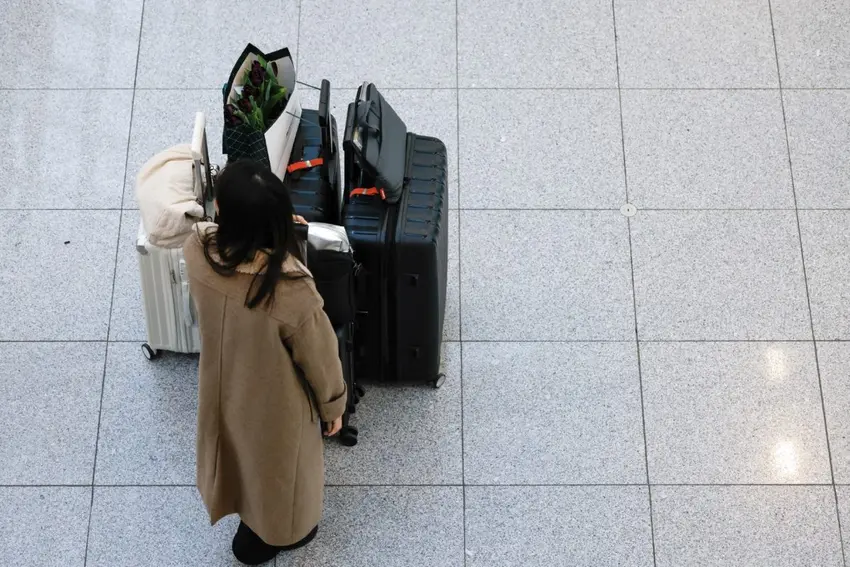
Air passengers in Germany will face disruptions later this week after a two-day strike was called by the union Verdi in a dispute over pay and conditions.
Verdi is urging workers at Munich airport to stage a walk out on Thursday and Friday.
It comes as a strike affecting Cologne/Bonn and Düsseldorf airports caused severe disruption this week, including hundreds of cancelled flights. A strike at Hamburg airport also hit operations earlier in the month.
READ ALSO: Passengers see flights cancelled at Düsseldorf and Cologne-Bonn airports
A spokesperson from Munich airport said significant disruption is expected.
"Passengers must be prepared for a greatly reduced flight schedule and delays," a spokesperson for the airport told regional German media.
What should I know about the Munich strike?
The 'warning' strike at Munich Airport is scheduled to start from midnight on Thursday morning (February 27th) and then last for 48 hours until the end of Friday, February 28th.
Verdi said the action was announced as early as possible in order to give passengers the chance to prepare for the disruption. The union is taking part in collective bargaining negotiations aimed at securing better pay and conditions for airport workers.
Munich is Germany's second busiest airport after Frankfurt and in 2024 was said to be the fastest-growing airport in Germany. It welcomes some 41.6 million passengers each year.
Which flights are being cancelled because of the strikes?
It is not yet clear which flights will be cut due to the effects of industrial action.
But passengers can expect major disruptions at security checks and ground services.
A total of around 830 flights in and out are scheduled on both days.
"It is currently not possible to make any predictions about the level of strike participation among the various service providers or the impact on flight operations," the Munich airport spokesperson said.
Air travellers are advised to check the status of their flight with their airline before departure. If their flight is cancelled, they should receive a notice from their airline.
Travellers are advised not to come to the airport if their flight has been axed, and instead arrange a different flight or get their money back from the airline or whoever they booked with.
The airport says it is in "close contact with the airlines and service providers in order to reduce the inconvenience for travellers as much as possible".
What happens if my flight is cancelled or delayed?
It is important for passengers to know their rights if they face a cancellation or major delay.
Affected passengers could be entitled to compensation under EU law if their flight is delayed or cancelled.
Co-founder of airline compensation specialists SkyRefund, Ivaylo Danailov, told The Local: "If your flight is cancelled and you choose to be reimbursed, you are legally entitled to a full refund for both your cancelled flight and your return flight because you were unable to reach your destination.
"You can receive up to €600 if your flight is delayed over three hours or cancelled less than 14 days before departure."
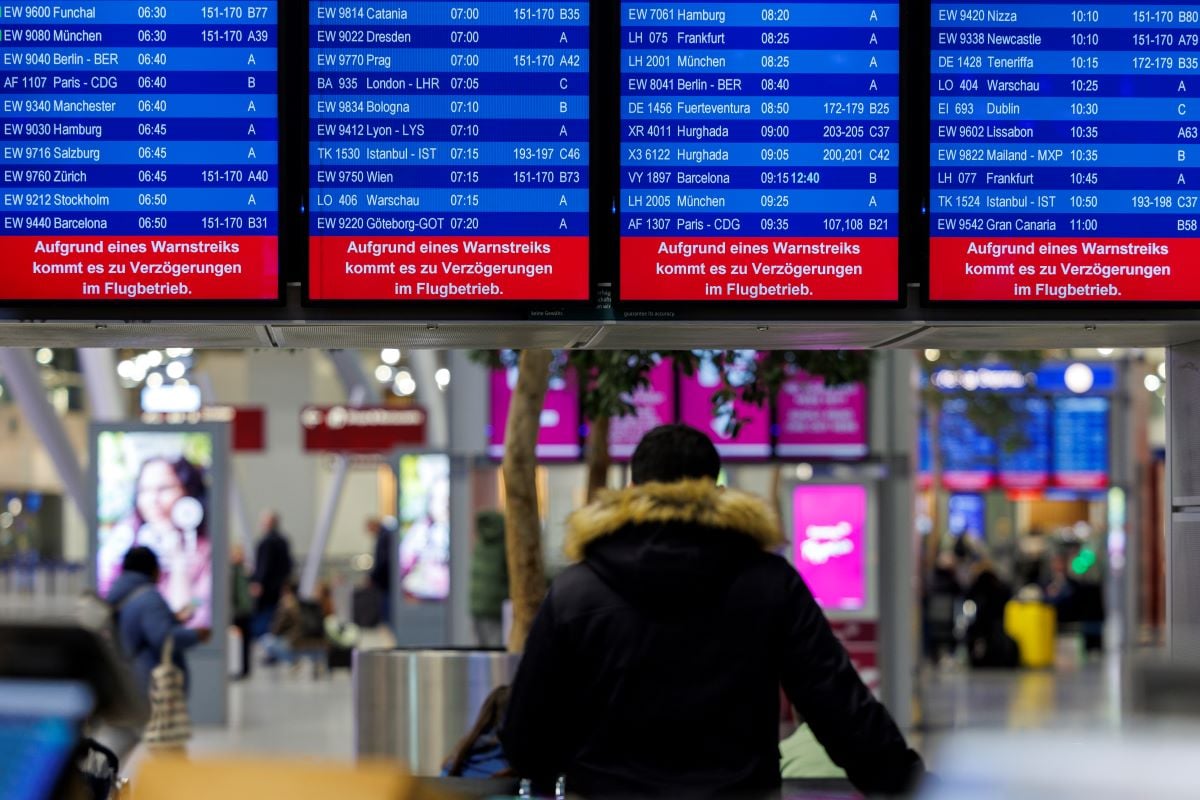
If passengers face long waits at the airport, they are entitled to food and drink which is usually issued by airlines in the form of vouchers. If they become stranded, they have the right to accommodation and transport there and back.
READ ALSO: What are your rights in Germany if your flight is delayed or cancelled?
Why is Verdi bringing strikes to the airports?
These strikes by some airport staff come as part of industrial action among public sector workers that have been affecting regions across Germany recently. Employees in public transport, childcare, garbage collection and other public services have been taking part in strikes.
According to Verdi, many airport workers are also included in collective agreement for public service workers. For instance, those who work in administration, check-in, aircraft handling, passenger and crew transport as well as baggage handling.
A second round of wage negotiations was held last week in the eastern city of Potsdam, but ended without resolution.
In recent negotiations for public sector employees Verdi has demanded wage increases of eight percent or at least €350, three additional days off, and higher bonuses for certain kinds of work.
Interior Minister Nancy Faeser (SPD), who has been leading the negotiations on the employer side, has previously said there is a "tense" financial situation at the federal and local government level, but that she was hopeful for a solution to be found.
The next collective bargaining round is scheduled for March 14th.
Following the German election, it will be interesting to see how politicians deal with the current action. At the moment the Social Democrats are in a minority government with the Greens in a caretaking capacity.
CDU leader Friedrich Merz is on course to become the next German chancellor, with the conservatives currently trying to build a new coalition government.
READ ALSO: Will Germany see more transport and public sector strikes?
Comments