
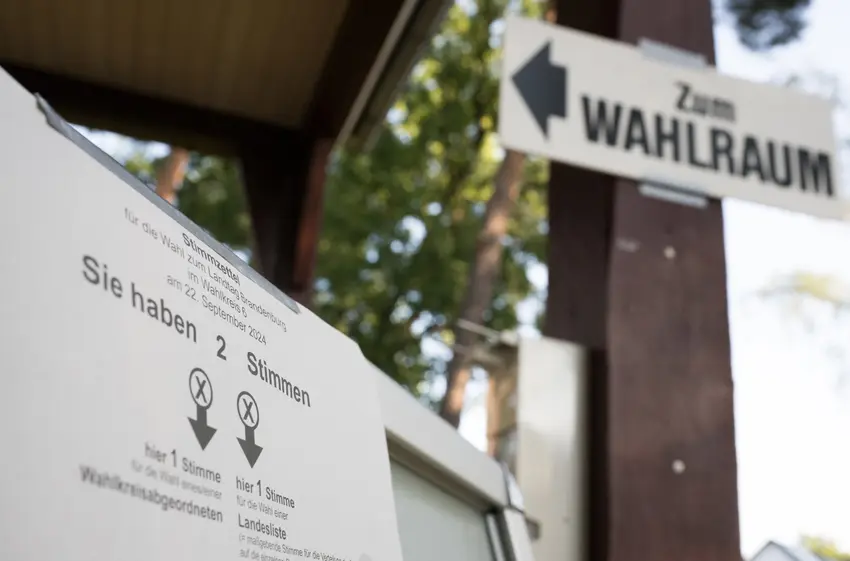
As Germans head to the polls this week at the end of a ferocious election campaign, there are plenty of stories to tell.
The short run-up to the snap elections has been marred by tragedy, with a spate of brutal attacks dominating the news cycle. The current frontrunner, CDU leader Friedrich Merz, has broken a long-held taboo in accepting votes from the far-right AfD in parliament. And once again in global politics, a dismal economy looks set to lead to the ousting of an incumbent.
A story that is less well-told - and one that is largely ignored in German media - is that of the millions of residents who will not be at the polls this Sunday. Of those who serve meals in restaurants, look after young children in Kitas, develop life-saving vaccines in laboratories, and ultimately go unheard on election day.
Despite the introduction of Germany’s new dual nationality law last year, we find ourselves in familiar territory. According to recent official statistics, 12.9 million people live in the country without German citizenship - almost 15 percent of the population.
Around 10 million of these are believed to be over the age of 18, which means that a good 12 percent of adults in Germany will be shut out of voting on February 23rd.
READ ALSO: Why around 10 million people in Germany can't vote in the election
Millions of these people will have lived in the country for several years - even decades on end - working and paying taxes. Many will have been born here, attending German schools and speaking German as a first language. A large number will have felt barred from obtaining citizenship by the years-long ban on dual nationality: they may have felt part of German society, but unwilling to deny other roots and identities.
Whatever their stories, they have largely remained unheard.
Barriers to citizenship
For years, these millions have been wilfully sidelined in German politics. For the migrant-sceptic CDU and CSU, they have been a source of distrust - and even smeared as a threat to national security. The fight to overturn the ban on dual citizenship reveals just how deep this suspicion goes.
At each of the readings of the traffic-light coalition’s flagship citizenship reform, MPs from the centre-right Union made speeches in the Bundestag predicting the collapse of German society. According to Merz, the Union’s chancellor candidate, the expansion of dual nationality means “we are bringing additional problems into the country”.
READ ALSO: Why is dual citizenship still so controversial in Germany?
Conservative opposition to expanding the franchise is nothing new - and there have been attempts to restrict voting by marginalised groups throughout history.
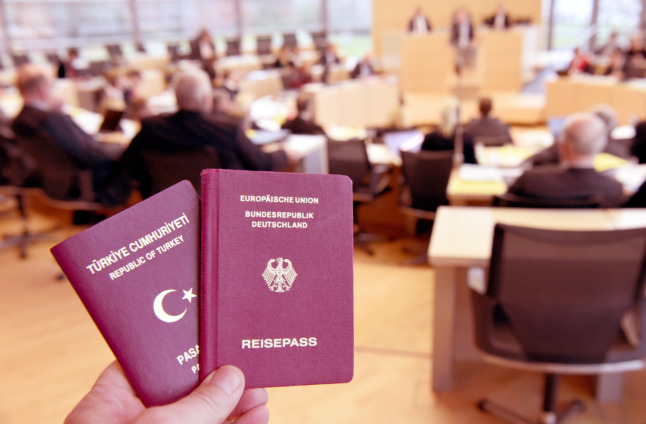
In 19th century Prussia, the three-class franchise split voting rights by tax contributions. It ensured that those with the most wealth had by far the most say in elections, while the poorest had little say at all. Some point to the current system - all voting rights for Germans, some for EU citizens, and none for non-EU citizens - as a similar three-class franchise.
In the past few decades of German politics, restrictive rules on citizenship suppressed the voices of the ‘wrong’ type of voter - at least in the eyes of the CDU. The dual nationality law was meant to change that. By opening more routes to citizenship, it was a way to broaden the electorate and bolster German democracy.
This time, sadly, it will have little effect.
READER QUESTION: 'Why can't I vote in the German election when I pay taxes?'
Years of waiting
For so many foreigners in Germany, the wait for citizenship reform has been long and full of frustrations. Years of navel gazing and infighting by the three parties of the traffic-light coalition meant the Social Democrats’ “priority project” was repeatedly put on the backburner. Inexplicably, the law took almost three years to pass, held up by redundant debates and political point-scoring.
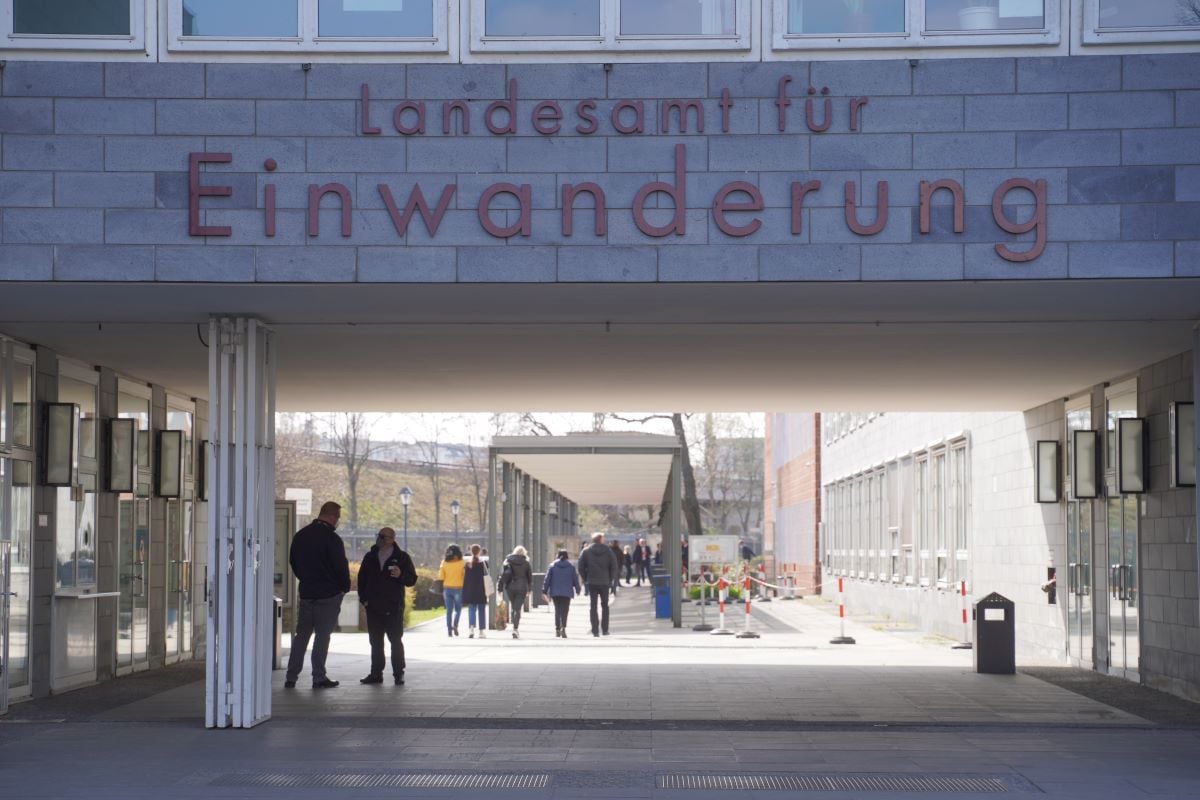
When the law finally came into force on June 24th last year, local authorities seemed blindsided by its arrival. Who would have thought that a drastic liberalisation of nationality laws might lead to an influx of naturalisation requests?
Of course, citizenship offices across Germany are doing their best to cope with limited resources. The question is why, with so much preparation time, more resources weren’t made available in the first place. Why, when the law mandates three months as a reasonable processing time for citizenship, are so many people being forced to wait two years?
READ ALSO: Which German cities have the longest waiting times for citizenship?
For tens of thousands of applicants in Berlin, the situation is even more bitter. Though the process has been recently digitalised, this has led to a two-class system where processing times depend on whether applications were submitted before or after the change.
If you happen to be one of those pre-2024 paper applicants - all 40,000 of them - then ‘Pech’ (bad luck) - your application from 2022 is gathering dust in the archives. Applied online in late 2024? You could get invited to your naturalisation ceremony in a matter of weeks.
A Facebook group dedicated to naturalisation in Berlin reveals the scale of the bewilderment. Theories about reasons for fast-track processing swirl around at pace - would better German or more savings get my application processed faster? - but ultimately, chaos theory appears to be the only rule that makes sense.
An unwanted debate
When the dual nationality law finally arrived, nobody could have predicted that the government would collapse less than five months later. When the election rolls around, it will have been eight months - almost to the day - since the reform was written into law.
In almost all of Germany’s major cities, this is an impossible deadline for gaining citizenship.
For those waiting on tenterhooks for their German passport, the snap elections are a hard pill to swallow. Though they may qualify for naturalisation, their voices will now be ignored for another four years, thanks largely to these bureaucratic hurdles. And while they have no vote, there's much less incentive for politicians to improve their lives.
For now, that means that this silent mass can only look on from the sidelines as they are increasingly made the centre of the “debate”.
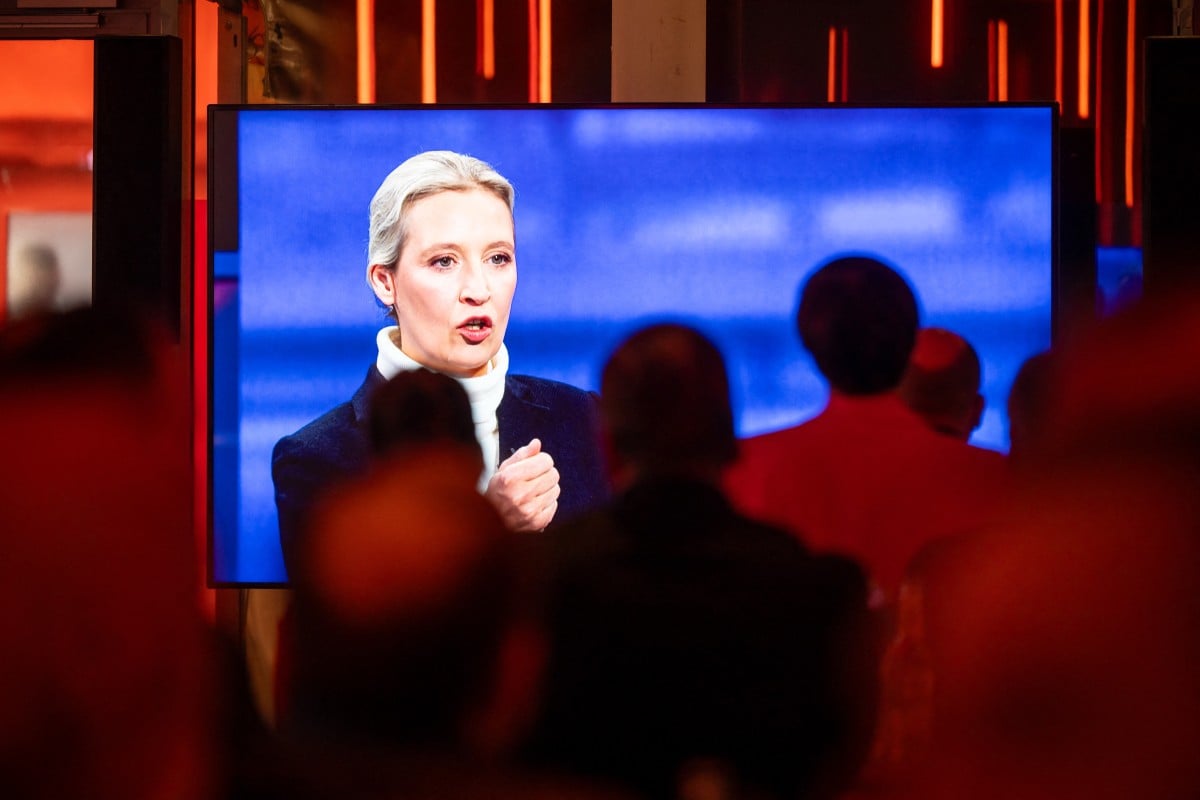
Rather than reckon with dismal construction rates and unscrupulous landlords, it is foreigners who are causing the housing crisis. Rather than address the rise of racism and the far right, it is foreigners who have imported their hate. Rather than acknowledge that migration has no impact on crime rates, foreigners are blamed for disturbing the peace.
An honest debate might point to the fact that Germany’s economy has major structural problems, and that an ageing population is putting its revered social system on the brink of collapse. It might point to the contribution that foreigners make to German society, and look with regret at the administration that is failing them.
Instead, this Sunday will mark another missed opportunity to bring these voices into the conversation. Many of us will sit at home while parties that reject our right to vote are voted for en masse.
READ ALSO: Anger, fear, nostalgia - why German voters back far-right AfD
With the Union pledging to scrap dual nationality if they come into power, we just have to hope that any future coalition partner - whether the Social Democrats or Greens - stands firm on their legislation and stands up for the international community.
If they do, there may be some light on the horizon. There may even be some hope for stemming the lurch to the right. By the time 2029 rolls around, rather than tired scapegoating and debates over foreigners, Germany may even have something approaching a diverse democracy.
Comments (1)