
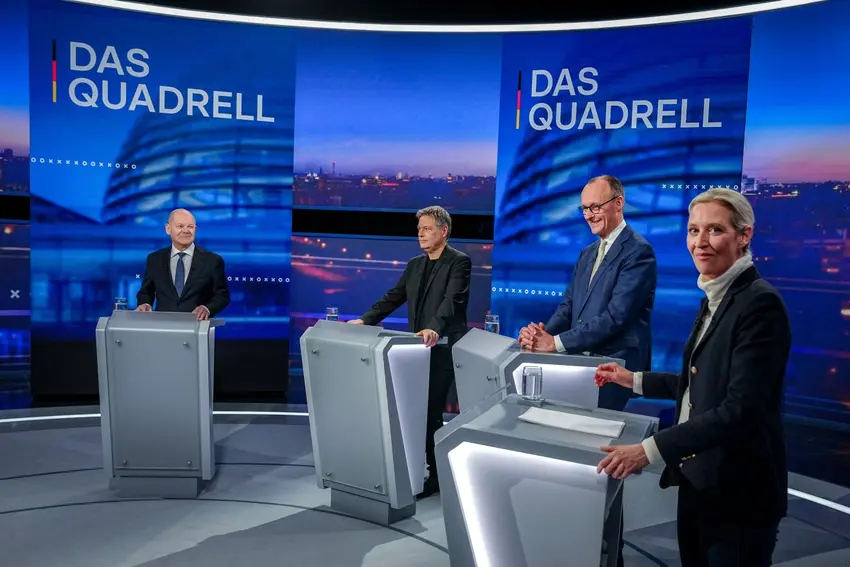
Two-year-old girl and her mother die from Munich attack injuries
A two-year-old girl and her mother died on Saturday following injuries suffered in the car ramming attack in Munich, police said.
An Afghan man was arrested on suspicion of deliberately driving a car into a crowd on Thursday morning, injuring nearly 40 people.
A police spokesperson told AFP: "Unfortunately, we have to confirm the deaths today of the two-year-old child and her 37-year-old mother."
Police said the suspect, a 24-year-old asylum seeker, may have had Islamist extremist motives for the attack.
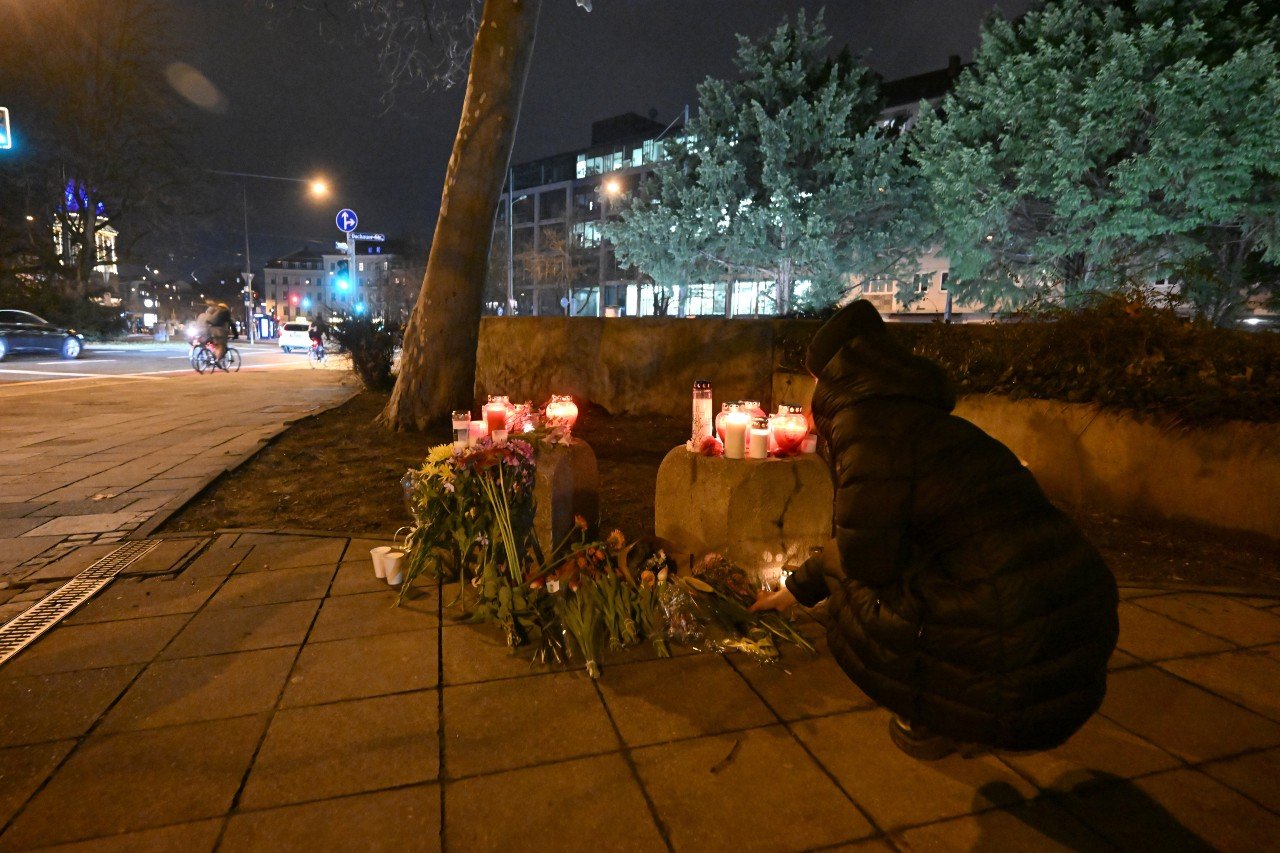
Four-way election TV debate ahead of vote
With a week to go until Germans vote, the country's first four-way televised election debate took place on Sunday.
Chancellor candidates Olaf Scholz, of the SPD, the CDU/CSU's Friedrich Merz, the Greens' Robert Habeck and the far-right AfD's Alice Weidel clashed in the RTL debate, which covered topics such as the war in Ukraine, migration, the US government and the economy.
Comments by US Vice President JD Vance in which he called on Germany to drop its decades-long taboo of having the far right in government became one of the main talking points.
"I will not allow an American vice president to tell me who I can talk to here in Germany," said Merz, whose party is currently leading the polls on around 30 percent.
Chancellor Olaf Scholz also rejected Vance's comments as "unacceptable" and asserted there is "no cooperation with the extreme right".
But Weidel praised Vance for having "spoken out so clearly".
"We must not build firewalls to exclude millions of voters from the outset - we have to talk to each other. He made that clear," Weidel told the audience.
Viewers of Sunday's debate put Merz ahead with 32 percent, while Scholz came second with 25 percent saying he was the most convincing candidate, according to a poll by the RTL broadcaster.
Around 30 percent of Germans are said to still be undecided about who they want to vote for in the election, according to the latest surveys.
READ ALSO: Inside Germany - endless strikes, election debates and shock after Munich attack
German election favourite Merz sets out foreign policy plans
Germany's conservative election frontrunner Friedrich Merz pledged a stronger role for Berlin in the EU and muscular support for Ukraine as he outlined his foreign policy vision at the Munich Security Conference.
Merz, 69, is a committed European and trans-Atlanticist who has argued the EU must be united to deal confidently with US President Donald Trump, whom he has labelled "predictably unpredictable".
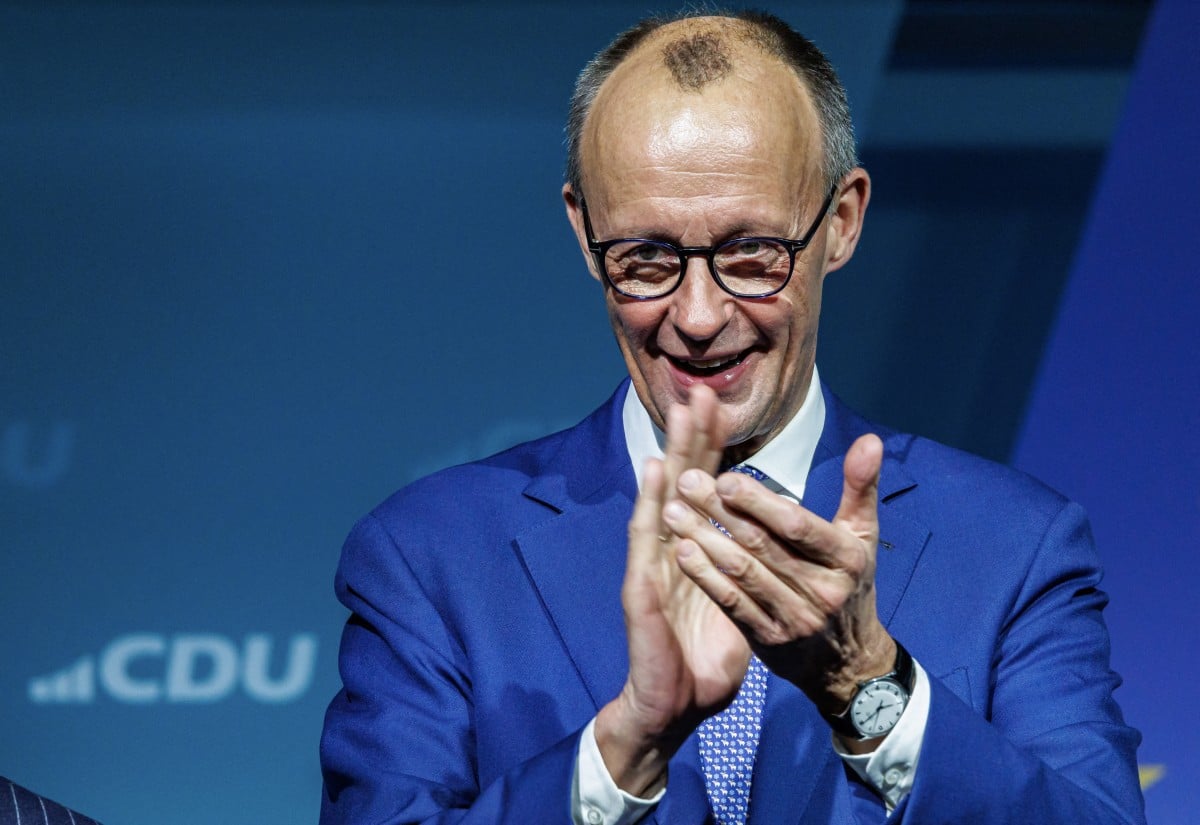
He said his intent "remains to deliver, within a European coordinated framework, more weapons to Ukraine" whereas Scholz has flatly refused to send long-range missiles to Kyiv.
Merz, who is leading the polls, also sketched out his position vis-a-vis Germany's most significant ally, the United States, after Trump shocked allies by starting direct talks with Russian President Vladimir Putin to end the conflict in Ukraine.
READ ALSO: Which coalition governments are most likely after Germany's election?
Trump said Kyiv's desire to join NATO was impractical, but Merz affirmed his backing for Ukrainian accession to the military alliance.
"There is an agreement within NATO that Ukraine gets the perspective of becoming a member... I don't agree with anybody who is putting NATO membership off the table," Merz said.
Merz has also outlined plans to bolster ties with European allies, notably Paris and Warsaw, which he says deteriorated badly under Scholz, and backed calls to spend more on defence.
But he did not commit to a spending target or say where the money for more arms would come from. "I'm open to have any debate on resources," he said.
Demo against far right draws thousands in Berlin
Tens of thousands of people joined a demonstration against cooperation with the far right in Berlin on Sunday, after US Vice-President JD Vance called for Germany to drop the longstanding taboo.
Around 30,000 people took part in the protest a week ahead of a general election, according to police, while organisers put the number at around 38,000.
Many carried placards with slogans denouncing the far-right Alternative for Germany (AfD), which is expected to become the second-biggest party in next Sunday's vote.
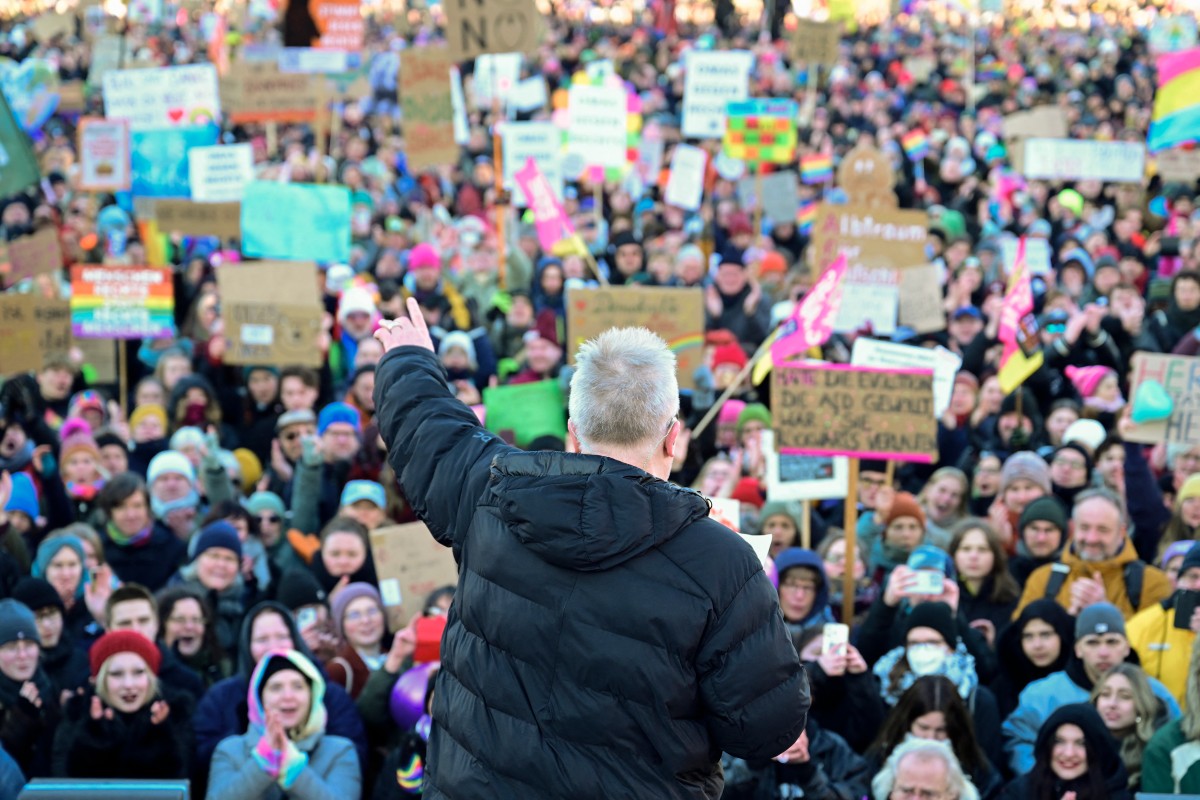
The demo was held under the motto "We are the firewall" - a reference to the longstanding position of Germany's established parties not to work with the far right (Brandmauer).
The anti-immigration party has seen its poll ratings edge upwards in recent months and is expected to register a record-breaking score of around 20 percent of the vote.
The rise of the AfD - aided by US support, most notably from tech billionaire Elon Musk -- has alarmed its critics, with several demonstrations attracting large crowds in recent weeks.
Some 250,000 people attended a demonstration against the far right in Munich last weekend, with a similar demo in Berlin the week before drawing around 160,000.
'Go and vote' urges German President
One week before the federal election, Federal President Frank-Walter Steinmeier called on the people of Germany to take part in the election.
"On February 23rd, we will decide on the direction of the coming years. Every single vote counts," said Steinmeier in a video message published on Sunday.
"That's why I ask you: go and vote."
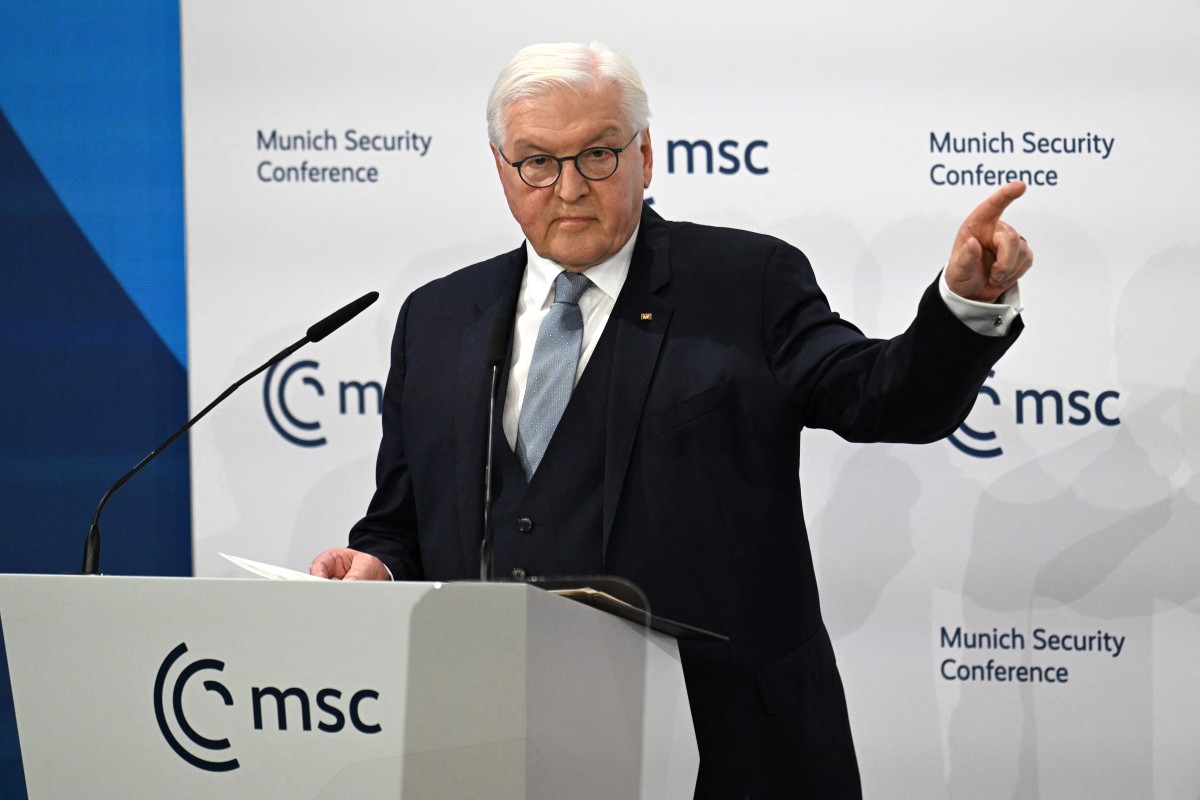
Germany has a democratic system that "billions of people around the world long for, in which the majority decides but the rights of the minority are protected," he said. Everyone should therefore vote in the knowledge that their "vote could be the decisive one".
With reporting by Rachel Loxton and AFP
Comments