
Immigration policy has been a key point of discussion leading up to the snap national election – especially after a controversial migration proposal was pushed through the Bundestag with votes from both the centre- and far-right parties.
But while public debates on immigration are often centred on asylum seekers, policy that impacts immigrants and would-be dual-citizens have far-reaching impacts in virtually every aspect of German society.
For example, in the scientific research community.
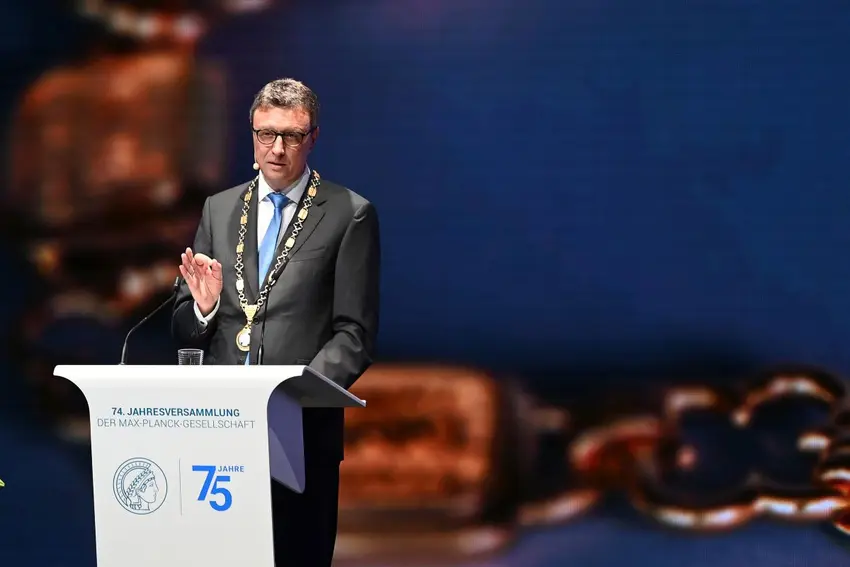
Dr. Patrick Cramer, President of the Max Planck Society which is among the world’s leading organisations for science and technology research, recently gave an interview with Der Spiegel magazine in which he highlighted the important role immigrant researchers play in Germany, and explained why he supports dual-citizenship, among other liberal approaches to immigration.
The role of foreign nationals in German scientific research
“We are following with concern how the migration debate is being conducted,” Dr. Cramer told Der Spiegel at the beginning of his interview, explaining that conducting cutting edge scientific research “depends on being able to attract international specialists…[and] the best talents.”
Researchers from around 130 nations work at the Max Planck Society and roughly 40 percent of the directors don’t have a German passport, according to the president.
“That is why I oppose nationalist forces that are out to isolate themselves and threaten precisely this culture of welcome,” Dr. Cramer said.
He added: "In order to keep top people here, we need dual citizenship for those who would like to get involved with us permanently and who feel connected to our country."
Germany's previous 'traffic light' coalition government, made up of the Social Democrats (SPD), Greens and FDP passed significant citizenship reforms - allowing dual citizenship for German passport holders and also easing the requirements for immigrants to naturalise.
But the conservatives have vowed to dismantle parts of the reform - including a plan to get rid of allowing dual citizenship for all.
READ ALSO: Why is dual citizenship so controversial in Germany?
Could researchers from the US seek a new home for their work in Germany?
It’s well documented that during the Nazi regime in the 1930s and 1940s Germany suffered an extensive brain drain in which renowned scholars fled the country – some because they were directly threatened and others to get out of a regime that was hostile to certain schools or thought and research. This was ultimately a boon to countries like the United States, which gladly took in top German scientists. Ironically some of them proved enormously helpful to the US war effort in helping with the creation of atomic weapons.
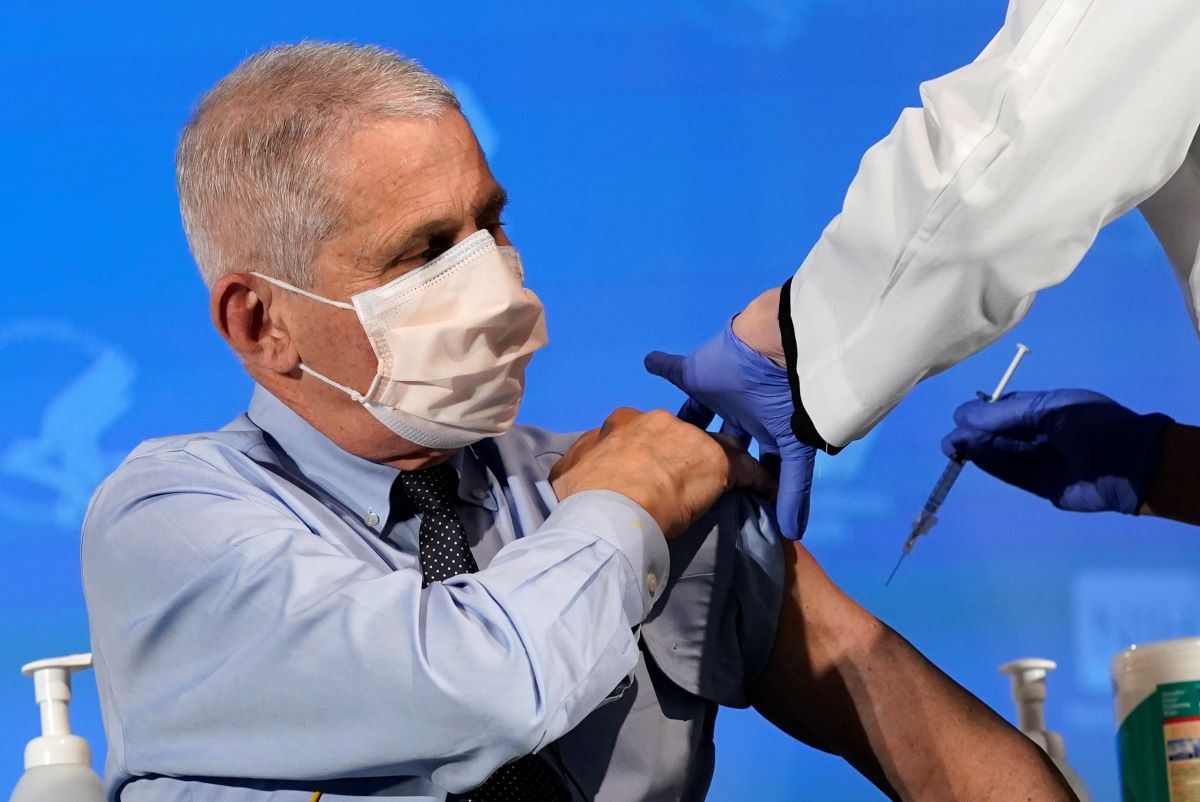
Some 80 years later, an administration that is hostile to some scientific research has taken the reins in the US. To give just one example, the Trump administration has attempted to intervene in the National Institutes of Health (NIH), which is one of the biggest funding institutions of health research globally.
For now it’s unclear if the US will radically defund scientific research broadly, but Cramer notes that his American colleagues have voiced concern.
In the US, “gender research, climate and Earth system research and research on infectious diseases are coming under particular pressure,” Cramer told Der Spiegel.
He added that this could ultimately lead to top researchers seeking places to continue their work, such as in Germany.
“We are already seeing the first signs of this," Cramer said. “In response to the most recent call for research group leaders, we received twice as many applications from the US as in the previous year.”
All of that in mind, Cramer suggests the US may become a talent pool for German research institutions.
During his own trip to the US, scheduled for later this spring, Cramer suggests he plans to approach some leading researchers to ask, “Are you perhaps interested in coming to Germany? And if so, what do you need for it?"
READ ALSO: Checklist - How to move to Germany as an American
Science calls for diplomacy in a time of global conflict
Regardless of how things develop, it's clear to those at Max Planck Society that science is best done in collaboration, and not only with people from the US but with the world’s top researchers, wherever they are found.
China too is investing heavily in research, for instance.
“Decoupling [from China], as the American government is striving for, is not in our interest,” Cramer said, although he noted that he does not want to collaborate in research there with proximity to the military or which could be used to monitor the population.
Research collaborations with Russia had been cut following the country’s invasion of Ukraine. But here too, Cramer looks forward to future cooperation.
“There will be an end to the war, a time after Putin,” he said. “Then science is ready, because there are still bridges here.”
READ ALSO: RANKED - The 'best' universities in Germany for 2025
Comments