
US President Donald Trump began implementing tariffs on imported goods over the weekend, initially with 25 percent tariffs levied against goods from Canada and Mexico and 10 percent tariffs levied against goods from China.
During his campaign he had also talked about imposing tariffs on goods from the EU, but he has not yet implemented those.
The price of the euro seems to have been immediately affected by the news, it plummeted to $1.0141 on Monday morning, its lowest level since November 2022. The euro price has slowly declined since Trump’s election in November, before then it was at about $1.09. A weaker euro tends to negatively effect people living in Germany, because income earned in Europe loses value abroad.
European stock prices have also taken a hit. Meanwhile headlines in English and German media have begun referring to the tariff developments as a "trade war".
How does this affect Germany?
Experts expect that even the tariffs against Mexico and Canada could have knock-on effects for the German economy.
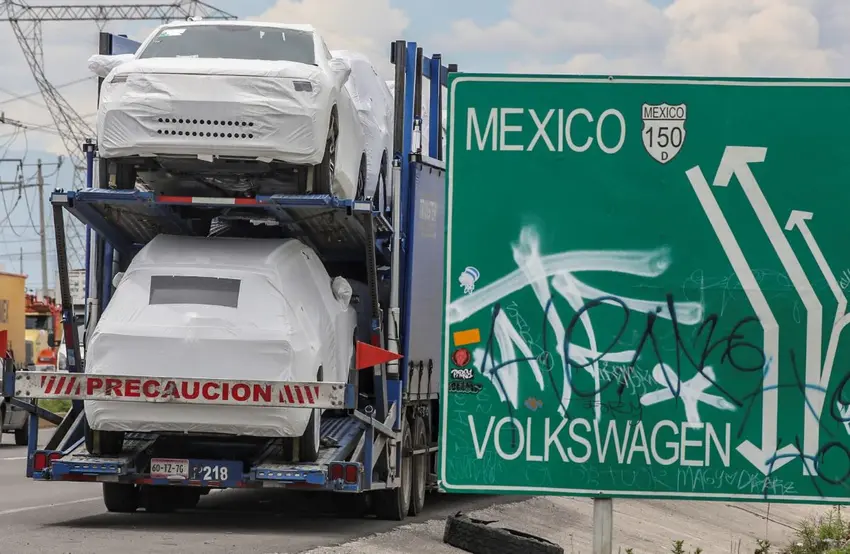
German automakers in particular have voiced concern. Audi, BMW, and Volkswagen all operate production plants in Mexico, and sell many of the cars they make there in the US. Mercedes-Benz also has a joint plant in Mexico with Nissan. Volkswagen also had plans for a new battery cell factory in Ontario, Canada – designed to supply cells to the group’s electric car plants in the US.
The auto giants gave cautious comments on the day after the tariff announcement.
“We are monitoring developments in the USA very closely,” a Volkswagen spokesperson told the DPA.
"Mercedes-Benz supports a liberal trade order based on WTO rules. This includes the principle that all parties involved find the same conditions," a spokesperson from the group said.
If they remain in place for long, tariffs would hurt the auto brands’ US sales, negatively impacting profits at a time when the firms are already cutting costs by laying-off large numbers of workers here in Germany.
Last week, BMW CEO Oliver Zipse proposed that the EU lower duties on American made cars (currently set at 10 percent) in an effort to appease the US and maybe avoid new tariffs.
READ ALSO: How Trump’s tariffs could hit companies in Germany hard
Is Europe next?
Asked if he would also impose tariffs on products from the EU, Trump recently answered, “Absolutely.”
For their part, European Union leaders have said the EU would retaliate "firmly" if tariffs were raised against the bloc. But for now, Brussels hopes to avoid a trade conflict with Trump through negotiation.
If EU-wide tariffs were to be imposed, there is good reason to think Germany, which is Europe’s largest economy, would be the hardest hit.
Previously European Commission chief Ursula von der Leyen suggested that Europe might keep Trump on their side by buying more liquefied natural gas from the United States. Trump has demanded the EU buy more US oil and gas – while also complaining the bloc does not import enough American cars and farm products.
What are people saying?
German Chancellor Olaf Scholz reacted on Sunday, saying it was important not to divide the world with new trade barriers.
Scholz also suggested that the EU bloc has "scope for action" as a major economic power.
Friedrich Merz, the opposition leader and frontrunner to become the next chancellor, seconded this sentiment, saying, "Tariffs have never been a good idea for resolving trade policy conflicts."
Trump believes by imposing tariffs he can boost the US economy, protect jobs and raise tax revenue. But economists warn that tariffs ultimately hit businesses and consumers on both sides, making the cost-of-living more expensive everywhere.
Dirk Jandura, President of the German Foreign Trade Association BGA, suggests that people in the US will be the real losers of Trump’s tariff policy: "The losers are always the end consumers, who feel the price increases at the checkout. I would like to see the tariffs still averted."
READ ALSO: How do Germany's leading political parties plan to fix the economy and boost jobs?
Comments