
Inside Germany is our weekly look at some of the news, talking points and gossip in Germany that you might've missed. It’s published each Saturday and members can receive it directly to their inbox by going to their newsletter preferences or adding their email to the sign-up box in this article.
Which German political party will you be matched with?
We are counting down the days until Germans go to the polls on February 23rd.
Perhaps you've been reading our election coverage and finding out what different party pledges are on things like the economy, housing or immigration.
If you are eligible to vote, you will no doubt be seriously thinking about which party deserves your support. Or if you haven't got German citizenship, maybe you're just wondering: which party suits me best? Who am I most aligned with?
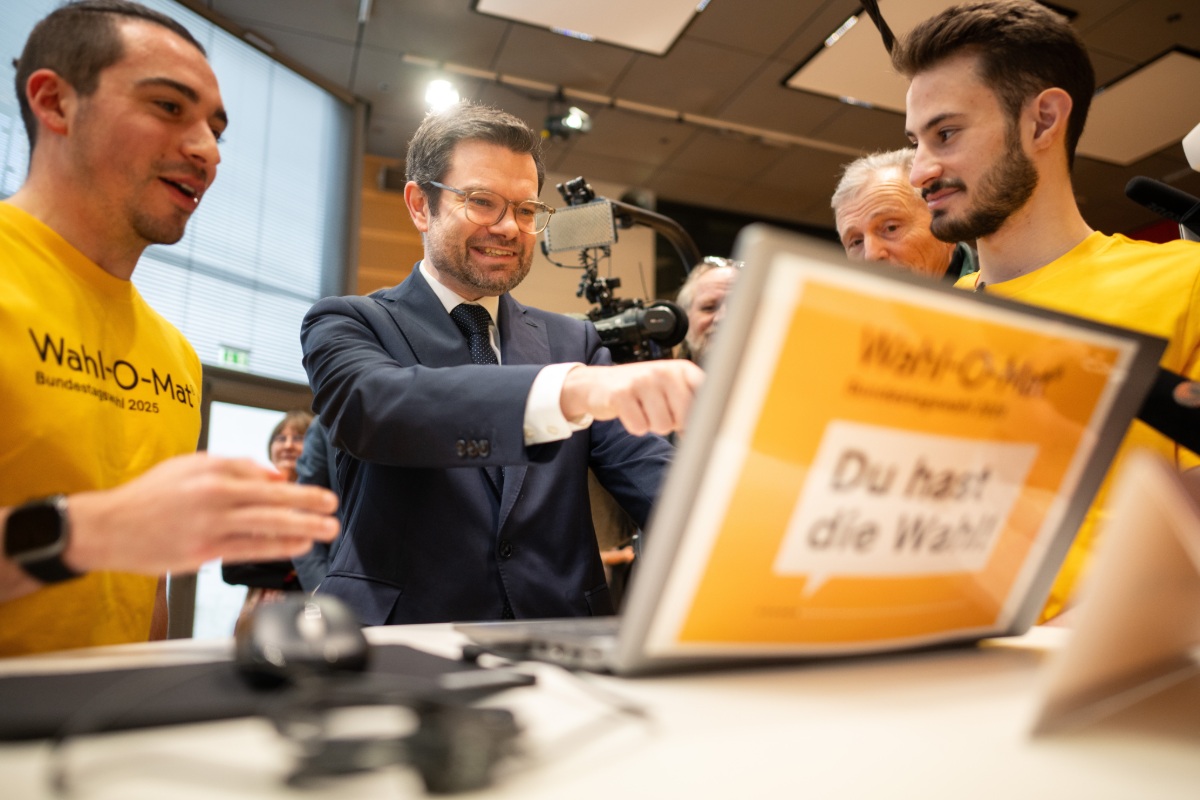
Step forward, Wahl-O-Mat. This handy online tool can provide guidance on which parties line up with your core beliefs. To put it another way, it's like matchmaking for politics.
As Paul Krantz wrote in a report this week, the Wahl-O-Mat, which you can access here, takes the form of an online quiz. It features nearly 40 statements on domestic and foreign policy, immigration issues (including dual citizenship), energy, benefits and even on an Autobahn speed limit and other topics.
You can choose ‘agree’ (stimme zu), ‘neutral’ or ‘disagree’ (stimme nicht zu) for each statement or you can skip it.
"After you’ve marked your opinion on 38 theses, you’ll see your results," writes Paul. "Parties are scored on their agreement with your answers: when you and a party agree on a thesis they get two points, when you are neutral and they agree they get one point, and when you and the party disagree they get no points."
At the end of the quiz you'll have an idea of the parties that align with your beliefs - your best match if you will!
Although it is not fool proof - and you may opt to vote more tactically - perhaps it's a good tool to use if you're still not 100 percent sure about who to vote for.
But the fun thing is that you don't even have to be a voter to take part. You can find out which German political parties fit your vibe - and you get to practise your German while doing it.
The German city offering free beer to encourage voting
Over to Duisburg in North Rhine-Westphalia now where authorities are teaming up with carnival organisers to offer a local beer as an incentive to get people to vote.
Voters can visit the Bürgeramt Mitte on Saturday, February 15th, between 10am and 2pm to collect their postal voting documents (if they don't already have them) and then cast their postal vote.
Those who exercise their democratic right to vote will then be offered an alcoholic or non-alcoholic König Pilsener (or KöPi as it is also known) or a soft drink. There will also be snacks on offer like Bratwurst.
The move is aimed at increasing voter turnout which has been especially bad in the area. Only around 68 percent of Duisburg's voters turned out in the last nationwide election in 2021.
"Sometimes you have to take unusual paths," city director and head of elections Martin Murrack told German magazine Spiegel when explaining the incentive.
Are Germans falling out of love with Abendbrot?
For foreign residents in Germany who enjoy a warm dinner in the evening, Abendbrot (literally - 'evening bread') can be perplexing.
But the German culinary custom of a light evening picnic with a spread of bread, cold cuts of meat, cheese and boiled eggs can be tasty as well as convenient. Yet a new survey suggests it might even be going out of fashion in Germany thanks to younger people.

German news agency DPA reported this week that only around a quarter of young adults (26 percent) agreed that they preferred an Abendbrot-style snack compared to a warm meal at dinner. Among those over the age of 55, 37 percent agreed that they preferred Abendbrot.
So why isn't it so popular anymore?
Traditionally, Germans have a hot sit-down lunch between 12 and 2pm, and that's why people began opting for a simple cold meal based around bread later in the day.
According to cultural scientists, this custom of eating cold food in the evening dates back to the 1920s. At that time, industry dominated everyday life - in contrast to the more agricultural structures in countries like Italy and France.
Although many workplaces in Germany do still have a canteen where hot meals are served, that trend has been changing. More people are opting for a quick sandwich or salad at lunch and then having a big warm meal in the evening.
By the way, the same survey found that at breakfast time, bread is the most popular option across all age groups.
The most popular type of bread among Germans is wholemeal, followed by multigrain, rye, crispbread and pumpernickel.
I have to agree that German bread is wonderful and I have to stop myself eating it for every meal.
Are you an honorary German?
Sadly, we at The Local do not have the power to bestow a naturalisation certificate on our members.
But I was delighted to hear that many of you enjoyed our alternative citizenship quiz this week!
If you got the majority of those questions correct, I reckon you can safely say that you're fully integrated into German life.
Comments