
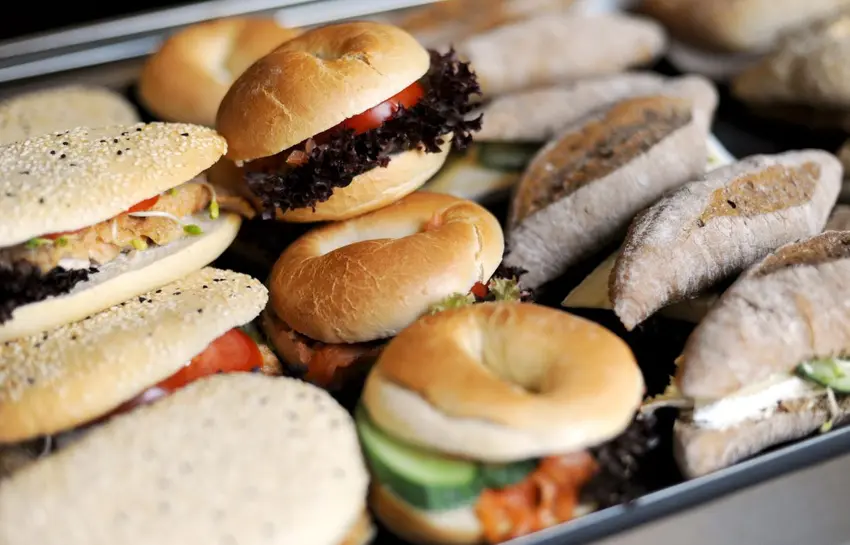
How you order a sandwich in Germany depends on where exactly you are doing so.
True to the basic logic that underlies much of the German language, generally sandwich names are a description of what’s on them. So Käsebrötchen, as the name implies, is a cheese sandwich, and Käse-Schinkenbrötchen is a ham and cheese sandwich.
This basic naming formula – [main ingredient] + brötchen – is used in many of the bakery chains and generic cafes found in bigger cities and train stations across the country. It’s also a sure-fire way to ask for a sandwich when you aren’t sure of the name: When in doubt ‘item + brötchen’ it out.
But, as those familiar with German dialects might expect, things get a little more complicated regionally.
It’s all about the bread
There are at least 300 specific types of German bread – a fact that some Germans are quite proud of.
READ ALSO: How Germany's marvellous bread helped me overcome food anxiety
And while you couldn’t reasonably be expected to learn the names of all of them, picking up a few along the way will make ordering sandwiches easier, because regional German sandwich names are often named for the bread that’s used.
Here are just a few regional sandwich names to be aware of:
Belegte Brötchen
Belegte Brötchen typically refers to open-faced sandwiches. The term can literally be translated to “occupied bread”, and in some places it can refer to sandwiches broadly (not just the open-faced ones).
Similarly you may occasionally hear Brot mit Belag (bread with filling).
Sandwiches under this name are thought to have originated in Southern Germany, but you can find them marked as such in bakeries throughout Germany, Switzerland and Austria.
If you’d like to try making Belegte Brötchen at home, check out these recipes suggested by Healthy Green Kitchen.
Other standard Hochdeutsch or ‘High German’ terms that could be used include simply Brot, or Pausenbrot.
Schnitte, Stulle, Bütterken, Knifte, Bemme
All of these words are regional terms for bread and/or sandwiches.
(Die) Stulle is more common around Berlin and in Germany’s northern regions, for example, whereas (die) Bemme is more specific to the Saxon dialect.
(Die) Schnitte and also simply (das) Brötchen are understood widely throughout Germany.
(Das) Bütterken or also (das) Bütterbrot, would more specifically apply to butter on a slice of bread. But in German, this too fits within the broader category of sandwiches – go figure.
Semmel and Weggla
In much of Bavaria, (die) Semmel is more commonly used. For example, you could get a Leberkässemmel, which consists of a thick slice of meatloaf served in a bread roll – often with a generous portion of sweet mustard.
But regional terms – especially for local specialities like bread and bier – can change quickly in the south.
In parts of Franconia, which makes up the northern part of the state you may hear (das) Weggla instead.
To order a sandwich with three of Nuremberg’s famous sausages, for instance, you’d ask for “drei im Weggla” (three in a bun).
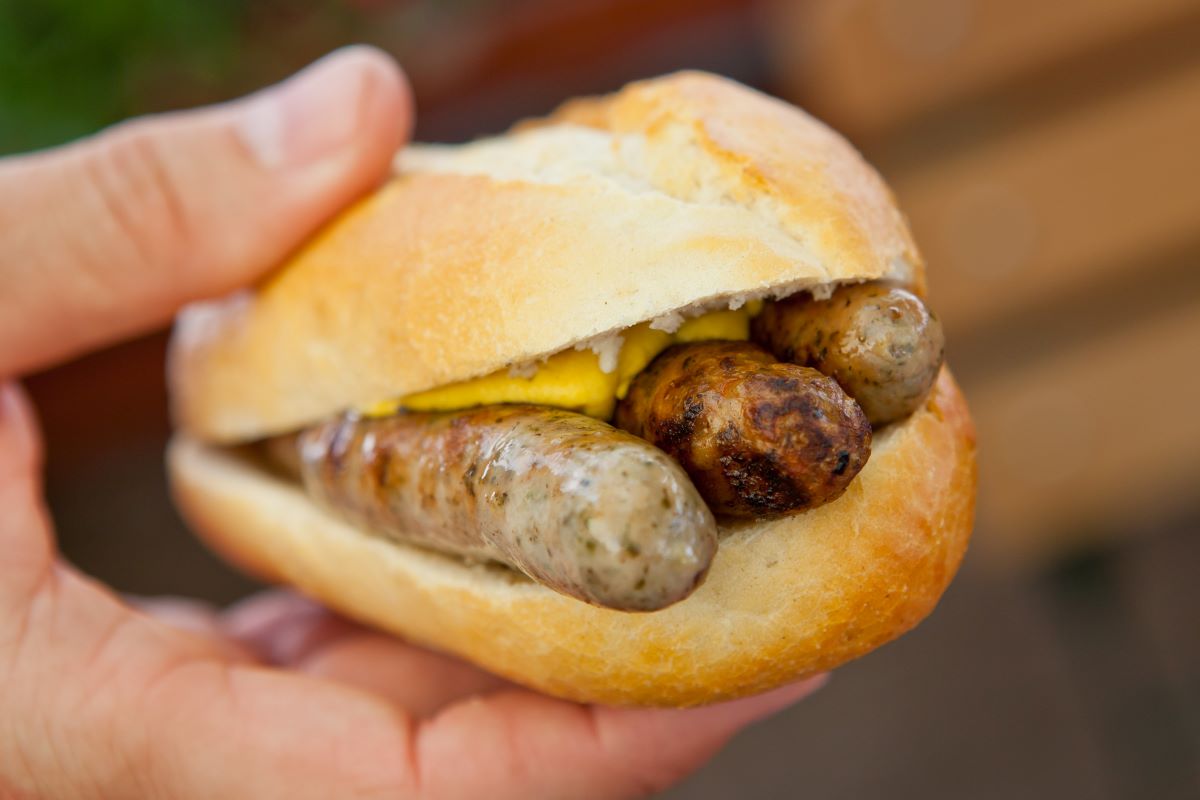
This is perhaps a step closer to the Swabian term – (das) Wecke or Weckle.
READ ALSO: 10 regional dishes you have to try while visiting Bavaria
Röggelchen
On the west side of Germany, where buns are more often made of rye (Roggen), you could also hear the term (das) Röggelchen.
A Röggelchen is also part of the notorious Cologne specialty Halve Hahn, which despite being called a 'half-chicken,' is actually more like a deconstructed cheese sandwich.
Sandwiches are popular as ever
They might not agree on what they’re called, but one thing that Germans can agree on; sandwiches aren’t going anywhere.
A recent YouGov survey found that young adult Germans are increasingly making and eating more sandwiches.
DPA reported that the uptick in sandwich consumption could be in response to rising food prices, or because they are convenient for modern lifestyles.
Around 30 percent of German adults surveyed said they agreed with the statement “I eat sandwiches to save money.”
Irene Krauß, who wrote the book “The Big Book of Pretzels” and previously ran the Museum of Bread and Art in Ulm suggests that "More and more people eat out of the house.
"Bakeries and bakery shops fit in with this trend, where you can get coffee in addition to a bread or sandwich. It’s not particularly ‘cheap’, but it is certainly cheaper than going out to eat."
Did we miss your favourite German term for a sandwich? Let us know in the comments below.
Comments