
We've updated this to celebrate the Day of German Bread on May 5th 2020.
It was only as I bit into my second Laugenstange (pretzel stick) of the day that I realized I had rebuilt my problematic relationship with bread.
That was a few weeks ago, but for years I had tried to avoid any kind of bread, believing it was the root of my problems. It’s not that I had an intolerance to gluten and I’m not a sufferer of the debilitating coeliac disease. But I had read countless articles on why eating bread would lead to piling on weight and health difficulties.
I struggled with self-esteem and body confidence issues during my 20s and took these warnings to heart. Cheese on toast and tuna sandwiches were banned from my stomach, but this only led to cravings – and, looking back, it didn’t actually make me healthier at all, only more anxious.
Despite it being an integral part of our meals historically, bread today has become controversial and even a victim of the war against carbohydrates that rages in some parts of the world.
Yet in Germany, although the diet industry does exist, peoples’ love of bread seems to have endured. Thankfully, this has rubbed off on me and I am now no longer scared of a loaf.
READ ALSO: Five delicious breads you have to try in Germany
Brotzeit
I had only been in Berlin a few weeks when my first German flatmate arranged brunch or Brotzeit (literally bread time). We’d sit on the balcony of her Neukölln flat as friends brought over huge slabs of cheese, or apricot jam, fresh honey, cucumbers, fruit or pretend salami (for the veggies). There was every kind of spread available, from cream cheese to bright pink beetroot spread.
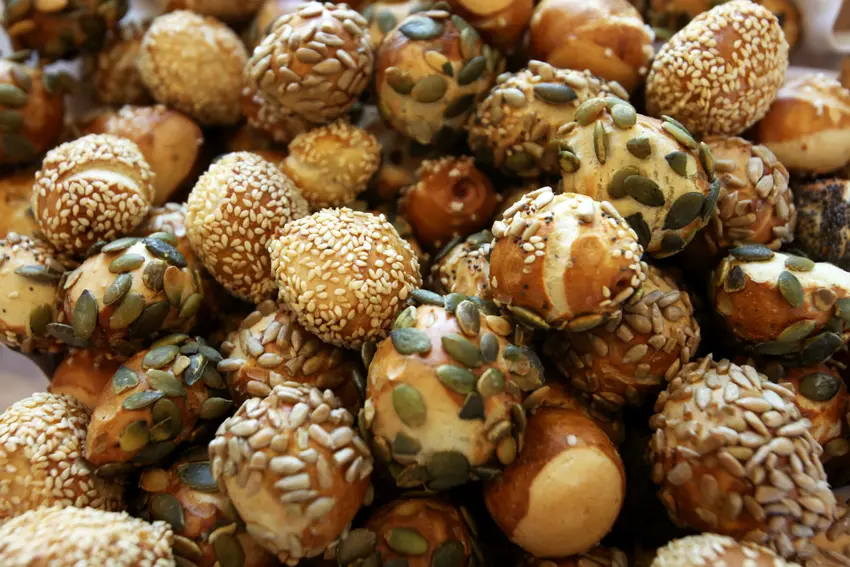
I watched in awe at how she laid out all the ingredients of the brunch with so much care, as if it was a theatre production. She would empty brown crinkly bags filled with Sonnenblumenkernbrötchen (sunflower seed rolls) or Kürbiskernbrötchen (pumpkin seed rolls) into a big bowl.
From Roggenbrot (rye bread) to Zwiebelbrot (onion bread) or Vollkornbrot (whole grain), there was never a shortage of carbohydrates.
To start with I was cautious and only nibbled on a small roll. It was only after several months of watching people in Germany eat up bready goodness with such gusto that I built up the courage to really enjoy it too.
'Quality and variety'
German bread is different to other kinds in Europe. It’s composed mainly of whole grains, like rye, spelt, millet and wheat, making it more dense than fluffy ciabatta or baguettes. It’s a huge part of the country’s food culture, from Munich to the Baltic Sea.
Bernd Kütscher, director of the German National Bakers Academy in Weinheim and head of the German Bread Institute in Berlin, says it’s the “quality and variety” that makes it special.
“While most countries only know wheat bread, we like to bake with rye, spelt and other grains that grow in different parts of Germany thanks to our different soil conditions,” he says.
Kütscher, who also runs a bread blog, adds that the rye needs to be mixed with sourdough, which helps to produce a distinct flavour and makes it easier to digest and conserve.
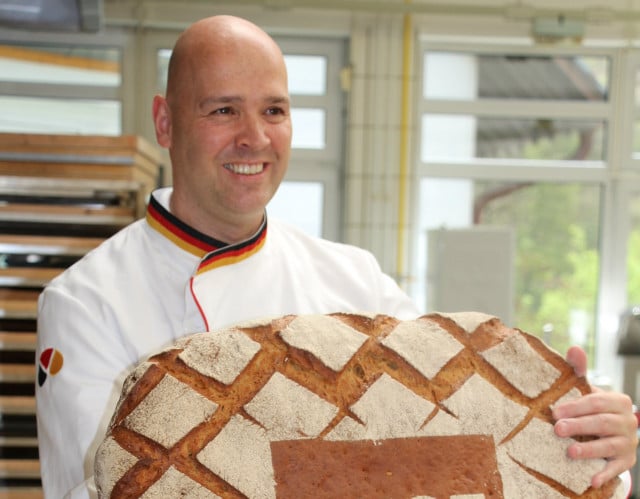 Bernd Kütscher. Photo: German National Bakers Academy
“In addition, only qualified master bakers are allowed to open a bakery in German," he adds, emphasizing the skill needed to bake good bread.
Kütscher says the German Bread Institute has found that more than 3,200 different types of bread are offered in 11,000 German bakeries every day, which highlights its popularity.
Berlin-born writer Ursula Heinzelmann, author of Beyond Bratwurst, a History of Food in Germany, agrees that the choice is “legendary”.
“Germany is in the middle of a continent, we cover a lot of very different areas climatically, that makes not only for good bread, but great diversity of form,” says Heinzelmann. “That really is something special.”
Part of German culture
My ultimate favourite, I’ve learned, is Laugenbrötchen (pretzel buns), which taste salty and have a pleasing sheen to them like they’ve been varnished. This is the lye they’re dipped in.
But it’s not just traditional German bread I’ve fallen in love with. There are also many Middle Eastern supermarkets that sell huge breads covered in flour or poppy seeds. Dipped into a fresh dip like hummus or Paprikapaste, they can provide a nourishing meal when there’s no time to cook after a long day.
Kütscher says bread is “firmly established” in German culture, “starting with breakfast, break-time snack and ending with supper in the evening”.
In fact, the German way of having a big cooked meal for lunch and a lighter ‘evening bread spread’ or Abendbrot in the evening is one of the culinary habits I’ve picked up since arriving here almost a year and a half ago, along with maintaining strong eye contact when clinking glasses and saying ‘Prost’ before a sip of beer.
SEE ALSO: Prost! Why Germans make eye contact when they clink glasses
It’s clear in Germany that bread is king – you only have to look at the queues in bakeries with their mouth-watering goods. But has it always been this way?
Heinzelmann, who grew up in West Berlin, can remember bread being a huge part of her childhood menu. “The typical everyday bread was a large sourdough loaf with a bit of wheat – Mischbrot,” she says. “We would have called it grey bread which was not a derogatory term. It’s not white, it’s not black, it’s Graubrot."
"Rolls were only for the weekend or special occasions. Something special and more expensive than bread.”
However, Heinzelmann points out that not all bread is equal and hopes that a new breed of artisan bakers will ensure quality is on offer in Germany.
“Nowadays you have, at every corner, the so-called bakers who are part of a larger chain and are really quite industrial. They have pre-baked doughs which they just finish."
"We need a large base of affordable reliable quality at every corner for everybody.”
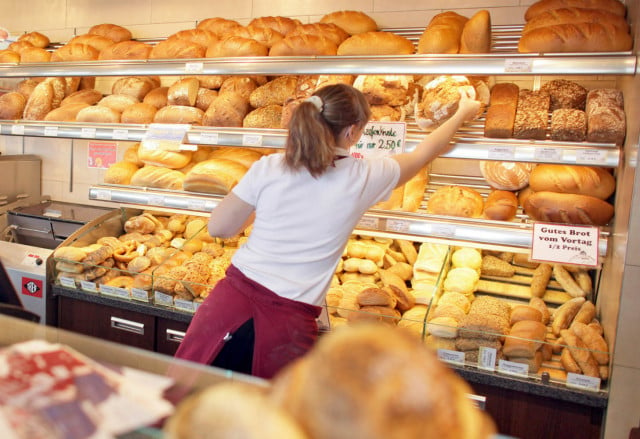 Photo: DPA
Journalist and author Samuel Fromartz, who worked at Weichardt Bakery in Berlin as part of his research on his book, In Search of the Perfect Loaf, says he found high quality bread on offer in Germany.
“There’s a bread culture in Germany so people eat and appreciate breads,” he says. “I love that you can buy pretty good bread all over."
"Not all the bread I had in Germany was great but what I loved was the variety of breads and all the things they were doing with wholegrains, seeded loaves and how sourdough was essential to fermentation of their breads as opposed to just using commercial yeast."
"All of that increases the spectrum of flavours and textures that you can get from bread.”
Fromartz says his favourite loaf is a Rogenweißen (rye wheat) from Weichardt. “It’s marvelous,” he says. “You have a couple of slices and it’s almost a meal in itself.”
'Everyone should eat bread'
Although I’m sure there are people who don’t like the wheat stuff, not one person I’ve met here yet has had a bad word to say about it. There also seem to be far fewer scare-mongering articles displaying how you can lose weight by ditching bread from your diet.
READ ALSO:
- Woman in Essen kicked off bus for eating a bread roll
- North German court rules bread rolls and coffee don't constitute breakfast
Kütscher says there is a trend in western media to sell “new nutritional wisdom” which creates uncertainty for people over what to eat.
But he says cutting out bread isn’t healthy. “Everyone should eat bread every day, including some wholegrain bread,” he says. “A hundred years ago people ate twice as much bread without being bigger than nowadays.”
For me, things changed when I left a city and job that made me unhappy and decided to take the plunge and move abroad. Perhaps shedding off the worries I’d built up led me to also ease up on my food anxieties and accept the German love of bread.
I’ve never looked back and I hope the popularity of bread in Germany continues. Eating Laugenstangen without guilt may be a small step for bread-kind, but it’s a giant leap for me.
Comments