
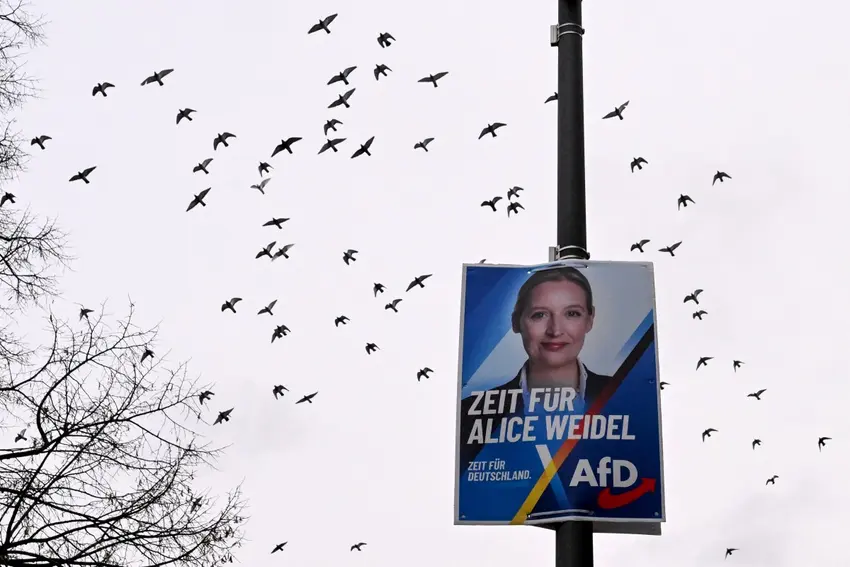
With just weeks to go until Germans vote, migration and security policy in Germany have become the main election issues.
It comes after a knife attack in the Bavarian city of Aschaffenburg claimed the lives of a man and a two-year-old boy.
The suspect in last Wednesday's attack is a 28-year-old Afghan man, who had previously been rejected as an asylum seeker, with a history of mental health issues.
The incident was the latest in a series of violent crimes committed by asylum seekers that have fuelled a bitter debate over immigration.
READ ALSO: Germany's asylum services in the spotlight after knife attack
What's happening now?
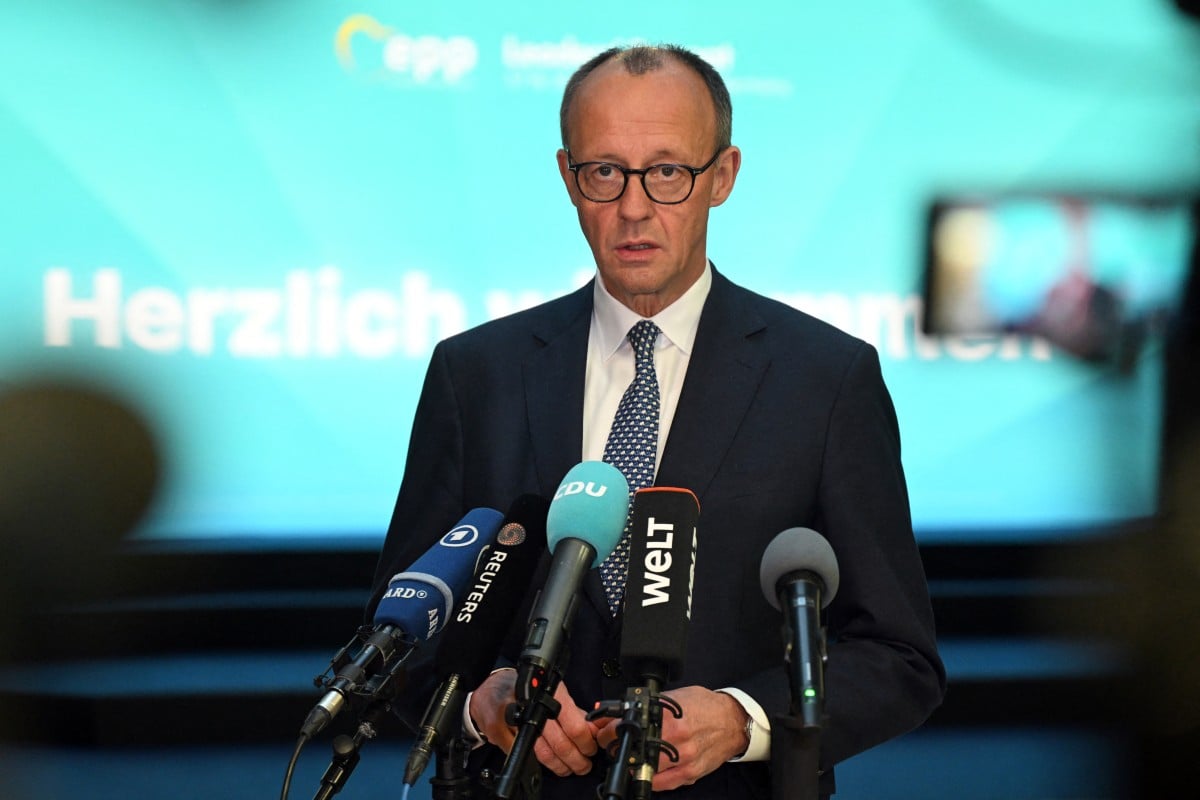
After the attack Friedrich Merz, who leads the opposition conservative CDU-CSU and has a strong poll lead, vowed that if elected, he would quickly order permanent controls on all German borders and push through sweeping policy changes.
He said that "under my leadership, there will be fundamental changes to immigration law, asylum law and the right of residence in Germany".
Later, it emerged that the CDU/CSU was submitting motions to the Bundestag on Wednesday, as well as a draft law on Friday.
On Wednesday, Chancellor Olaf Scholz, of the Social Democrats, is expected make a statement on migration and security, with a heated debate expected after. It is being called a 'migration showdown' by some German media outlets.
Why is all of this so controversial?
The CDU/CSU intends to put two motions for resolutions on the agenda on Wednesday called: ‘In favour of a change of policy on internal security’ and ‘Five points for secure borders and an end to illegal migration’.
The motions include calls for permanent border controls and more deportations. In another motion, there are proposals to allow for dual citizens to have their German nationality revoked in cases of serious criminal offences and to reverse parts of the citizenship reform, such as allowing dual citizenship for all and the option to naturalise after three years in cases of excellent integration.
The motions are to be voted on in the Bundestag Wednesday afternoon, followed by another vote on a proposed draft law on Friday.
READ ALSO: The CDU's immigration plan for Germany including citizenship reform
The draft law entitled ‘Act to Limit the Illegal Influx of Third-Country Nationals to Germany’ aims to end family reunification for refugees who have restricted protection status, and may to go to the Bundestag on Friday.
It isn't clear if the proposals would even be fully allowed under German or EU law.
There's also another major sticking point, because a majority for the motions could be reached with the support of the far-right Alternative for Germany (AfD) for the first time in the German parliament.
As The Local has reported, CDU leader Friedrich Merz has said he is okay with the AfD backing the measures.
Will this happen?
It is unclear if the motions will receive a majority. The CDU/CSU had criticised the AfD in the plans. But the AfD parliamentary group has said it plans to vote in favour of both motions, arguing that it has been demanding tougher measures for years.
According to German media reports, one of the two motions, the 'five-point plan on migration', could receive a majority.
Many fear this will weaken the 'Brandmauer' or firewall' against the AfD - a political strategy used by mainstream parties to limit the AfD's power and influence.
The Protestant and Catholic churches in Germany made the unusual move on Wednesday of getting involved with politics.
They said that parliamentary groups had previously agreed not to enter a situation where votes from the AfD were the decisive factor.
The churches said in a statement: "We fear that German democracy will suffer massive damage if this political promise is abandoned."
Public opinion appears to be mixed. A poll conducted by INSA on behalf of German newspaper Bild found that almost half of Germans (48 percent) would agree to tougher migration laws coming into force in Germany even if they were passed with AfD support. Around 33 percent said they would reject this.
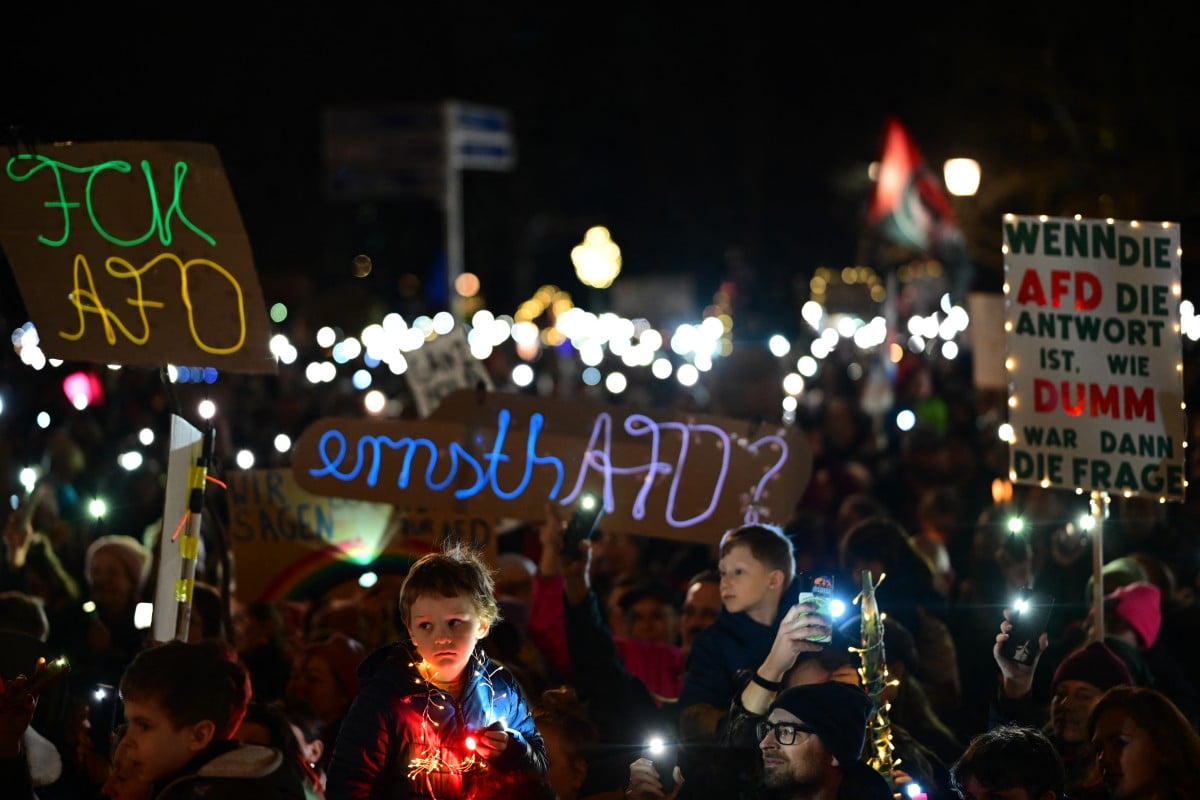
Meanwhile, tens of thousands of people across German cities have been on the streets protesting against the AfD and what they see as German society moving further to the right.
READ ALSO: 'Fundamental changes': German politicians demand action after knife attack
What are other parties pushing for?
The SPD wants to put its own security laws back on the agenda.
It is pushing for a vote on the reform of the Federal Police Act. It also wants to put the national implementation of the EU asylum reform and a series of additional powers for the security authorities on the agenda for the first time.
The Greens are campaigning in favour of creating the conditions for the new Common European Asylum System (CEAS), which sets out common standards and co-operation to ensure that asylum seekers are treated equally in an open and fair system across Europe.
Would anything change in practice?
It's not very likely. This is because the CDU/CSU motions are more of a signal of the direction they want Germany to take.
However the draft law that the Committee on Internal Affairs dealt with initially in November and which, according to the current schedule, could be finally debated on Friday takes thing a step further - although the Bundesrat would have to give its approval if it is passed in the Bundestag.
In any case, it is likely to trigger major discussions across Germany and in the future government.
Comments