
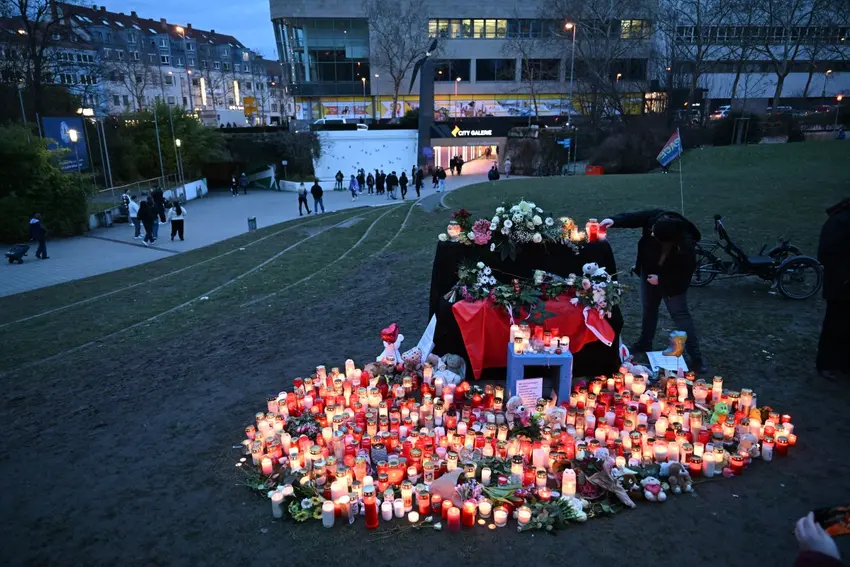
Wednesday's stabbing in Aschaffenburg, which claimed the lives of a man and a two-year-old boy, is the latest in a series of high-profile violent crimes committed by asylum seekers that have fuelled a bitter debate over immigration.
With national elections coming up on February 23, both Chancellor Olaf Scholz's Social Democrats and the opposition conservatives have promised a new asylum crackdown in response to the events in Aschaffenburg.
The hardline response of politicians however risks overlooking the difficult questions raised about the support offered to asylum seekers, experts said.
The suspect in Wednesday's attack, a 28-year-old Afghan man with a history of mental health troubles, was transferred by authorities to a psychiatric institution after his arrest.
His profile was similar to that of the presumed perpetrator of another knife attack in Mannheim in May, which left a policeman dead. He too was an Afghan asylum seeker with a mental disorder.
READ ALSO: 'Fundamental changes': German politicians demand action after deadly knife attack
The suspects in both cases probably had "serious psychological problems, regardless of whether they have were migrants or not", said Ulrich Wagner, psychology professor at Phillips University Marburg.
But conditions for asylum seekers in Germany, already burdened by war and exile, could "massively encourage" their mental health issues, Wagner said.
'No privacy'
"This is not meant to excuse such acts, but it is about finding causes so that something like this can be prevented," Wagner said.
Asylum seekers in Germany were housed in shared accommodation with "practically no private space, no privacy", he said.
Most of them were also barred from taking jobs, which would "bring structure to life".
At the end of 2023, the federal and regional governments agreed a plan to reduce the period that asylum seekers have to wait for their applications to be processed and to potentially enter the job market to six months.
Currently, the time that migrants spend in administrative limbo can stretch to several years.
The stressful conditions in this transition period can "cause psychological damage" on already "vulnerable" migrants, Wagner said.
The various "difficult procedures" and levels of German bureaucracy faced by migrants could also lead to frustration, he said.
Media coverage of previous attacks was also liable to breed copycats, as potential perpetrators in the same situation "get the idea they could do something like this, too," Wagner said.
'Insufficient'
The suspect in the Aschaffenburg stabbing is said to have been referred for psychological assessment on three different occasions, investigators said after the attack.
But despite his issues being noticed by authorities, the suspect was apparently in an environment where the support on offer was "insufficient", said Lukas Welz, head of he German Association of Psychosocial Centres for Refugees and Victims of Torture (BAfF).
"In this regard, Germany has a structural problem," Welz said.
According to his organisation, "30 percent of refugees in Germany suffer from psychological problems such as depression or post-traumatic stress disorder".
Those seeking asylum in Germany are only entitled to medical care in the event of acute illness or pain during the first three years of their stay, the BAfF said.
READ ALSO: How the conservatives want to gut German citizenship laws
"The question of whether psychotherapy is part of this is left to the discretion of the competent social services. In practice, requests for treatment are often handled by medically unqualified personnel," the organisation said.
The problem has been recognised by officials in Berlin. Traumatised refugees "have practically no access to outpatient therapy facilities", even though at-risk people could "pose a threat" if not cared for, Health Minister Karl Lauterbach said in an interview with the Funke media group.
In the interview, Lauterbach pledged more dedicated facilities to address the issue, but such care centres for asylum seekers often suffered from "insufficient and unstable funding", the BAfF said.
And the idea of boosting support services is not in line with the current political environment. After the attack, Scholz slammed an attitude of "false tolerance" towards violent asylum seekers, vowing to take all measures necessary to change the situation.
Germany's opposition conservatives (CDU/CSU), who lead the polls, also called for a "fundamental change" to immigration law and promised steps to refuse entry to migrants at the border, if the party wins the election.
Comments