
Life has been getting expensive in Germany lately. At the supermarket, the price of everyday goods have continued to rise, while gas and electricity bills have remained high in the wake of the energy crisis.
Unfortunately, a number of changes coming into force this year could also make life that little bit more expensive for homeowners and renters - though there is some good news as well.
From increased social benefits to the property tax reform, here are the main changes affecting the housing market and its tenants in 2025.
Housing benefit adjustment
Housing benefit - known in German as Wohngeld - is also set to go up this year in light of the increase in living costs.
The welfare payments will rise by 15 percent on average, amounting to around €30 extra for households on average. Wohngeld is given to low-income households who are struggling to afford their rents or mortgage payments, for example due to working a minimum wage job or having a small pension.
It is reviewed every two years to ensure it reflects the current costs on the German housing market.
Property tax reform
Around two years after German homeowners filled in and submitted their property tax forms, the controversial reform is finally set to come into force - and it could mean higher costs for households.
The property tax changes are intended to update the amount that owners pay to better reflect the current value of their properties, and different federal states have used different ways of assessing this.
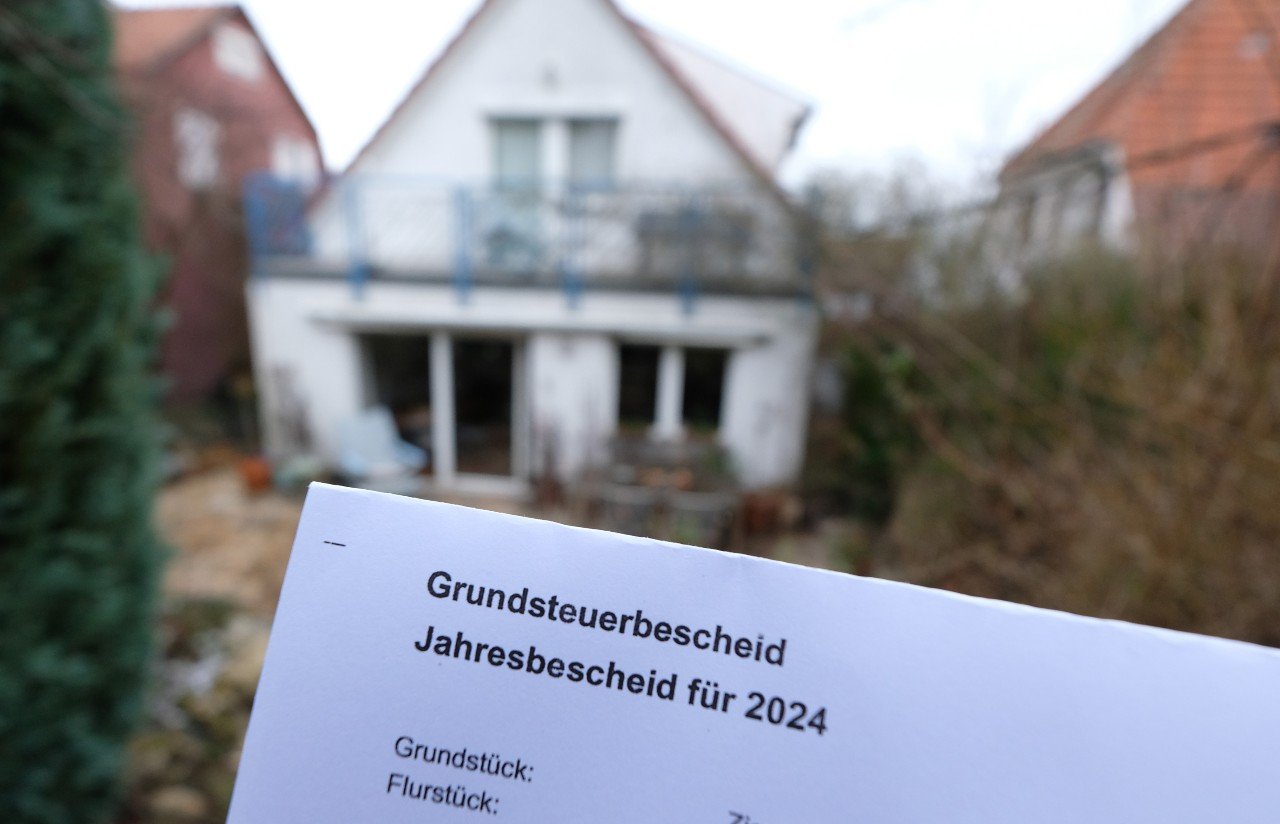
In some cases, property tax bills could go down, but homeowners' association Haus & Grund expect an average increase of €1,000 per year for those unlucky enough to see their bills go up.
For renters, this could also mean a hike in additional costs, as property taxes are one of the costs that landlords are entitled to pass onto renters. Currently, tenants pay around 18 cents per square metre each month to cover the homeowners' property taxes, though this could potentially increase.
Unfortunately, a huge number of homeowners are still waiting to find out how much they're due to pay, with the majority of big cities aiming to send out the assessments in January or in the first quarter of the year, so the uncertainty may continue for another few months at least.
READ ALSO:
- Germany's chaotic property tax reform and what it means for you
- Can I appeal the new property tax assessment in Germany?
Stricter rent controls
Though the future of Germany's rent brake is far from certain, tenants in rent-controlled properties will at least be able to rely on it until the end of 2025, as this is the date the Mietpreisbremse has been extended to.
Currently, asking rents cannot be more than 10 percent higher than the average market rent in the local area, and landlords aren't allowed to raise rents by more than 20 percent in the space of three years.
In a new tightening of the law, tenants will also be able to claim back overcharged rent from the landlord for up to 30 months after their contract begins - without needing to submit a complaint beforehand.
Shortage of homes
With the government consistently missing its housebuilding targets, experts predict that shortages on the housing market will worsen in 2025. This year, just 250,000 of the planned 400,000 new homes are expected to be built. Meanwhile high immigration and urbanisation continue to drive up housing demand in urban areas.
Since many people are currently priced out of buying property, this is likely to place more pressure on an already overheated rental market and potentially lead to another hike in rents. It could also make it even harder to find a new home if you happen to be planning a move this year.
READ ALSO: Why tenants in Germany could see steep rent hikes in 2025
Increase in CO2 tax
Germany's CO2 tax is designed to encourage people to move away from fossil fuels and make their homes more energy efficient in order to save money in the future. When it was first introduced in 2021, the tax added €25 to every tonne of CO2 emissions, but this has been increasing year-on-year and will be set at €55 per tonne in 2025.
That means that houses that rely on fossil fuels for heating and electricity - i.e. those with gas or oil heating systems - are likely to see an increase in their energy costs this year.
For homeowners, this will be reflected in a higher bill from your energy provider, while renters could see their Nebenkosten (additional costs) go up. It's worth noting, though, that renters don't usually have to pay the lion's share of the CO2 tax: if the rental property has a low efficiency rating, landlords could be liable for up to 95 percent of these extra costs.
READ ALSO: Everything that changes about life in Germany in January 2025
Lower interest rates
After several painful hikes in interest rates in 2022 and 2023, the European Central Bank (ECB) has begun to lower them again this year, making mortgages more affordable for new buyers.
Currently, people purchasing a home can expect interest rates of around 3.2 percent on a ten-year mortgage, compared to rates of around 3.6 percent a year prior. This could amount to savings of hundreds of euros per month, though it may still be prohibitively expensive for would-be buyers.
For that reason, experts aren't necessarily forecasting a sudden boom on the property market, but there could be a slight recovery with property prices increasing by between two and four percent.
READ ALSO: Do rising rents make buying a home in Germany a better option?
New rules for wood-burning stoves
In an effort to reduce air pollution, Germany has implemented stricter regulations on wood-burning stoves.
As of January 1st, 2025, older models that do not meet current emissions standards must be upgraded or decommissioned. More specifically, stoves installed between 1995 and 2010 must produce no more than 4g of carbon monoxide per cubic metre of exhaust, and no more than 0.15g of particulate matter.
Homeowners who fall afoul of the new rules will need to replace them with compliant models or install filters to reduce particulate emissions. Failure to comply with these regulations could result in fines of up to €50,000.
Mandatory smart meters
Starting this year, electricity customers consuming over 6,000 kWh annually, as well as households with photovoltaic systems, heat pumps, or EV charging stations installed after January 1st, 2024, must be equipped with smart meters.
Average households using approximately 4,000 kWh of energy per year can also request a smart meter from their energy provider. This must be done within four months of their request, and providers can charge up to €20 per year to households with above-average energy consumption.

The goal is to have at least 50 percent of households equipped by 2028 and 95 percent by 2030, paving the way for more efficient energy usage.
Changes to heating law
Barely a year after Greens Economics Minister Robert Habeck introduced his controversial heating law, a number of changes could well be on the horizon.
The centre-right CDU and CSU, who are currently leading in the polls to win the next election, have already pledged to overturn huge swathes of the law - not least the additional subsidies Habeck has offered to households who want to swap out fossil fuel heaters for more energy efficient ones.
READ ALSO: Citizenship to Bürgergeld - The laws the German CDU want to scrap if they win power
The law is intended to encourage households to exchange their old heating systems for things like heat pumps, which consume far less energy, but critics have described it as confusing and convoluted.
If the law were scrapped this year, there would still be a 30 percent subsidy available for people to purchase energy efficient heating systems - but nothing near the 70 percent available to some households under the current heating law.
Comments