
For several months now, opinion polls have given the centre-right Christian Democratic Union (CDU) and Christian Social Union (CSU) parties a reason to celebrate.
In the latest INSA poll published on Monday, the CDU/CSU alliance hit an impressive 31.5 percent - almost double the 16 percent netted by the Social Democrats (SPD) and more than double the Greens' 13 percent.
The liberal Free Democrats (FDP), which recently exited the three-party traffic-light coalition, were languishing on 4.5 percent - just short of the five percent needed to enter the German Bundestag.
If the conservatives' high poll numbers are any reflection of the public mood, they could soon be set to return to a role they previously held for 16 years straight: heading up the next coalition government.
This could herald a major change in the direction of travel in Germany. According to an exclusive report in Bild, the CDU and CSU have drafted a "secret list" of the laws they'd like to overturn as head of the next government.
Though some of these are not so secret, the document is a good indication of the policies the centre-right parties currently have in their crosshairs.
These are the 10 laws currently in the firing line - although in many cases it will be unlikely that they will get the support to change the legislation (more on that below).
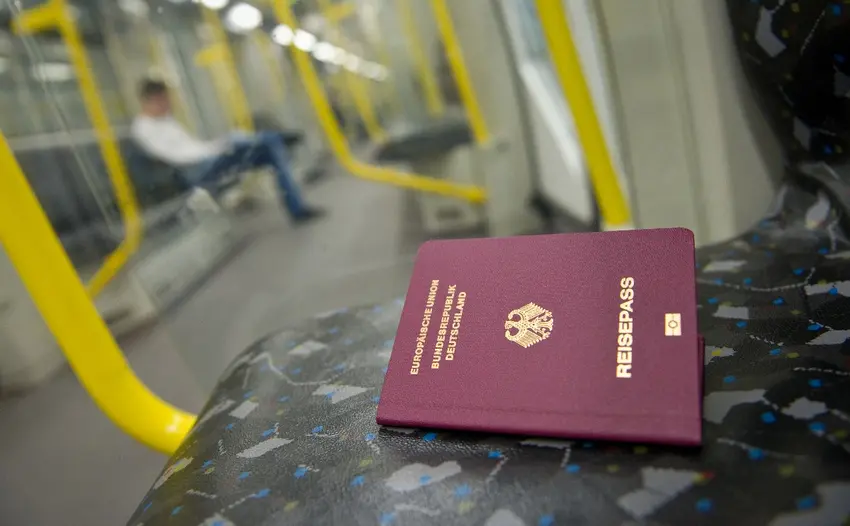
1. Dual citizenship law
A flagship project of Interior Minister Nancy Faeser (SPD), the CDU has long been infuriated by Germany's new citizenship law. The reform permits dual nationality for all new citizens (as well as allowing Germans to keep their nationality when naturalising abroad), and cuts down the years of residence required to be eligible for citizenship.
Back in June, when it finally entered into force, CDU immigration spokesperson Alexander Throm said his party intended to scrap it.
“The CDU and CSU will reverse this unsuccessful reform,” he said. “Dual citizenship must remain the exception and be limited to countries that share our values.”
Throm had previously criticised the bill as a "citizenship devaluation law" and “the law with the most wide-reaching negative consequences for our country”. The CDU/CSU also want to reverse the reduction in years of residence required for citizenship, presumably raising it back up to eight, or six in exceptional circumstances.
As The Local has reported, it is unlikely that they will achieve this because of several factors which you can read more about in our fact check article.
FACT CHECK: Can Germany's CDU scrap the dual nationality law?
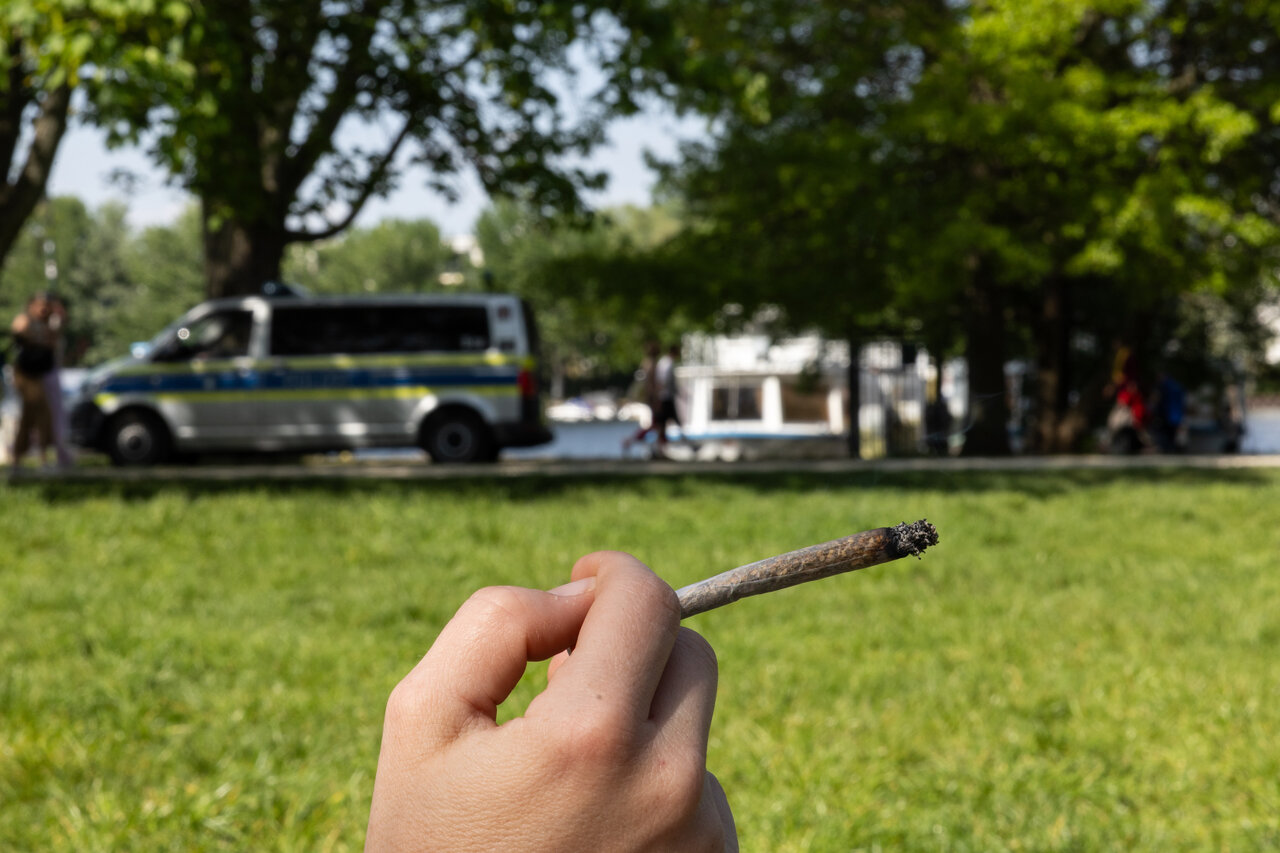
2. Cannabis legalisation
The move to legalise cannabis has long been fiercely opposed by the CDU and CSU. They argue that the bill emboldens organised criminals and neglects the protection of children and minors.
Speaking to ZDF in November, CDU interior spokesperson Silke Launert described the cannabis law as "one of the most important issues to reverse" if they part reentered government.
This would involve once again criminalising possession of the drug and closing the recently opened cannabis members' clubs.
3. Bürgergeld
For the fiscally conservative CDU, the traffic-light coalition's reform of long-term unemployment benefits (previously known as 'Harz IV' has been a constant source of irritation.
With the introduction of Bürgergeld, or Citizens' Allowance, the parties aimed to end the years of tough sanctions on benefits recipients and take a much gentler approach to getting jobseekers back into the workforce.
They also increased the monthly allowance by around 11 percent and gave recipients a year long moratorium on having to dig into savings or downsize their apartment. However, the previous coalition did also draw up a plan to tighten some of the rules around receiving the benefit this year.
READ ALSO: How the German government wants to toughen up rules on unemployment benefits
Nevertheless, the CDU has slammed the reforms as a betrayal of working people and argued that they encourage people to remain unemployed. Instead, the party wants to introduce a system known as Grundsicherung, or Basic Security, that would increase sanctions and end benefits entirely for people who turn down work opportunities.
4. Basic child allowance
The traffic light coalition's Kindergrundsicherung (Basic child allowance), which is due to come into force in 2025, is designed to tackle child poverty and increase access to social support for families.
The concept pulls together different types of financial aid under one payment that is automatically paid out to families, with lower income parents receiving additional help.
However, CDU leader Friedrich Merz has described the reform as "sheer madness" and said he would stop it being introduced in order to make savings in the national budget. "We can't do everything," he told ARD's Maischberger programme in November.

5. Heating law
A key project of Economics Minister Robert Habeck (Greens), the Building Energy Act - colloquially nicknamed the heating law - has been in the CDU's visiers for some time.
The law mandates that households replace old oil and gas heaters with eco-friendly options once they break down, but only in certain areas and types of buildings.
In addition, it offers generous subsidies for households proactively looking to swap fossil fuel heaters for renewable energy sources such as heat pumps.
READ ALSO: How do I install a heat pump in my German property?
If the CDU takes power, they plan to rip up this law - along with the government subsidies.
"People need freedom of choice instead of the government reigning in their boiler room," CDU Secretary General Carsten Linnemann recently told Bild.
6. Self-determination law
One of the hallmarks of the traffic-light coalition was the push to modernise some of Germany's socially conservative policies, expanding the rights of LGBTQ people and other minority communities.
The self-determination law, which allows citizens to change their gender and name much more easily, was part of this project.
CDU parliamentary leader Andrea Lindholz has criticised the law as a "catastrophe" and "a genuine security risk" and has pledged to revoke it - at least partially - if the party returns to power.
READ ALSO: How Germany's 'self-determination law' will make it easier for people to change their gender
7. Financial burdens for farmers
At the start of this year, a wave of farmers' protests swept across Germany, with disgruntled agricultural workers blocking roads and motorways with their tractors.
One of the main sources of anger was the scrapping of key subsidies such as tax breaks for agricultural diesel. The CDU has said this harms the competitiveness of farmers and has argued that diesel subsidies should remain.

8. Nuclear energy exit
Back in April 2023, Germany completed the last phase of its nuclear energy exit, initiating the closure of its final three nuclear power plants in Baden-Württemberg, Lower Saxony and Bavaria.
In November this year, CSU leader and Bavarian state premier Markus Söder called for a halt to the process of dismantling Isar 2, the Bavarian nuclear power plant. Söder has said the shutdown is reversible, although plant operator Preussen Elektra has denied that this is a case.
According to the list obtained by Bild, the nuclear exit is a key policy that the CDU and CSU want to reverse if they re-enter government next year. However, spokesperson Andreas Jung has denied that this is the case, telling the Schwäbische Zeitung that the party would focus on an "innovation offensive" in energy instead.
9. Two-vote cap in federal elections
As part of its plans to reduce the number of MPs in the Bundestag, the traffic-light coalition made a key change to German election that outraged the CDU and CSU.
In Germany, citizens vote for both a party and a candidate in their local area, with the candidates who receive the most first-preference votes (known as a 'direct mandate') automatically gaining a seat in the Bundestag. Under the traffic-light reform, this will no longer be the case, and candidates would only get a seat if their party receives enough votes for them to do so.
The Bavarian CSU, which often gains extra seats through direct mandates, has described this change as damaging to democracy. If they and their sister party, the CDU, re-enter government, it seems another reform could be on the cards.

10. "Pull-effect" for illegal migration
Irregular migration is a major topic for the CDU and CSU, with the parties calling for tougher border controls, swift deportations and the rejection of asylum for people who have already sought protection in another EU or Schengen country.
In addition, the centre-right alliance has regularly slammed traffic-light policies that they believe offer an incentive for illegal migrants, such as the promise of family reunification and quick routes to citizenship.
These "pull-effects" should be withdrawn, the CDU has said, with no citizenship or family reunification offered to those seeking temporary protection.
Will the CDU be able to enact their plans?
This is where things get tricky. Despite their current success in the polls, the CDU and CSU are highly unlikely to gain enough votes to govern by themselves.
Instead, they will need to enter into a coalition with at least one of the parties from the former traffic-light coalition - most likely the Greens or Social Democrats (SPD).
READ ALSO: Scholz and rival trade blows as German election campaign kicks off
That's because the only other party doing well enough in the polls to join a governing coalition is the far-right AfD, who all other mainstream parties have refused to work with.
Though the CDU could rely on AfD votes to enact some of its plans, this would be politically explosive, and the centre-right party would also have to agree to a policy programme along with its future coalition partner - or partners.
With the traffic-light parties having only just passed their laws - some of which have been years in the making - they are unlikely to agree to a bonfire of their policies overnight. What we're more likely to see is a compromise situation in which some laws are watered down while others are kept in their entirety.
Comments (1)