
Riedbahn opens after months-long closure
There is some good news for train travellers.
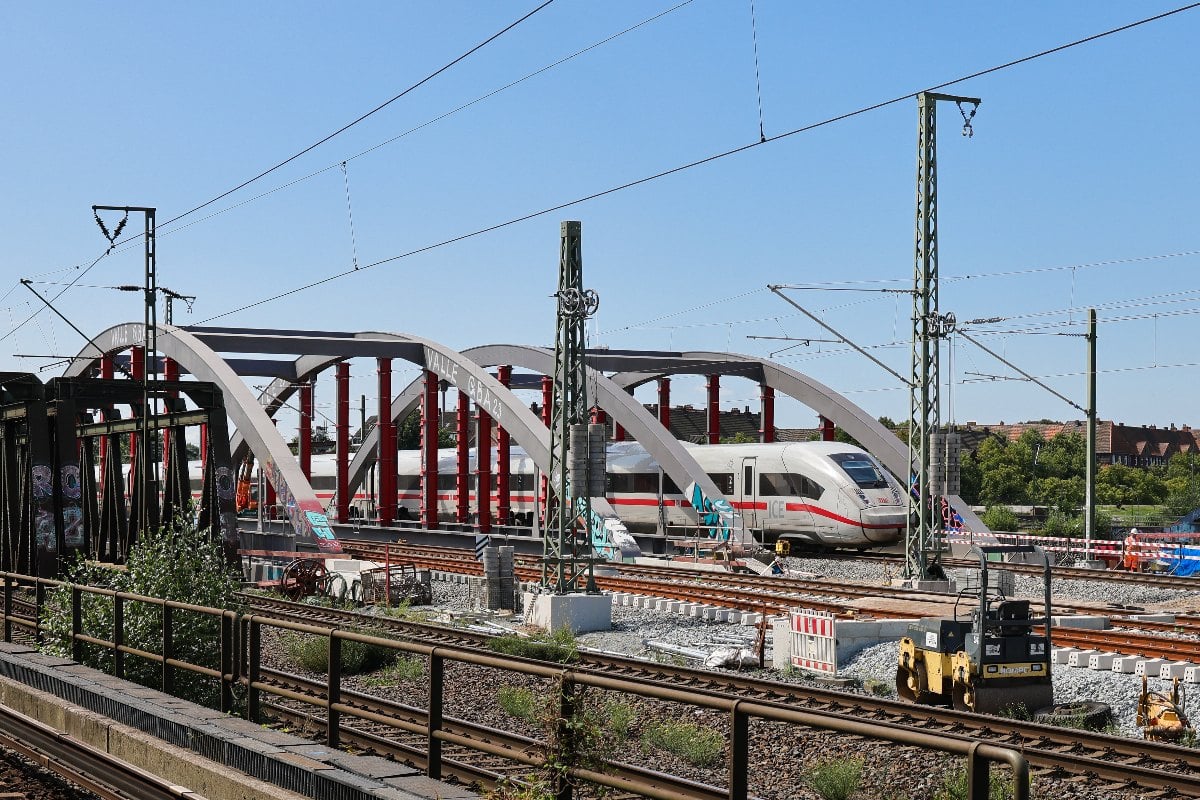
The Riedbahn - a well-used track section between Frankfurt and Mannheim - is reopening as planned after five months of disruption.
Due to the line being a key route, the closure has affected long-distance travel nationwide.
But rail replacement services and diversions will be lifted on December 15th, easing the situation for passengers. The section has been undergoing renovation since July 15th.
Faster journeys return between Hamburg and Berlin
The long-distance route between Hamburg and Berlin will be up to speed once again from December 15th.
That's because a diversion via Stendal, which added 45 minutes to the journey will be lifted. Other restrictions due to track refurbishment will also come to an end. The journey usually takes about two hours.
Higher prices for train tickets - and a new timetable
Another key change coming up in December will affect tickets. Some long-distance rail passengers will have to pay more for train tickets from December 15th.
According to Deutsche Bahn, flex fares will be 5.9 percent more expensive on average. Plus the cancellation of flex fares will be subject to a charge from seven days before the first day of validity.
Deutsche Bahn said prices for commuters will also go up by an average of 5.9 percent, although flexible offers will still be available with the 10 and 20-journey ticket.
However, saver and super saver fares will remain unchanged.
READ ALSO:
- What to know about Germany's long distance train service changes
- How Deutsche Bahn plans to make German trains more reliable
New rail connections - including to Paris
We're continuing with the train updates. Deutsche Bahn's winter timetable also kicks in from mid-December.
There's good news for those eager to spend more time in the French capital - and who wouldn't? From December 16th, rail travellers will be able to travel from Berlin directly to Paris - via Frankfurt, Karlsruhe and Strasbourg during the day. The journey is expected to take around eight hours.
There will be one service a day - departing from Paris at 9.55am, arriving in Frankfurt at 2.04pm and in Berlin at 6.03pm. The journey in the other direction leaves Berlin at 11.54am, arriving in Paris at 7.55pm.
Other changes include 11 services per day on the Berlin-Frankfurt Sprinter service, with a journey time of around four hours.
A new daily direct ICE service between Amsterdam and Munich via Stuttgart and Ulm will also launch, with a journey time of seven hours.

Prepare for Christmas public holidays
Employees in Germany get three public holidays during the festive season.
Christmas Day and Boxing Day (December 25th and 26th) fall on a Wednesday and Thursday this year and these are nationwide public holidays, while New Year's Day (January 1st) is also an official Feiertag. On these days, the majority of businesses close, as well as shops. Workers who can't get these days off, such as medical professionals, receive time back.
Christmas Eve and New Year's Eve aren't official public holidays in Germany but many businesses give their employees either a half day or full day off.
Make sure to buy your gifts and your festive food and drink in plenty of time before the chaos of supermarkets leading up to Weihnachtstag. Shops will usually close at noon or 2pm on Christmas Eve.
Christmas post deadline
Anyone sending letters or packages to friends and family in Germany should take note of some important dates.
Letters need to be sent by December 21st to arrive on time for Christmas, according to Deutsche Post. For packages, the cut off date is December 20th.
There are earlier deadlines for those posting letters or packages to loved ones in Europe and beyond.
READ ALSO: The deadlines to send Christmas packages to and from Germany in 2024
Meanwhile, most Deutsche Post branches are open on December 23rd and December 30th but will be closed on Christmas Eve and New Year's Eve (as well as the public holidays).
Tax relief for workers
The net salary on employees' pay slips in December is likely to be a bit higher if tax relief changes are approved.
The basic tax-free allowance - the part of income that does not have to be taxed - is set to be increased by €180 to €11,784 with a retroactive effect from the beginning of the year. In addition, the tax-free allowance for children is to rise by €228 to €6,612.
The Bundestag has already passed the law. If the Bundesrat, which represents the states, gives the final approval to this change it will mean a slightly higher net salary for employees next month.
READ ALSO:
- Why there may be more money in your December payslip
- Everything you need to know about paying taxes in Germany
- How Germay's tax plans for 2025 could affect you
Longer days on the horizon
The days are getting ever-darker but there is a key calendar moment coming.
December 21st is the shortest day of the year. During the winter solstice, the sun is lower above the horizon than at any other time of the year. It rises late in the morning and sets early in the afternoon.
But from December 22nd, the days become longer again.
Christmas trees get more expensive
As you might expect with rising inflation, Christmas trees are slightly more expensive on average this year compared to last year.
The Federal Association of Christmas Tree Producers recently estimated the price range to be around €22 to €30 per metre of Nordmann fir. This is a euro more than last year.
Our tip is to consider getting a tree from a local Christmas tree seller. They are often family businesses dating back years. Plus workers stand out in the cold for many hours selling trees up to the afternoon of Christmas eve.

Photo: picture alliance/dpa | Frank Molter
Schools and Kitas take a break
Children, teachers and support staff will no doubt already be looking forward to their winter holidays.
As always, German states start and end the holidays at slightly different times. This year, many states start the break on December 23rd, with Hamburg and Schleswig-Holstein going off on a break a bit earlier.
Standardised charging cables
Manufacturers of smartphones, tablets and other electronic devices will soon have to offer a standardised USB-C charging cable, under EU law.
Under the new rules, consumers will no longer need a different charger every time they buy a new device because they will be able to use one single charger for a range of small and medium-sized portable electronic devices.
The regulation is set to take effect in Germany from December 28th.
Comments