
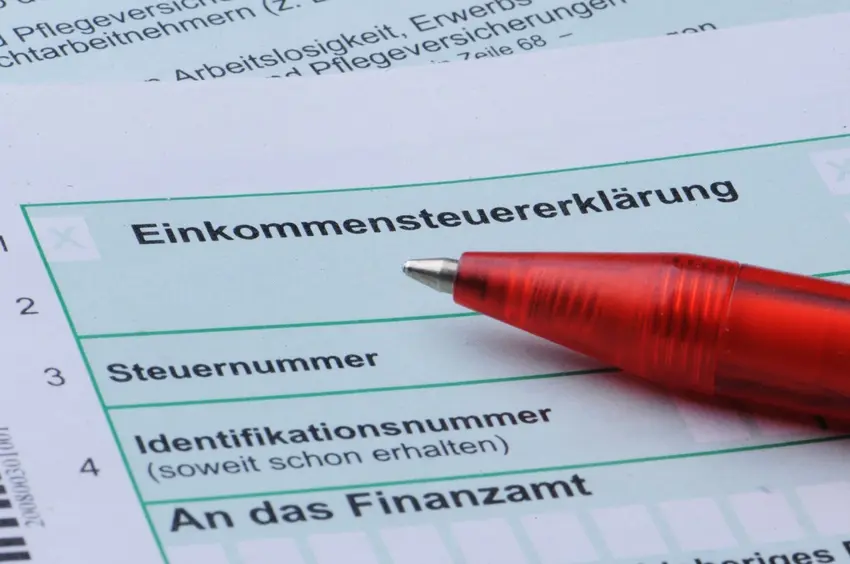
According to the traffic light coalition government's tax plan, recently announced by Finance Minister Christian Lindner, the basic allowance is to increase next year.
Additionally, middle class families could pay just slightly less in taxes next year, whereas higher salary earners may pay a bit more.
Here's how the 2025 tax shake-up could affect you.
The basic allowance - or the amount that you need to earn annually before owing any tax at all - is set to increase from €11,604 to €12,096 in 2025.
Child allowance - or Kindergeld - is also going to see a raise.
However, the Labour Ministry is currently mulling over a plan to increase social insurance contributions - such as health insurance and pension contributions - which could offset these gains and ultimately leave most households with less in take-home money.
READ ALSO: Everything you need to know about paying taxes in Germany
How much more or less money will I have in my pocket?
That depends on how much you earn and your family status. According to data compiled by Focus Online, middle class earners will likely see get a very modest amount back on their tax return.
A single person without children in 2025 earning €2,000 a month will see a net gain of €31 - over the course of the entire year. This decreases gradually to €17 for a similarly single person making €5,000 a month.
Again though, depending on Labour Ministry plans to increase social insurance contributions - these small gains may end up being eaten up.
Any single person without kids making more than €5,000 a month will end up with less in their pocket than in previous years. Single, childless people making between €5,500 a month and €8,500 a month will see anywhere between €176 and €238 less in their pocket per year.
Families with two married partners and two children will see modest gains of anywhere between €38 and €64 per year - if they're making €5,000 or less in month in combined income. If they make more than that, they'll see a net drain on their household pocketbook of €235 a year at a combined income of €5,500 a month.
This drain goes up the higher their combined income is. A married couple with two children making a combined income of €8,500 a month will see €554 less in their pocket starting with the 2025 tax return. Overall, this group of people will see the biggest losses under the Finance Ministry's new plan.
READ ALSO: Ehegattensplitting - How did Germany's marriage tax law become so controversial?
How social insurance increases could affect the overall household budget
The Finance Ministry's planned tax changes affect only your income tax.
But every tax return in Germany also comes with social insurance contributions - including health insurance contributions, unemployment insurances contributions, and payments into your state pension.
If any of these contribution amounts go up, it affects the bottom line on your tax return - ultimately affecting how much money you actually take home.
Labour Minister Hubertus Heil wants to up the pension insurance limit. This is the amount that you earn per month on which you are required to pay pension insurance contributions. Contributions to your state pension on any money you earn that's more than the pension insurance limit are voluntary.
Heil is looking to raise this from €7,450 to €7,550 per month in eastern Germany - and to €8,050 in western Germany. Increasing the pension insurance limit will thus only generally affect higher earners.
However, planned increases to public health insurance contributions - and to public long-term care insurance - will affect just about everyone.
Public health insurance contributions are expected to go up 0.3 percentage points on average next year - with the increase split between employer and employee. This is an average amount - as the actual amount could differ slightly depending on which public health insurance firm - like TK or AoK - that you are insured with.
READ ALSO: How to save money on health insurance by switching providers in Germany
Meanwhile, long-term care insurance is set to go up from 2.3 percent for single people to 2.45 percent. Families with two kids will see their contributions rise from 1.7 percent to 1.85 percent.
Ultimately, the social insurance increases are likely to mean that most working people in Germany will take home less money overall starting in 2025.
What's the reaction?
The German Taxpayer's Association has heavily criticised the government's plans - saying that the burdens of the social security sector have counteracted previous work to give German residents tax relief that wouldn't simply be eaten away by inflation.
The association has accused the government of shying away from necessary reforms in the social security sector, that would help get spending under control.
READ ALSO: German cabinet ministers approve sweeping tax reform plans
Comments