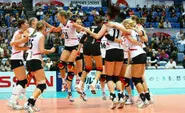
Germany’s women volleyball team celebrated a sensational victory in Japan on Wednesday, beating the world cup favourites USA 3-0 and getting into a good position to qualify for the 2012 Olympics.
Berlin-based artist collective “Migrantas” has been exploring the effects of immigration since 2004. For their latest project, they invited multilingual children to think about what the different cultures in their lives mean to them. Jessica Ware reports.
The 30 leading German companies belonging to the blue-chip stock DAX stock index unveiled a plan Monday to bring more women into management, but stopped short of making quotas compulsory.
A new poll has found that 70 percent of Germans are in favor of a mandatory quota for women in executive positions at German companies. Even a majority of men have signed on to the idea.
Andrea Nahles, general secretary of the Social Democratic Party, and new mother, has called on German politicians to take "one day off politics" every week.
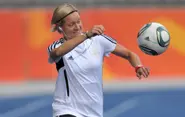
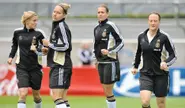
Germany launch their women's World Cup campaign on Sunday with a sell-out crowd expected at Berlin's Olympic Stadium against Canada as the hosts bid to win a third straight title.
Germany, the United States and Brazil are the favourites as the battle for the ultimate prize in football gets underway on Sunday in the 2011 FIFA Women's World Cup.
Gay players have long struggled for acceptance in the world of sports, and as Germany prepares for the Women's World Cup, their issues are again at the fore. Current and former players say progress has been made, but not enough.
Germany is about to host the Women's World Cup and Sonia Phalnikar couldn't care less – a tough thing to admit for someone considering herself both a feminist and a football fan. A commentary.
What does a Neo-Nazi look like? One’s typical stereotype might be of a jackbooted skinhead. But increasing numbers of active right-wing extremists in Germany are actually women, experts say.
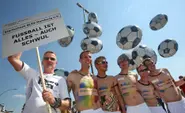
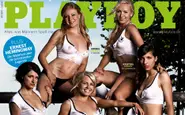
Just weeks before the kickoff of the Women's World Cup, five players on Germany's national team have participated in an erotic photo shoot for Playboy to prove football really is the beautiful game.
To avoid a looming labour shortage, Germany should follow the example of Scandinavian countries and dismantle barriers to women entering the workforce, according to the European Commission.
With one in every three German firms fearing a growing shortage of skilled workers, the head of the governmental industry group has called for marginalised workers to be brought back into the workplace.
Women have better career chances in smaller German companies than large corporations, with a fifth of mid-sized firms being led by a female CEO, according to a new survey released on Friday.
Germany's top companies pledged Wednesday to publish new targets for placing more women in their boardrooms but resisted fresh calls for legal quotas to rectify a wide gender gap.
While a woman behind the decks is nothing new, Berlin's electronic ladies say they have to work extra hard to get the attention they deserve in a male-dominated industry, <b>Ruth Michaelson</b> reports.
Germany made no progress last year on its yawning gender wage gap, with women earning 23 percent less in gross pay than men – the same as 2009, official figures showed Thursday.
The federal government is planning a meeting with human resources directors from Germany's 30 DAX companies to tackle the issue of an absence of women in top management jobs, according to a newspaper report.
A new survey shows Germany’s largest companies are overwhelmingly opposed to a mandatory quota for women in executive positions, with only one firm coming out in favour.
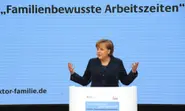
Chancellor Angela Merkel called the dearth of women executives at German companies a “scandal” on Tuesday, as she oversaw the signing of a charter aimed at improving “family-friendly” working conditions.
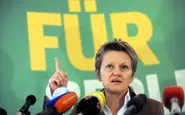
Green party parliamentary group leader Renate Künast said that Germany's constitution demands gender equality in managing positions in German industry, adding weight to increasing calls for a gender quota.
Most Germans doubt that companies will boost the representation of women on their boards unless they are forced to do so by a mandatory quota, a poll published Friday found.
Chancellor Angela Merkel may have ruled out a mandatory quota for women in executive positions at German firms this week, but on Friday Family Minister Kristina Schröder said she was still pushing a graduated scheme to achieve the same ends.
Chancellor Angela Merkel ruled out a mandatory quota for women in executive positions at German firms late on Wednesday, effectively ending an internal debate within her party on the subject.