As Europe’s biggest economy, Germany attracts workers from around the world who come in search of well-paying jobs. But how do salaries in Germany really compare to the rest of Europe?
The average German worker experienced a one percent drop in real earnings in the pandemic year of 2020, the most significant drop since records began in 2007.
Whether it's businesses reopening, wages rising in some fields and a new public holiday in Berlin, there's a lot changing in May 2020 - and not all of it coronavirus related.
The amount you take home at the end of the month doesn’t just depend on the job you do or how hard you work. According to new statistics, where you live might just be the most important factor.
Wages in Germany have grown much
faster than in other eurozone countries in recent years, a Bundesbank (central bank) study published Monday found, reversing conditions seen before the
financial crisis that stoked intra-European resentment.
If you work in the public sector you will receive an average of 7.5 percent more pay in the future after the public service union Ver.di struck a new wage deal with the government.
The best-selling French economist Thomas Piketty released a study on wage equality across the globe on Friday. His team found wages in Germany were as unequal as before the First World War.
German workers enjoyed a strong increase in wages for the third year in a row in 2016, official data showed Thursday, in news likely to be welcomed by the European Central Bank.
The middle classes in Germany and the USA are both in sharp decline, while top earners on both sides of the pond reap the rewards, a study by the German Institute for Economic Research shows.
A new study shows that German women are some of the most pessimistic in the developed world about the effect starting a family will have on their career.
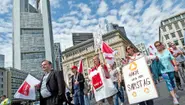
Members of service workers' union Verdi at Deutsche Post made good on threats to walk off the job on Monday, announcing an indeterminate strike that will hit deliveries across Germany.
Families Minister Manuela Schwesig confirmed on Sunday that she wants a new law allowing women to compare their wages with men doing similar work, provoking angry reactions from employers.
Rail operator Deutsche Bahn said on Monday that it would resume talks with the German Train Drivers' Union (GDL), pushing back the possibility of further crippling strikes.
As railway operator Deutsche Bahn (DB) continues negotiations with train drivers' union GDL, its other major union EVG has threatened a strike over pay differences between employees.
Millions of workers in Germany saw a real increase in pay in the first half of the year, with wages negotiated through collective bargaining agreements recording their highest rise for 15 years.
Germany's average hourly labour cost was €31.70 in 2013, giving it the seventh highest rate among the 28 EU countries - and its costs are rising faster than the European average.
German MPs will give themselves a pay rise of €830 per month, it was decided in parliament on Friday morning in a package of measures aimed at tackling corruption among politicians.
Workers' wages in real terms have dropped in Germany for the first time in four years, falling by an average of 0.3 percent from the third quarter of 2012 to the same period this year.
As figures show an increase in poverty despite record employment rates, and the potential new government argues about a universal minimum wage, German job centres are suing employers for paying less than €2 an hour.
A French economy minister has launched a scathing attack on Germany’s ‘unfair’ wage policy “which he claims is based on who can pay workers the least”. The attack was timed just days before the Germans goes to the polls.
From August, haircuts will get more expensive across Germany. But customers facing a hair-raising bill should keep their wig on – it's all because stylists are now getting fairer pay.
German jobless figures may have dropped sharply in recent years, but almost one quarter of workers are now employed in the low-wage sector, according to a new labour market study.