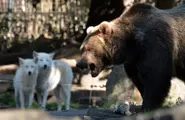
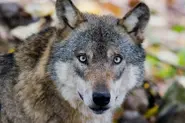
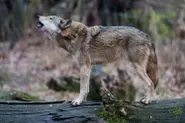
Long the dangerous threat of many fairytales, bears and wolves still hold a firm position in the popular imagination. But is there a risk of bumping into one on your next German hiking trip?
The German government on Wednesday relaxed
rules on culling wolves, as the population of the predator has grown since returning to the country two decades ago.
The sneak attack happened at a cemetery and quickly turned into a whodunnit that fired up a heated debate about the return of wolves to the wild in Germany.
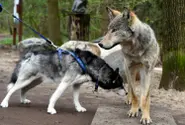
In light of rising wolf populations across Germany, there's a greater risk of dog-wolf interbreeding. Some organizations say these hybrid pups could be worrisome and potentially dangerous.
After over a century and a half of extinction, wolves are back in Germany and multiplying quickly. But who exactly is affected by this growth and does it pose a threat to humans?
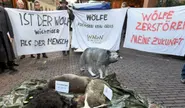
Straight out of a medieval fairy tale, angry farmers gathered in Hanover's ancient centre with their dead livestock to protest the damage that wolves are doing to their livelihoods.
Wolves are once again roaming the forests of Germany after being wiped out over a century ago. The government is now providing nearly half a million Euros to teach people how to live with them in peace.
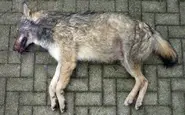
A wolf has been found dead near a motorway in Baden-Württemberg - the second time in recent months one of the rare predators has been found dead in the southern state.
Nearly 135 years after the last wolf in the Hunsrück area of Rhineland-Palatinate is believed to have been shot dead, six baby wolves are being nurtured by hand.
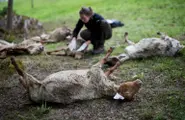
DNA tests on the carcasses of lambs reveal that a wolf has been hunting around the forests east of Munich. Local authorities don't believe the animal poses a threat to humans.
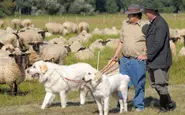
German shepherds are calling for sheepdog subsidies to help them protect their flocks from wolves which are steadily reclaiming ancient territories - and treating themselves to lamb suppers.
Wolves killed five sheep at a farm south west of Berlin after sneaking through an electric fence, it was confirmed Wednesday, in a sign that the animals are becoming more active in the countryside around the capital.
Thirteen years after wolves returned to an eastern German village, its residents have not only overcome age-old fears to live peacefully alongside the predator but even come to enjoy the benefits of its presence.
Over 800 non-native plant and animal species have settled in Germany over the past few decades, while several species which disappeared long ago are returning home, according to the Federal Office for Nature Conservation (Bfn).
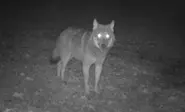
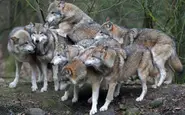
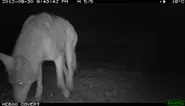
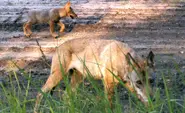
A pack of wolves has settled near Berlin and has become well established enough to have cubs. Researchers caught them on camera, just 25 kilometres from the capital.
A German soldier lost his nerve when three young wolves followed him on a night exercise, stopping when he stopped and getting closer when he carried on walking – just like a game of “What’s the time Mr Wolf?”
Wolves which have resettled in Germany are rarely hunting sheep, instead eating wild dinners of deer and boar, according to scientists who have been studying their poo.
Wolves are doing so well in Germany, and adapting to so many different habitats, that they are likely to spread from their current strongholds in the eastern parts of the country to become part of the natural landscape nationwide.
Authorities urged farmers in the northern German state of Mecklenburg-Western Pomerania to secure their fences on Tuesday after determining that a lone wolf likely killed and severely injured a total of 15 sheep in a single field overnight.
Bavarian farmers and authorities are debating what to do about a “problem wolf” that has already killed 21 sheep and is allegedly roaming ever-closer to populated areas.
German farmers have been warned to get used to living with wolves after 15 lambs were killed and another 20 animals were severely injured in an attack in Brandenburg this month.
The ÖJV ecological hunters’ association urged Bavarians on Friday to remain calm following confirmation that a lone wolf has been spotted near the southern community of Brannenburg.