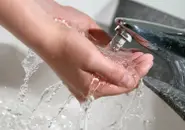
For many Germans, it’s second nature to buy bottled water rather than drink from the tap. But Germany’s environment ministry is pushing to change this.
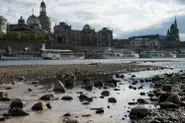
Agriculture is already affected by an ongoing draught in Germany, but what about personal water supplies? Experts weigh in on what can be done to minimize the problem.
The docks are eerily quiet at Cologne's main port on the mighty River Rhine, with hundreds of containers piled up and awaiting their journey north on one of Europe's busiest commercial arteries.
Deutsche Umwelthilfe (DUH) is taking Germany to court in a bid to stop potentially harmful nitrates entering the groundwater - substances known to endanger human health.
Opposition politicians and pressure groups have demanded action after it emerged that the vast majority of Germany’s rivers and streams are in a bad ecological condition.
A man in the north German town of Salzgitter left all the taps in his apartment running for an entire year. His landlord only noticed when he received an enormous bill from the water company.
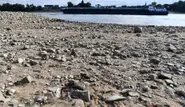
The Rhine river, a major shipping waterway through western Germany, is experiencing worringly low water levels, causing problems for vessels along the major shipping route.
Germany took third place among advanced economies for having the best environmental surroundings in a report on quality of life, though the country did not rank as well in openness of government.
Germany's Federal Environment Agency (UBA) is encouraging lawmakers to hurry up and ban fracking in all but name, saying the process is too dangerous to even consider allowing.
German beer is famous for containing just four ingredients under the beer purity law, but it appears some brands have picked up an unwelcome fifth ingredient - plastic particles.
German researchers have found an unusually high amount of plastic particles in Italy's Lake Garda, a study has revealed. Fish often mistake the plastic for food meaning it could end up on dinner tables.
Nearly 40 years ago, the African nation of Mali gave former East Germany a baby crocodile as a gift. Now, Theophila is over three metres long and lives in Magdeburg's water treatment plant where she has become a local legend.
Berlin‘s state government has bought a chunk of the city’s privatised water company to bring the lion’s share of the firm into public hands, two years after a referendum showed the capital’s citizens wanted their water back.
Hundreds of people in Berlin have been told their water is contaminated with deadly bacteria and not only will they have to get drinking water from containers in the street – they’ll have to shower outside too.
A quarter of a million Germans have been boiling their water and emptying their supermarkets of the bottled wet stuff for the last week after an E-coli scare – which officials now say could have been a false alarm.
Buying expensive bottled water rather than getting it out of a tap could not only be a waste of money, but have much fewer health benefits than advertisers would like consumers to believe, a German watchdog said on Thursday.
Those thinking of cooling off with a jump in the sea or a lake this summer can do so without worrying about pollution – German bathing waters have been ranked above average for their cleanliness when compared across Europe.
Berliners pushed through the city-state’s first successful referendum on Sunday, with almost everyone at the polls voting in favour of complete disclosure of the German capital’s water utility contracts.
A German tourist was missing in Australia's rugged Kakadu National Park, police said Saturday, expressing grave fears that he had been gone more than 24 hours without drinking water in intense heat.
Lead pipes, snobbery or just plain stinginess: why is it so difficult to get a glass of tap water in a Berlin? <b>Viktoria Larsson</b> attempts to quench her thirst for Berlin’s English-language magazine Exberliner.
Germans may love their bottled water, but it turns out their tap water is just as good, if not better. Tobias Jochum spoke with the establishment, a connoisseur and a purist for Berlin’s English-language magazine Exberliner.
Many of Peru's grittiest slums can only dream of access to water. But thanks to a German NGO, simple technology and hard work, some humble homes are the first to use plastic netting to harvest water from the fog cloaking the night sky, writes AFP's Luis Jaime Cisneros.
An immigrant population of crayfish from the United States has invaded the waters of the northern German state of Mecklenburg-Western Pomerania, threatening the local population with a crustacean plague.
It’s been a rough weekend for Hamburg. First there was a power outage, then riots, then thousands of citizens of Hamburg lost water pressure after a pump failed, a spokesman for Hamburg’s water authority said Sunday.