Germany's coronavirus cash payment to families was found to be a more efficient and cost-effective way of boosting spending than lowering VAT, a new study shows.
European economic power Germany is coming under increasing pressure to boost spending to accelerate economic growth, as its massive surpluses create growing friction with other countries.
Bickering broke out within Chancellor Angela Merkel's hard-fought coalition on Wednesday, as German budget plans left the defence and international development ministries out in the cold.
While the European Union gears up for another of its endless post-crisis bouts over spending, debt and deficits, Berlin's German Historical Museum has turned a microscope onto the mania for
saving in Europe's largest economy.
Germany should be legally bound to invest in infrastructure, the centre-left challenger to Chancellor Angela Merkel at September elections said on Sunday.
US President Donald Trump's demand for NATO allies to boost defence spending is driving an election-year dispute between Chancellor Angela Merkel's conservatives and their centre-left challengers led by Martin Schulz.
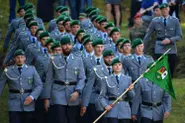
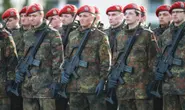
The Defence Ministry is to add thousands of new soldiers to its ranks and increase spending by billions, it was announced on Tuesday. But will it be enough to satisfy the Americans?
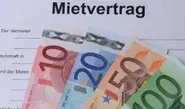
Germans spend more than a third of their household budgets on keeping a roof over their heads each month, new figures showed on Thursday – an increase of almost three percentage points in recent years.
Consumer confidence in Germany is at its highest since late 2001, as rising optimism about the economy and income expectations persuade German shoppers to open their wallets, a poll found on Thursday.
Polling shows German consumers are increasingly confident, meaning that economists expect them to pull out their wallets and spend money. But where does the average family's disposable income go?
German retailers upgraded on Tuesday their forecast for 2014, saying the robust labour market is filling consumers with festive cheer ahead of the crucial Christmas season.
Update: Consumer confidence in Germany has stopped falling, as households appear to be no longer fazed by concerns about the economic fallout from geopolitical crises, a new poll found on Friday.
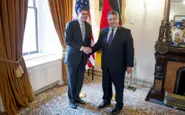
US Treasury Secretary Jacob Lew, in a meeting on Wednesday with German Economy Minister Sigmar Gabriel, called on Germany to boost public spending to stimulate stuttering eurozone growth, the Treasury said.
The Vatican on Wednesday suspended indefinitely a German Catholic cleric dubbed the "bling bishop" for his luxury lifestyle, despite multiple calls in Germany for him to be dismissed.
Bridges for bats, a disastrously over-budget philharmonic hall and a cycle path that stops in the middle of nowhere – a list published on Thursday reveals the bizarre ways in which the government has wasted German taxpayers’ money.
Tricks which make it difficult to compare food prices have been revealed by a German consumer watchdog, showing people can pay up to 50 percent more for the same product depending on which shop they use.
Several of Chancellor Angela Merkel’s cabinet ministers are reportedly threatening to sink her centre-right coalition’s proposed austerity package only weeks after they agreed to make deep spending cuts.
Reductions in social benefits will spearhead the deepest spending cuts in modern German history, Chancellor Angela Merkel announced Monday. But education and research will be spared the axe and income and sales taxes will not be increased.
Germans are set to find out by lunchtime Monday the results of the cabinet’s brainstorming session on how to slash government spending by €51 billion over the next six years.