
Trash to cash: Can Germany turn its plastic waste into fuel?
One company near Dresden has created an innovative approach to turn plastic waste into fuel - which it hopes to roll out throughout Germany and beyond.
German supermarket chain Aldi set to charge for fruit and veg bags
Discount chain Aldi is to charge customers a fee for disposable fruit and vegetable bags in future as part of plans to cut down on plastic waste.
Why your takeaway coffee could soon cost more in Germany
Both manufacturers and consumers could soon be hit with higher costs. But is that such a bad thing?
EU Parliament votes to ban single use plastics
The Parliament of the European Union has voted to ban single use plastics across the bloc. The ban is expected to come into effect within the next two years.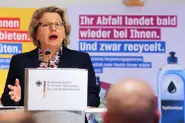
How Germany's environment minister plans to turn around plastic use
Drinking fountains everywhere, sitting on benches made out of recycled material and placing fruits directly in shopping carts rather than plastic bags - German environment minister Svenja Schulze pushed for these changes as part of a recycling plan she presented in Berlin on Monday.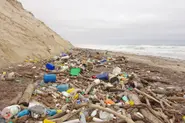
War on plastic leaves manufacturers clutching at straws
For decades, plastic straws have been essential props for cocktail makers, smoothie lovers and fast food addicts. But that may be starting to change, thanks largely to vigorous environmental campaigning.
German study casts doubt on 'plastic digesting' caterpillars
Scientists in Germany on Friday cast doubt on the work of colleagues who claimed that plastic bag-eating caterpillars might hold the answer to the planet's growing synthetic waste problem.
How the Reichstag was wrapped in plastic
Twenty years ago, between the 17th and 24th June 1995 the renowned artist couple Christo and Jeanne-Claude unveiled their latest and most extravagant artwork - they had wrapped the Reichstag in plastic, at a cost of $4 million.
Beer contaminated with plastic particles
German beer is famous for containing just four ingredients under the beer purity law, but it appears some brands have picked up an unwelcome fifth ingredient - plastic particles.
German scientists: Lake Garda is full of plastic
German researchers have found an unusually high amount of plastic particles in Italy's Lake Garda, a study has revealed. Fish often mistake the plastic for food meaning it could end up on dinner tables.