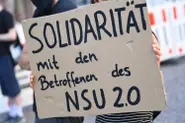
German police have arrested a man they suspect of sending threatening letters inspired by a shadowy neo-Nazi cell
that committed a string of racist murders in the 2000s, prosecutors said Tuesday.
More than 200 police in western Germany swooped on colleagues accused of spreading "repulsive" far-right propaganda in online chatrooms, a state interior minister said on Wednesday.
Prosecutors said Monday they arrested a
former police officer and his wife who they suspect of having sent threatening
emails to politicians and other public figures across Germany, signing them
off with a neo-Nazi reference.
A wave of threatening messages sent to
politicians and other public figures in Germany is larger than previously
thought, it emerged Tuesday, deepening a row over possible far-right links in
a regional police force.
After a heavily-armed man shot two people dead, one of them outside a synagogue, in eastern German city Halle, Interior Minister Horst Seehofer said there were "signs of a far-right extremist background" to the attack.
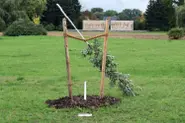
A tree planted to commemorate a victim of the neo-Nazi Nationalist Socialist Underground (NSU) group has been sawed down in the eastern German city of Zwickau.
German police have been shaken by accusations five officers formed a far-right cell that shared Hitler and swastika pictures in a WhatsApp group and threatened a lawyer with Turkish roots.
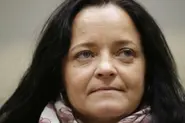
The only surviving member of a German neo-Nazi cell behind a shocking series of racist murders was sentenced Wednesday to life in prison, capping one of the longest and politically charged trials of the post-war period.
Germany's domestic spy agencies are extremely reluctant to reveal how much they knew about a neo-Nazi murder series that cost 10 people their lives. The Local talks to an expert who says that clarification and reform are long overdue.
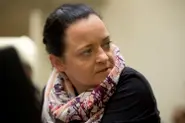
For Beate Zschäpe, the woman at the heart of Germany's neo-Nazi murder trial which reaches a verdict on Wednesday, the dark path began in the far-right skinhead subculture that flared after the Berlin Wall fell.
A defence lawyer for Beate Zschäpe, the only surviving member of a German neo-Nazi trio, Tuesday launched final arguments, signalling the end phase of a mammoth murder and terrorism trial.
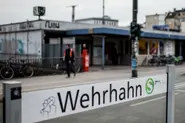
Nearly 18 years after a bombing
at a German commuter rail station targeting Jewish immigrants, the alleged neo-Nazi accused of the crime will go on trial on Thursday.
German prosecutors on Tuesday sought a life sentence for the surviving female member of a neo-Nazi trio accused of a string of racist murders that targeted mainly Turkish immigrants.
German police admitted Wednesday they had falsely linked two high-profile crimes - an unsolved child murder and a neo-Nazi cell's killing spree - because investigators accidentally contaminated DNA evidence.
Two art projects aimed at remembering the terrorism of the neo-Nazi National Socialist Underground (NSU) were attacked this week, one incident involving an explosive device.
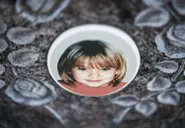
In a surprising twist linking two of Germany's most high-profile criminal investigations, the DNA of a deceased neo-Nazi terrorist was found near the remains of Peggy K., whose disappearance 15 years ago rocked the country.
Statements from a police officer in 2000 reveal that the NSU terrorist group may also have been active in Berlin, and appeared to be scouting out a major synagogue to attack.
Beate Zschäpe, the only living member of an underground neo-Nazi cell accused of murdering ten people, has spoken to the court in Munich after three years of silence.
The maker of a hard-hitting television drama about a notorious wave of racist murders across Germany has compared the neo-Nazi group behind them to a homegrown Isis who are far from defeated.
A fifth person connected to an ongoing inquiry into an underground Nazi terror cell has died suddenly, leading one expert to claim that it can’t possibly be coincidence.
The last living member of the neo-Nazi NSU terror cell, Beate Zschäpe apologized in a statement in court to the victims of the group's murders - but explained why she was not legally guilty.
For four years, a Nazi terror suspect on trial for ten murders and two bomb attacks has held her silence. But Beate Zschäpe has suddenly decided to speak out for the first time.
Four years ago, police finally uncovered the far-right group behind a series of grisly murders - but the story of the National Socialist Underground (NSU) is far from over.