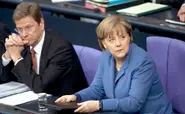
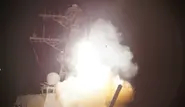
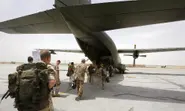
Facing criticism over Germany’s refusal to contribute to the military intervention in Libya, the Bundestag voted Friday to relieve NATO allies by broadening the German mission in Afghanistan.
The German government is fending off embarrassing claims that Foreign Minister Guido Westerwelle nearly caused a diplomatic disaster by directly opposing the UN vote for a “no-fly zone” in Libya.
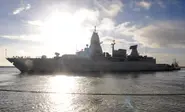
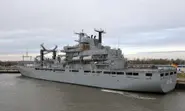
German warships will not participate in a NATO operation in the Mediterranean to enforce a UN-mandated arms embargo on Libya. But Berlin said Wednesday it will increase its Afghanistan deployment to free up NATO forces.
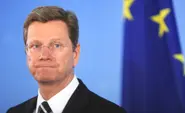
German Foreign Minister Guido Westerwelle on Monday said Arab League criticism of alliance action in Libya showed that Germany had "good reasons" to fear military intervention.
The German government’s decision not to participate in military action against Libya’s Muammar Qaddafi – primarily for domestic political reasons – is deeply irresponsible, argues Markus Horeld from ZEIT ONLINE.
A majority of Germans support the current military action against Libyan dictator Muammar Qaddafi although most are not in favour of German participation in the mission, according to a poll published on Sunday.
Nearly one-half of those asked in a new poll were critical of Chancellor Angela Merkel's management in the face of the nuclear crisis in Japan. Merkel is in Paris on Saturday for a meeting with world leaders on Libya.
Did Germany abandon its closest allies by abstaining from a UN resolution to impose a no-fly zone over Libya? The Local discussed the potential implications with Dr. Henning Riecke of the German Council on Foreign Relations (DGAP).
German Chancellor Angela Merkel said Friday that reports Libya is reacting to a United Nations resolution were "encouraging" after Tripoli declared a ceasefire in its battle against rebels. But Berlin denied it had isolated itself diplomatically.
No German troops will take part in any military intervention in Libya as there are "considerable risks and dangers," Foreign Minister Guido Westerwelle said Friday, after Berlin abstained in a UN vote to impose a no-fly zone.
German Foreign Minister Guido Westerwelle on Thursday strengthened his rejection of a possible no-fly zone over Libya, saying it was tantamount to military intervention, and adding that no Bundeswehr soldiers would take part.
German banks including the Bundesbank have frozen over €10 billion in Libyan assets following a European Union decision, news magazine <i>Der Spiegel</i> reported in its edition to be published Monday.
German Chancellor Angela Merkel on Friday demanded Libyan dictator Muammar Qaddafi step down immediately, as his forces continued to advance on rebel-held parts of the North African nation.
Germany expressed caution Thursday on the issue of recognising Libya's opposition as the country's representative, as France irked Berlin by opening diplomatic relations with opponents of Muammar Qaddafi‘s regime.
Germany will send three ships to return some 4,000 migrants stuck in Tunisia to Egypt, after they fled there to escape the violence in Libya, Germany's Foreign Minister Guido Westerwelle said Thursday.
Germany has proposed an international freeze on all payments to Libya for 60 days to deprive ruler Muammar Qaddafi of the means of "oppressing the people," Foreign Minister Guido Westerwelle said Monday.
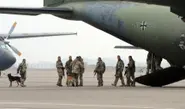
The Bundeswehr teamed up with the British Royal Air Force to stage a risky covert rescue mission, plucking 132 Europeans from Libya, among them 22 Germans, according to a media report on Monday.
The leaders of Germany and Britain agreed on Saturday that severe international sanctions should be imposed as quickly as possible on the Libyan regime, Berlin said.
German Foreign Minister Guido Westerwelle renewed his call for sanctions against Libya on Friday as US President Barack Obama tried to organise a coordinated effort from world leaders to quickly respond to the crisis in the North African country.
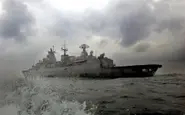
Three warships are on their way toward Libya to help with the evacuation of German citizens from the crisis-hit country, where violence continues to intensify. Germany has recommended all its nationals leave.
The head of Amnesty International Germany in an interview published on Thursday has called on Berlin to be ready to accept Libyan asylum seekers fleeing the crisis-hit country.